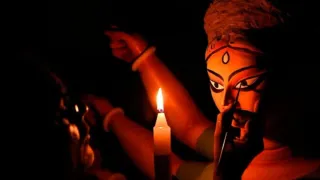
It's Mahalaya, "the great awakening", the day that marks the start of Devi Paksha, when Goddess Durga begins her journey from Kailash to the earth. Mahalaya has a bittersweet emotion for the Bengalis across the country. On one side, people rejoice as Goddess Durga arrives at her maternal home; on the other, there is a gentle melancholy in knowing that she will depart after 10 days.
In a typical Bengali household, Mahalaya begins with family members waking up before dawn to the legendary radio programme recited by Birendra Krishna Bhadra. When Bhadra proclaimed "Ya Devi Sarvabhuteshu", the opening verse of the hymn, his voice seemed to connect directly with the hearts of the listeners.
The words, laden with spiritual significance, became a powerful invocation. Spanning roughly 90 minutes, these holy verses became a ritual for the entire community. Programme Director Nripendranath Majumdar, now almost forgotten, was the man who made it all happen.
An artist places the heads of a sculpture for drying at a workshop ahead of the Durga Puja festival (PTI
The radio programme was first aired in 1932, years before India gained independence. Yet, the ritual holds the exact same power over every generation today. Over time, television shows restructured the Mahishasur Mardini programme in their own way.
Popular film stars used to play Ma Durga and her nine avatars. The television programme gained immense popularity through the late 2000s, with channels such as Zee Bangla and Star Jalsha broadcasting the Mahishasur Mardini at around 4 am and 5 am.
Mahalaya In Today's Era
In today's digital era, Mahishasur Mardini can be streamed anytime and from any place through music applications such as Spotify, Apple Music or YouTube Music. However, most Bengalis, particularly the older generation, prefer to listen to the nostalgic radio programme. Mahalaya is incomplete without Birendra Krishna's voice. This is what makes it so special. It is both fresh and familiar, a combination that makes it timeless.
While the Chandi Path echoes through living rooms, many gather at the ghats of the Hooghly River to perform Tarpan for their ancestors. The usual scenes from the banks of the Ganges show men standing waist-deep in the river, offering til and kusha grass to their ancestors for the peace of their souls.
The Arrival Of The Goddess
As the winds start smelling like the shiuli (night-flowering jasmine), the lanes of Kumartali begin their most significant ritual. The artisans begin to paint the goddess' eyes on the Durga idols. The ritual is known as Chokkhu Daan; till then, the idols are unfinished. The painting of Maa Durga's eyes indicates that she truly arrived in the idol. After finishing the paint, the artisans cover the goddess' face, and it is unveiled in the Mahashasthi.
Artisans in the lanes of Kumartuli (Pinterest)
As the scent of shiuli lingers in the crisp autumn air and the morning light settles over the quiet ghats, Mahalaya leaves an unmistakable stir in every Bengali heart. It is more than just the beginning of the festive season; it is a sacred bridge between our cherished past and the vibrant present.
From the timeless cadence of Birendra Krishna Bhadra's voice echoing through sleepy homes to the final, soulful touch of the artisan's brush in Kumartali, Mahalaya awakens not just the Goddess but the shared spirit, memories, and collective joy of an entire culture. The waiting is finally over, Maa Ashche.