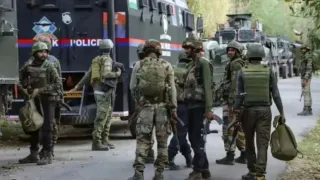
Manipur: The Ministry of Home Affairs (MHA) has extended the "disturbed area" declaration under the Armed Forces (Special Powers) Act (AFSPA), 1958, across the entire state of Manipur, excluding areas under 13 specified police stations amid fresh violence in the state.
The order will remain in effect for six months starting October 1, 2026, unless withdrawn earlier by the central government.
Four Villagers Shot Dead In Kamjong
The decision comes amid a sharp escalation of violence in the strife-torn state. On Friday, four villagers were allegedly shot dead by suspected militants in Kamjong district. Their bodies, bearing bullet injuries, were recovered from an isolated location near the Myanmar border in remote Pilong village.
According to local residents, a group of suspected militants crossed over from neighbouring Myanmar and ambushed five local villagers on Thursday. One villager managed to escape and alerted local authorities.
Manipur Chief Minister Yumnam Khemchand Singh strongly condemned the killings and conveyed his condolences to the bereaved families.
In a post on social media, the Chief Minister's Office said, "Such acts of violence have no place in our society and will not be tolerated."
What Is A 'Disturbed Area' And What Special Powers Do Armed Forces Get?
Under Section 3 of the Armed Forces (Special Powers) Act (AFSPA), 1958, a "disturbed area" is declared through a notification in the Official Gazette when the state or region is considered to be in a "disturbed or dangerous condition" requiring the use of armed forces to assist the civil administration.
Such a declaration is invoked when there are severe disturbances, violence, or conflicts involving different religious, racial, linguistic, regional, caste, or community groups.
Once a region is declared a "disturbed area", the armed forces are granted special powers:
- Authority To Use Lethal Force: Officers can, after issuing due warning, use force, including lethal force, against individuals violating orders that prohibit unlawful assemblies, movement, or the possession of firearms and explosives.
- Destroy Armed Facilities: Security forces are empowered to destroy arms dumps, fortified bases, shelters, or any structures used for armed attacks, training, or as hideouts.
- Arrest Without Warrant: Personnel may arrest any individual without an arrest warrant if they have committed, or are reasonably suspected of committing or attempting to commit, a cognizable offence.
- Search Without Warrant: Officers can enter and search any premises without a search warrant to make arrests, rescue a person believed to be wrongfully confined, or recover hidden weapons, ammunition, stolen property, and explosives.