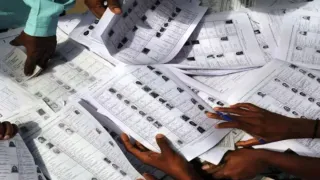
A fresh controversy has emerged in Rajasthan following the release of the latest draft voter list on Thursday under the Special Summary Revision (SSR) 2027. The list has raised questions over the actual number of voters in the state, as it records approximately 5.26 crore voters, around 11 lakh more than the 5.15 crore recorded in the final Special Intensive Revision (SIR) list published in February.
Rajasthan currently has three different voter lists, each showing a different number of voters, ranging from 5.15 crore to 5.45 crore. This has raised questions about the actual voter count in the state.
According to a report by The Times of India, the latest figure is significantly lower than the State Election Commission's (SEC) final voter list, which recorded 5.45 crore voters in early October. This means that three different figures have emerged in less than a year: 5.15 crore in the final SIR list, 5.45 crore in the SEC list and 5.26 crore in the latest Election Commission-linked SSR draft list.
Large Discrepancy In Rajasthan Voter Lists
The difference in voter numbers has raised questions about the accuracy of the official figures. While the final SIR list recorded 5.15 crore voters, the SEC list had 5.45 crore voters. The latest SSR draft list has now put the figure at 5.26 crore.
According to Chief Electoral Officer Naveen Mahajan, the SSR draft list includes 2,75,24,780 male voters, 2,51,42,052 female voters and 584 transgender voters.
The qualifying date for the revision is January 1, 2027. The Election Commission has invited claims and objections from November 12 to December 11. The final voter list will be published on January 4, 2027.
ALSO READ: UP SIR Row: CM Yogi Questions Missing Names Of 1.27 Crore Hindu Voters, Calls For ECI Investigation
Why Do The Voter Lists Differ?
To understand the difference, it is important to know how SIR and SSR work.
SIR is a more intensive verification process in which booth-level officers conduct house-to-house checks. Existing voters are given pre-filled forms, which they must submit to ensure their names are included in the revised voter list.
SSR, on the other hand, starts with the last published final voter list. Under this process, the names of existing voters generally remain unchanged, and they do not have to prove their eligibility again to retain their names.
ALSO READ: EC Relaxes Rules For Voter Roll Inclusion, But Only People In 7 States Can Apply: Here's Why
The main objective of SSR is to update the voter list by adding new names, removing ineligible entries and correcting existing details. Voters can submit applications for these changes during the revision process.
The difference between the two processes can lead to variations in voter numbers between draft and final lists. However, the latest figures have raised questions as the discrepancies are visible across different official voter lists.
The SSR draft list has around 11 lakh more voters than the final SIR list but approximately 19 lakh fewer voters than the SEC's list published in early October.
The draft list has been shared with recognised political parties and uploaded to the Chief Electoral Officer's website.
Before the final list is published next year, voters can apply to add, delete or correct their names by submitting the prescribed forms. Anyone whose name is missing, incorrectly recorded or needs to be removed can raise an objection before the final voter list is published on January 4, 2027.