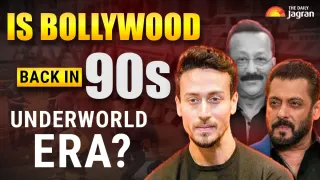
Bollywood actor Tiger Shroff reportedly escaped unhurt in a firing incident in Mumbai’s Juhu area on Sunday evening after gunmen opened fire at his vehicle while he was leaving a football club. Two people, including the actor’s driver, reportedly sustained injuries in the incident. The driver was said to have been hit by bullets, while the actor escaped without any gunshot injuries.
The 36-year-old actor escaped unhurt after gunmen opened fire at his car. The incident has once again raised concerns about the safety of public figures in Mumbai. The Lawrence Bishnoi gang has allegedly claimed responsibility for the attack in a viral social media post, but the police are yet to verify its authenticity.
This is not the first time a Bollywood celebrity has faced such a threat.
From the murder of Baba Siddique and the firing outside Salman Khan’s residence to the attack on filmmaker Rohit Shetty’s home and now the reported shooting involving Tiger Shroff in Juhu, Bollywood appears to be witnessing a disturbing pattern of gangster-related threats that many believed had faded in the 1990s.
With members of the Lawrence Bishnoi gang allegedly claiming responsibility for high-profile attacks, a troubling question is resurfacing in Mumbai’s film industry-- Is the underworld’s grip on Bollywood returning?
To be honest, the comparison is hard to ignore. A series of high-profile incidents involving political figures, film personalities and security threats has revived an uncomfortable question in recent times.
The 1990s were marked by allegations of extortion, threats from organised crime groups and pressure on filmmakers and actors. Criminal networks were also alleged to have influenced Bollywood’s financing, casting, distribution and celebrity networks.
Recent High-Profile Attacks and Threats Involving Bollywood
1. Baba Siddique’s Murder - October 12, 2024
Baba Siddique, a former Maharashtra minister known for his connections with several Bollywood actors, was shot dead by three assailants outside the office of his son, Zeeshan Siddique, in Bandra on October 12, 2024. A Facebook post linked to Shubham Lonkar, an alleged associate of the Lawrence Bishnoi gang, claimed responsibility for the murder. The post linked the killing to Siddique’s close association with Salman Khan and the custodial death of Anuj Thapan, who was accused in the firing outside the actor’s residence.
2. Firing Outside Salman Khan’s Residence - April 14, 2024
On April 14, 2024, two gunmen riding a motorcycle opened fire outside Salman Khan’s residence at Galaxy Apartments in Bandra, Mumbai. The incident became a major warning sign that threats allegedly linked to organised crime could escalate beyond threatening phone calls and messages.
The alleged shooters, Vicky Gupta and Sagar Pal, were arrested in Gujarat. Anuj Thapan, who was accused of supplying the weapons, was arrested during the investigation and reportedly died by suicide in police custody on May 1, 2024.
3. Firing at Rohit Shetty’s Residence - February 1, 2026
A firing incident took place at filmmaker Rohit Shetty’s residence in Mumbai’s Juhu suburb on February 1, 2026. Gunmen reportedly fired at Shetty Tower, hitting the glass railing on the filmmaker’s balcony. The attack was allegedly carried out at the behest of a gang associated with Shubham Lonkar to extort money and create fear within the film industry. The investigation also reportedly revealed links between an accused in this case and the Baba Siddique murder case.
4. Ranveer Singh - Rs 10 Crore Extortion - Feb 1, 2026
Actor Ranveer Singh got a Rs 10 crore extortion threat via WhatsApp voice notes from a US number linked to the Lawrence Bishnoi gang. The sender claimed to be gang associate Hari Chand Jaat alias Harry Boxer. The threats came right after firing outside Rohit Shetty's Juhu home on Feb 1, 2026.
5. Firing at Tiger Shroff’s Vehicle - October 18, 2026
Three unidentified gunmen reportedly opened fire at the actor’s vehicle in Mumbai’s Juhu area. Shroff escaped without gunshot injuries, while his driver and another person were reported to have been injured.
Why Do These Incidents Resemble the 1990s?
During the 1990s, intimidation was used as a way to put influence. During that period, criminal networks were associated with extortion, threats against producers and attempts to influence film financing and business decisions.
Organised crime figures such as Dawood Ibrahim, Chhota Rajan and Abu Salem were linked to targeted shootings and high-profile murders that spread fear across the industry. These included the murder of T-Series founder Gulshan Kumar and the shooting of filmmaker Rakesh Roshan.
Today’s shootings and alleged threats have revived those fears, with the Lawrence Bishnoi gang being linked to several high-profile incidents.
During the 1990s, criminal gangs allegedly extorted money from Bollywood producers, pressured them over casting decisions, attempted to influence overseas distribution rights and used film financing to channel illicit money into the industry. Recent threats have also raised concerns about extortion and attempts to exert financial control.
ALSO READ: Bandaged Arms, Dressing On Shoulder: First Visuals Of Tiger Shroff After Escaping Firing Attempt
However, some methods have changed between the 1990s and 2026.
During the 1990s, gangsters often contacted victims and media organisations directly to claim responsibility for attacks and spread fear. Today, social media platforms allow alleged gang members to post messages within hours of an incident, claim responsibility and issue threats to people associated with their targets.
In the 90s, Bollywood relied on unregulated cash funding, which made extortion easy. Today, with corporate studios, OTT platforms and legal financing, the industry is far more structured and organised, while threats and attacks still happen, but they don't mean the underworld controls Bollywood's business again.
The biggest worry today is that violence is being used to create fear and show power. These recent attacks remind us of the 90s gangster era in Bollywood. The real test now is whether police authorities, government can break these criminal networks and make sure no one in the industry has to fear for their life for doing their job.