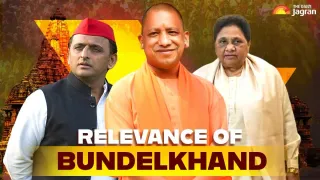
As Uttar Pradesh gears up for the 2027 Assembly elections, Bundelkhand is emerging as an important political battleground. Over the past decade, the region has witnessed a significant shift in its political landscape. Once considered a stronghold of the Bahujan Samaj Party (BSP), it gradually became a key area of support for the Bharatiya Janata Party (BJP).
The BJP's electoral performance in the region has been particularly impressive. However, the 2024 Lok Sabha elections brought a setback, raising questions about whether the party can retain its influence in the coming Assembly polls.
The key question is, how did the BJP build such a strong support base in Bundelkhand, and can the opposition challenge its dominance in 2027?
Why Is Bundelkhand Important in the 2027 UP Elections?
The Bundelkhand region of Uttar Pradesh comprises 19 Assembly constituencies and several parliamentary constituencies spread across seven districts:
- Jhansi: 4 Assembly seats
- Lalitpur: 2 Assembly seats
- Jalaun: 3 Assembly seats
- Hamirpur: 2 Assembly seats
- Banda: 4 Assembly seats
- Chitrakoot: 2 Assembly seats
- Mahoba: 2 Assembly seats
In 2017, the BJP won all 19 seats. In 2022, the BJP-led alliance won 16 out of 19 seats. This makes Bundelkhand an important region for the BJP ahead of the 2027 elections.
From BSP Stronghold to BJP Dominance
For many years, the BSP had a strong presence in Bundelkhand because of its support among Dalit communities. Under the leadership of Kanshi Ram and Mayawati, the party developed a strong organisational and electoral presence across the region.
In the 2007 Assembly elections, the BSP won 14 seats in Bundelkhand. The Samajwadi Party (SP) also had a presence in the region and won seven seats in 2012.
However, the political situation started changing after the 2014 Lok Sabha elections. The BJP expanded its support base and made major gains in the region.
In the 2017 Uttar Pradesh Assembly elections, the BJP won all 19 seats in Bundelkhand. In 2022, it won 16 seats, while the opposition won the remaining three.
These results showed how much the region's political preferences had changed.
How BJP Built Its Political Dominance in Bundelkhand
The BJP's rise in Bundelkhand was not the result of a single election. It was shaped by a combination of political leadership, organisational expansion and electoral successes over several years.
1. Key Faces (2012-14)
Leaders such as Uma Bharti and Swatantra Dev Singh played important roles in strengthening the BJP's presence in the region.
Uma Bharti, in particular, highlighted issues such as water scarcity, development and Bundelkhand's long-standing challenges. She won the Charkhari Assembly seat in 2012 and later secured the Jhansi Lok Sabha seat in 2014.
These efforts helped the BJP expand its political presence and connect with regional concerns.
2. 2017: A Complete Electoral Sweep
The 2017 Uttar Pradesh Assembly elections marked a turning point for the BJP. The party won all 19 Assembly seats in Bundelkhand.
The PM Modi-Yogi leadership, the BJP's development narrative and promises of improved infrastructure helped strengthen its appeal among voters.
3. 2019: Continued Dominance in the Lok Sabha Elections
The BJP maintained its momentum in the 2019 Lok Sabha elections, winning all four parliamentary constituencies associated with the region: Jhansi-Lalitpur, Jalaun, Hamirpur-Mahoba and Banda-Chitrakoot.
This performance reinforced the party's position as the dominant political force in Bundelkhand.
4. 2022: BJP Retains Its Stronghold
In the 2022 UP Assembly elections, the BJP won 16 out of 19 seats, while the SP won only three.
5. 2024 - A Big Setback?
In the 2024 Lok Sabha elections, the BJP faced losses in several constituencies, while the SP gained ground. Local dissatisfaction, party infighting and farmers' problems were among the issues that affected the BJP's performance.
How Did BJP Manage to Dominate? Key Reasons
Development and Infrastructure
One of the main reasons behind the BJP's growing support in Bundelkhand has been its focus on development and infrastructure.
The region has faced several problems for many years, including water shortages, poor roads, unemployment and a lack of industrial opportunities.
The BJP government has highlighted several projects to address these issues.
The Bundelkhand Motorway has improved road connectivity in the region. Government schemes like Har Ghar Jal aim to provide tap water to rural households. The government has also promoted the Defence Industrial Corridor and other industrial development projects.
The Ken-Betwa Link Project has also become an important project for this drought-hit region.
These projects have helped the BJP present itself as a party focused on regional development.
However, many challenges remain. Farmers continue to face problems related to water and agriculture, while unemployment remains a major concern among young people.
-Expanding Support Across Caste Communities
Another important reason for the BJP's growth has been its efforts to attract voters from different caste groups.
The party has gained support among several communities, including Lodhs, Kushwahas, Kurmis, Dalits, Brahmins and Rajputs.
It has expanded its support among non-Yadav OBC communities, along with sections of Dalit voters and upper-caste communities.
This broader social support has helped the BJP strengthen its position in Bundelkhand.
Hindutva and religious identity have also played an important role in the party's political campaign. Places such as Chitrakoot, which have religious and cultural importance, have featured prominently in the BJP's outreach to the region.
2024 Lok Sabha Elections: A Warning Sign for the BJP?
Despite its strong performance in the 2017 and 2022 Assembly elections, the BJP faced a significant challenge in the 2024 Lok Sabha elections.
The Samajwadi Party-Congress alliance made gains across several parts of Uttar Pradesh, including areas where the BJP had previously enjoyed considerable support.
Issues such as caste representation, unemployment, inflation, agricultural distress and local dissatisfaction influenced the electoral narrative.
The results demonstrated that the BJP could no longer take its traditional support base for granted. They also provided an opportunity for opposition parties to rebuild their organisational networks and strengthen their presence in Bundelkhand.
At present, there are exactly 14 BJP MLAs out of the 19 seats in the Bundelkhand region.
Looking ahead to 2027, the SP is likely to rely on its PDA strategy, which stands for Pichhda, Dalit and Alpsankhyak (backward classes, Dalits and minorities), to challenge the BJP's social coalition.
The BSP may also try to regain its traditional Dalit support base.
If the opposition manages to consolidate these communities, it could also influence the overall election results in Uttar Pradesh 2027.
The End Point
With 19 Assembly seats, Bundelkhand may be smaller than several other electoral regions of Uttar Pradesh, but its political significance should not be underestimated.
For the BJP, the region represents an important electoral stronghold that it will be keen to protect. For the Samajwadi Party, it offers an opportunity to challenge the BJP's dominance and expand its political footprint. The BSP, too, will look for ways to revive its traditional support base.
If the BJP manages to retain Bundelkhand, it will strengthen its position in the state. If the opposition makes significant gains, it could signal a broader shift in Uttar Pradesh's political landscape.