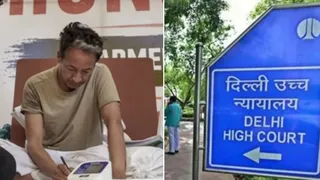
Sonam Wangchuk Hunger Strike: The Delhi High Court on Tuesday agreed to shift activist and educationist Sonam Wangchuk to Medanta Hospital. The court stated that all the treatment details that have been done so far at Safdarjung Hospital will be transferred to the private hospital. The court, after interacting with the doctors who attended him, pointed out that while he can be transferred to the private hospital, constant monitoring is required.
Wangchuk's Vitals Are Stable: Sibal
Kapil Sibal, while representing Wangchuk in the court, pointed out that his vitals are stable, adding that monitoring can continue. Solicitor General of India Tushar Mehta stated that the government has no objection if the activist is shifted to Medanta hospital. However, he said that Wangchuk should not be discharged until medical advice from the doctors.
Mehta further stated that while the court has agreed to shift Wangchuk to Medanta, the decision should be based on the doctor's advise and not the activist's will. Upon hearing to the arguments from both the parties, the court asserted that Wangchuk can be shifted to Medanta.
ALSO READ: Sonam Wangchuk Refuses Glucose As Blood Sugar Remains Low; What Doctors Said
RDA's Appeal To Prez Murmu
Earlier, the Resident Doctors Association (RDA) of the Delhi All India Institute of Medical Sciences (AIIMS) urged to President Draupadi Murmu to order an independent inquiry into the events at Jantar Mantar when the Delhi Police took the activist to the hospital. The medical body also highlighted that Wangchuk was not allowed to leave the hospital despite seeking a Leave Against Medical Advice (LAMA).
The RDA stated that if the claims are accurate, it raises serious questions about patient's autonomy and rights. "Reports indicating the use of lathi charge, tear gas, and physical force against a large number of peaceful protesters, including students, doctors and young citizens, are deeply unsettling," the association said.
"While certain aspects of the incident remain contested, videos and eyewitness accounts available in the public domain have raised serious questions regarding the manner in which peaceful democratic dissent was handled," it added.