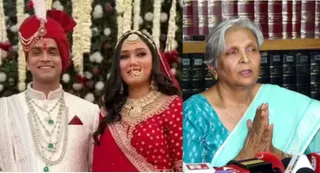
In a major update to the Twisha Sharma death case, the Bhopal court on Friday granted a five-day custody of Samarth Singh and his mother, former judge Giribala Singh, to the Central Bureau of Investigation (CBI).
"The court has sent Giribala Singh and Samarth Singh to CBI remand till 2 pm, June 2. They will remain in CBI custody till June 2. The CBI may ask the court to increase their remand if needed. We hope that the investigation will now proceed in the right direction," PTI quoted Anurag Srivastava, lawyer of Twisha's family.
Advancing the investigation into the dowry death case, the CBI is set to use an advanced ‘tunnel view’ investigation method. The investigation aims to help agencies digitally reconstruct Sharma’s final moments before she died in Bhopal.
According to reports, investigators are preparing a detailed minute-by-minute simulation of events to determine the exact sequence of circumstances leading to the former model-actor's death.
What Is The ‘Tunnel View’ Technique?
The “tunnel view” technique is a specialised investigation method that merges CCTV footage, phone records, Wi-Fi activity, internet usage, smart-device data, forensic evidence and witness statements into one synchronised digital timeline.
ALSO READ: Maharashtra: 8 Dead After Consuming Toxic Liquor In Pune, Pimpri-Chinchwad; CM Orders Probe
As part of the process, the CBI is reportedly examining CCTV recordings, mobile phone activity, internet logs, Call Detail Records (CDRs), Wi-Fi data and forensic mapping of rooms inside the Katara Hills residence.
The agency is also creating a virtual reconstruction of the house to track Twisha’s movements, identify who entered different areas of the residence and establish a clearer picture of what happened before her death.
Officials are aligning timestamps from surveillance cameras with mobile and internet activity to generate a highly detailed digital simulation of her final hours.
Investigators believe the “tunnel view” analysis could help uncover suspicious gaps in the timeline, inconsistencies in witness statements, unusual movement patterns and possible attempts to tamper with evidence after the incident.
Sources further indicated that the reconstruction may help determine whether Twisha faced coercion, whether multiple people were involved in a larger conspiracy or if the crime scene was manipulated.
Twisha's Chat With Mother - A Key Evidence
Twisha, who married Samarth Singh in December 2025, sent a WhatsApp message to her mother a few days before her death, expressing her feeling that she was "trapped" in the marriage. She also accused her in-laws of mental torture and dowry harassment.
Twisha's father claims that his daughter was being subjected to not only mental but also physical abuse. The family has alleged negligence in the investigation from the beginning. They say that the FIR was filed three days after Twisha's death, which threatens to compromise crucial evidence.
Questioning the findings of the first post-mortem examination, Twisha’s parents demanded a second autopsy and refused to conduct her last rites until it was completed.
On May 24, Twisha was cremated after a second post-mortem was conducted in Bhopal by doctors from AIIMS Delhi.
Twisha’s husband, Samarth Singh, was arrested in Jabalpur on May 22 after allegedly remaining absconding for nearly 10 days. He later surrendered following a search operation.
CBI Arrests Giribala Singh
In another key development, the CBI on May 28 arrested Twisha’s mother-in-law, Giribala Singh. The action came a day after the Madhya Pradesh High Court cancelled Singh’s anticipatory bail.
Officials questioned Giribala Singh at her residence in Bhopal’s Bag Mughaliya Extension before taking her into custody. She is expected to be produced before a court for further custodial interrogation.
The CBI is expected to intensify questioning in the coming days while cross-checking statements against digital and forensic evidence to establish the exact sequence of events leading up to the incident.