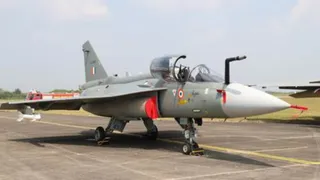
The HAL Tejas Light Combat Aircraft (LCA) Mk-1 is the cornerstone of India’s domestic aerospace ambitions. Representing decades of research, it serves as a litmus test for the "Make in India" initiative in the defense sector. The Tejas serves vital strategic roles that make it indispensable to India’s national security:
- The Tejas was designed specifically to phase out the aging, Soviet-era MiG-21 fleet, providing a modern, safer, and more agile platform for supersonic combat.
- With a recent Rs 62,370 crore deal for 97 additional Mk-1A jets, the program pumps billions into the Indian economy, supporting MSMEs and private defense firms.
While the aircraft is celebrated as a homegrown success, a detailed look at its airframe, engine, and avionics reveals a complex balance between indigenous innovation and a continued reliance on global suppliers.
Indigenisation Metrics: Value Vs Component Volume
The Tejas was born from a partnership between the Aeronautical Development Agency (ADA) and Hindustan Aeronautics Limited (HAL). At present, the Tejas features approximately 59.7 per cent indigenous content by value. However, when measured by the sheer volume of components, 75.5 per cent of its Line-Replaceable Units (LRUs) are produced domestically.
Dependency On Foreign Powerplants
The most significant hurdle in achieving total self-reliance remains the engine. The Tejas Mk-1 is currently powered by the General Electric F404-IN20 engine, imported from the United States. While the Kaveri K-9 engine project was launched to provide a domestic alternative, it remains in the development phase. Until an indigenous powerplant is flight-ready, the Tejas will continue to rely on international engine architecture.
Evolution Of Indigenous Content
India has made massive strides in "brain" and "nerve" systems for the fighter. Key domestic components already in use include:
- Mission Computers
- Radar Warning Receivers (RWR)
- Navigation Systems
- Electronic Warfare (EW) Suites
A major shift is occurring with the Uttam AESA Radar. While earlier versions used imported radar systems, this indigenously developed radar is being integrated into newer batches, significantly boosting the domestic value of the platform.
Scaling Up: Private Sector And Mk-1A
The upcoming Tejas Mk-1A variant aims to push the indigenous content to 70 per cent or higher by value. To achieve this, HAL and DRDO are working closely with private Indian firms. Technical specifications for components that were previously imported are being handed over to domestic manufacturers to build a robust local supply chain for control-surface actuators and advanced sensors.
Maintenance And Long-Term Sustainability
To ensure the fleet remains operational without constant foreign intervention, HAL is shifting its strategy toward local maintenance. By establishing Long-Term Repair and Maintenance Agreements (LTRMAs), HAL aims to service imported components within India, reducing downtime and furthering the goal of a self-sustaining defense ecosystem.