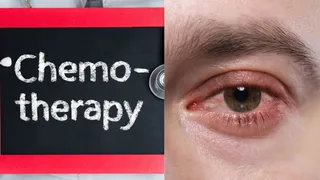
Chemotherapy and radiation, although life-saving for cancer patients, can also have less well-known side effects that affect the eyes, which are often overlooked in favour of more visible problems such as fatigue or hair loss. Physicians report that chemotherapy medications like 5-fluorouracil can cause dry eye syndrome, tearing, sensitivity to light and blurred vision from corneal inflammation and damage to the lacrimal gland. Radiation therapy to the head and neck, even at higher than 5 Gy to the lens, increases the risk of cataracts, retinopathy, and thinning of the retinal nerve fibre layer, which can result in permanent vision loss. These hidden problems, including conjunctivitis, keratitis, and madarosis (loss of eyelashes), develop quietly, making it essential to carefully monitor the eyes during treatment.
The ocular side effects of chemotherapy depend on the drugs used, with tamoxifen causing retinal alterations and targeted therapies such as trametinib causing floaters or serous retinopathy, which may be reversible but sometimes permanent. In conversation with The Daily Jagran, Dr Rohan N Dedhia, Retina, Cataract and Refractive Surgeon, Ojas Maxivision Eye Hospital, shares the hidden side effects of chemotherapy and radiation on eyes.
Understanding The Ocular Impact Of Cancer Therapy
Chemotherapy, as well as radiation therapy, has revolutionised the way people survive cancer; however, new ocular complications have also surfaced due to this. Many ocular tissues, such as the cornea, lens, retina and optic nerve, are highly sensitive to both toxic and radiation exposure. Dr Rohan N Dedhia states, “As eyes are a vulnerable organ of the body, and as a result of this, most eye-related side effects commonly happen with patients who receive head and neck radiation therapy and chemoradiation; however, many of these complications do not typically present themselves immediately after one finishes receiving treatment, but instead will usually develop months or years after the last treatment.”
Chemotherapy-Related Eye Changes
Chemotherapy medications often have an impact on the eye surface. Many individuals report dry eye syndrome, irritation of the eyes, conjunctivitis, excessive tearing, and blurred vision. Dr Rohan N Dedhia states, “Certain chemotherapeutic agents can also cause periorbital swelling, light sensitivity (photophobia), or corneal inflammation.” Some patients experience retinal changes, like haemorrhages or vascular abnormalities. Usually, these changes can be managed, but they require early recognition to prevent chronic discomfort or permanent vision impairment.
Vision Risks After Chemotherapy (Image Credits: Canva)
Radiotherapy And Long-Term Vision Risks
Radiotherapy for a long time to the head and neck region carries a higher risk of affecting vision due to radiation exposure near critical ocular structures. Cataracts have been known to occur due to even low doses of radiation being delivered to the lens and require surgical intervention years later.
Higher doses of radiation may damage the retina or optic nerve, leading to radiation retinopathy or radiation optic neuropathy, both of which, if not diagnosed early, may lead to irreversible vision loss. Additionally, chronic dry eye syndrome can also develop as a result of radiation-induced lacrimal glands.
Simple Steps To Protect Your Eyes During Chemotherapy and Radiotherapy
Baseline and serial ophthalmic evaluation: All patients should undergo a comprehensive eye examination before treatment and periodic monitoring during and after therapy to detect subclinical damage. Close communication between oncologists and ophthalmologists is critical to adjust therapy, manage ocular toxicity, and preserve long-term visual function.
Early management of ocular surface disease: Prompt treatment of dry eye and surface inflammation with preservative-free lubricants is essential to prevent chronic keratopathy and infection.
ALSO READ: What Is The 10-10-10 Rule? A Simple Eye Care Routine For Mobile And Laptop Users
Strict monitoring for radiation-related complications: Patients receiving head and neck radiotherapy should be actively screened for cataract formation, radiation retinopathy, and optic neuropathy, especially at higher doses.
Immediate evaluation of visual symptoms: Any onset of blurred vision, visual field defects, pain, or photophobia warrants urgent ophthalmic assessment to rule out irreversible damage.
Cancer treatment saves lives, but preserving the quality of life, including vision, must remain a priority. With proactive eye care, close coordination between oncologists and ophthalmologists, and long-term follow-up, most treatment-related eye complications can be managed effectively. Early intervention remains the most powerful tool in protecting a patient’s sight long after cancer therapy has ended.