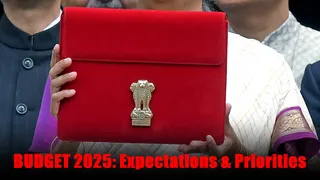
Union budget is perhaps amongst the most followed subjects. Preceded by expectations and suggestions, followed by analysis and commentary - invoking both criticism and patronage.
A perusal of the budget documents and deliberations would give an insight into not just economic affairs but also the political and social landscape.
The objectives of the central government are patently clear:
We fare poorly on various social indices. There are enormous development deficits. Our performance in education, health, sanitation, infrastructure, policing, judiciary is nowhere comparable with the best in the world. The quality and delivery of government service is sub-par. We continue to rank low in human development index, happiness quotient, Gini coefficient and several such measures.
Of course better governance is a prerequisite, enhanced budget outlay on several social parameters is mandatory too. To spend more, you have to earn more. Budget size can only grow in proportion to economic growth. We need to achieve and sustain the miracle growth rate in excess of 8 per cent for the next two decades, if we are to realize our aspiration of attaining developed world standards by 2047.
Now how to do that is the obvious difficult part. It requires effective, efficient and imaginative governance.
Before we perfunctorily suggest or opine, it is important to consider the background. Where do we stand at the start of 2025:
1. Our economic growth rate has slowed to 6.4 per cent, the lowest since Covid
2. Government investments are below target and private investment hasn’t picked up
3. Employment generation remains a concern
4. Interest rates are high and Indian currency at a historic low against the dollar
5. Capital markets have corrected by over 10 per cent in the last quarter, bulls have come to a halt and volatility continues
6. Geo political factors remain uncertain
Our tax to GDP ratio is around 11 per cent. Several emerging economies are at double our rate, while some first world countries have a ratio of well over 30 per cent. There is visible head room here. We need to increase our base rather than extort from a tiny minority that is anyways levied amongst the highest personal income tax rates in the world.
The position of middle class is testament to the overall health of the economy. It has long yearned for state largess. Higher standard deduction for the salaried, raising taxable income level, higher rebates and deductions on insurance premium, home loan interest, are much awaited reliefs.
Government needs to look at alternate revenue streams:
Disinvestment as a subject has not seen sufficient progress. We are not referring to privatization. That is a different matter. Our large banks, blue chip PSU’s may continue to be government owned and controlled, but do they necessarily need 100 per cent state ownership. Some equity dilution - anything within 10-49 per cent, can generate immense revenue without much dilution in control.
Land monetisation is another neglected avenue. Government is the largest land owner and this invaluable asset hasn’t yet been optimally utilized. Swathes of land – size of townships, worth hundreds of thousands of crores or more, are used for accommodating political and bureaucratic elites in every city of India. Should we endure this profligacy? We rather construct modern residential buildings and encourage apartment living. It would ease security provision apart from saving overheads and unlocking real estate.
It may seem heretic to some, but maybe it’s time to bring agricultural income above a certain level within the tax net. After all income from agriculture, is taxable in most of the developed countries. When our personal taxation is comparable with the highest in the world, how long should agriculture income remain exempt? The subsidies and deduction benefits may continue but some tax levy shouldn’t be viewed as unfair. Regardless of the economic logic, political feasibility of such a move of course is questionable. In the absence of a receptive environment, no political party will show the chutzpah, but then isn’t creating a conducive ecosystem also the responsibility of elected leaders?
Budget is not just a statement of account. It is also an expression of intent. It would help to clarify that regressive, exploitative ideas such as inheritance tax, estate duty, super rich tax - long consigned to the bin, deserve to now be defenestrated once and for all. Attracting foreign investment is one thing, our endeavour should also be to reign in exodus amidst a certain class.
Our tax litigation is onerous; disputed amount exceeding 5 per cent GDP, quite substantive. We can do with easy compliance and quick resolution. Multiple GST rates, absurd variance in rates between say normal and caramelized popcorn, non-air conditioned and air conditioned restaurants, have drawn several memes along with flak. GST may be subject matter of the council, yet finance minister is the chairperson and central government has 1/3rd voting right.
This notion of anything comfortable or luxurious being viewed as sinful and hence subject to higher tax is a relic of a bygone era. An aspiring economic super power has no place for such anachronism.
We need a fair and just structure and a progressive outlook. Societies tend to be more compliant if people believe their contribution to the exchequer is being utilized in nation building rather than funding the opulent lifestyle of political elite.
As a nation our single minded focus should be to become a part of the developed world by 2047. Middle class are the wheels of the economy, microcosm of the society - both the means and an end. They deserve to be our priority and at the heart of all policy formulation.