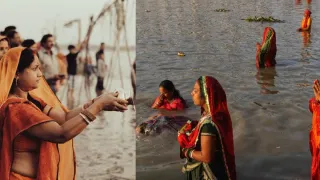
Sandhya Arghaya, the third day of Chhath Puja, falls on 15th November, 2026. On this day, devotees offer water (arghaya) to the setting Sun.
Unlike most Hindu traditions that pay respects to the rising Sun, Chhath Puja honours the setting sun for sustaining life on Earth and expresses gratitude for the past before seeking blessings for the future.
Let's understand the significance behind this tradition, how to perform it, and what are the auspicious times to perform the ritual.
Why Devotees Honour The Setting Sun?
In traditional Vedic culture, offering argahya to the rising sun symbolises creation and vitality. However, Chhath Puja offering Arghya to the setting sun on the evening of Day 3 carries spiritual, cultural, and ecological significance:
1. Express Gratitude
Worshipping the setting sun teaches that endings are as much as important as beginnings. On Day 3, devotees express gratitude for sustaining life on Earth and for the harvest throughout the passing year before asking for future blessings on Day 4
2. Seeking Blessings From Pratyaksha Devta And Chhathi Maiya
Surya Dev is considered a Pratyaksha Devta, the visible God. According to scriptures, the setting sun is accompanied by Pratyusha, Surya's divine consort, representing the last ray of daylight.
Offering Arghya at sunset pleases Chhathi Maiya, who protects children and grants family longevity.
3. The Science Behind The Ritual
From a practical perspective, standing in the water during sunset exposes the body to soft-spectrum UV rays. It is believed to help balance the body’s solar plexus and provide relief to the nervous system after a strict 36-hour waterless fast.
Worshipping the setting sun teaches that endings are as important as beginnings (Image: Pexels)
ALSO READ: Chhath Puja Kharna 2026: What Is The Significance Of Roti And Gur Ki Kheer?
How is Sandhya Arghya Performed?
To ensure maximum benefit, perform these rituals on the third day:
1. Devotees (Vratis) should have observed a waterless fast (Nirjala vrat) throughout the day.
2. Fresh homemade offerings like Thekua, raw sugarcane, coconut, seasonal fruits, and dry fruits should be properly placed in traditional bamboo baskets called Daura or Soop.
3. Before offering water to the setting sun, devotees should walk barefoot to rivers, ponds, or any water bodies.
4. Devotees should stand waist- or knee-deep in water and then offer milk and water toward the setting sun while chanting Vedic mantras.
Devotees should have observed a waterless fast throughout the day (Image: Pexels)
Sandhya Arghaya Muhurat Timings
According to Drik Panchang, here are the auspicious sunrise and sunset timings:
Sunset Time: 05:28 PM
Sunrise Time: 06:44 AM
Thus, by offering water to the setting sun, devotees symbolically let go of negativity, ego, and acknowledge the Sun's role in sustaining life.
FAQs
1. What is offered during Sandhya Arghya?
Devotees offer a stream of fresh milk and pure water alongside bamboo soops packed with Thekua, sugarcane, bananas, and seasonal fruits.
2. Can Sandhya Arghya be performed at home?
While natural water bodies like rivers or ponds are traditional, devotees living in urban areas or abroad often perform the ritual in makeshift water tubs or rooftop pools cleaned with sacred intent.
3. Why do devotees stand in water during Chhath Puja?
Water serves as a natural conductor of cosmic energy. Standing in water while facing the sun completes an energy circuit, allowing the body to absorb maximum solar power during peak spiritual hours.