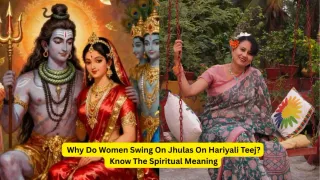
The festival of Hariyali Teej will be celebrated on August 15th, 2026. On this day, women adorn themselves with sixteen ornaments, wear traditional attire, and swing on the jhulas as part of the tradition. The swinging on jhulas is believed to represent nature, love, and joy.
Women, especially married women, observe nirjala vrat and pray for their husbands' long life and happiness. Unmarried women also observe a fast to seek a good life partner. Many more rituals are performed on this day, but the most unique is the swinging on jhulas. Let's understand the spiritual and religious significance behind this practice.
Religious Significance Of Swinging On The Jhulas
Associated With Goddess Parvati And Lord Shiva
According to mythology, Hariyali Teej is celebrated to mark the divine union of Goddess Parvati and Lord Shiva. Goddess Parvati performed rigorous penance to win Lord Shiva as her husband.
That is why Hariyali Teej is often associated with love, joy, devotion, and marital happiness. Swinging on the swing is believed to symbolise the celebration of this divine union.
Hariyali Teej is celebrated to mark the divine union of Goddess Parvati and Lord Shiva (Image: Facebook/lordshiva's devotee)
Associated With Lord Krishna And Radha
If you notice, Lord Krishna is often seated on the jhulas with Radha. According to religious beliefs, Lord Krishna and Radha used to swing together on the jhulas during the month of Sawan. Therefore, from Lord Krishna's time to today, swinging on Hariyali Teej is a reminder of Radha and Lord Krishna's divine love.
Spiritual Significance Of Swinging On The Jhulas
Apart from religious beliefs, the act of women swinging on a swing on Hariyali Teej holds immense spiritual significance. Here's how:
- Symbolises Joy And Freedom: The movement of a swing from back to forth symbolically represents letting go of worries and making space for happiness, positivity, and emotional renewal. Traditionally, women would gather during Teej and enjoy a little freedom from their daily responsibilities.
- Celebration Of The Monsoon And Nature: The month of Sawan brings the freshness and greenery of the rainy season. Everywhere there is greenery, and a different glow in the environment. Hariyali Teej is celebrated when nature is at its best. Jhulas tied to trees became a part of these celebrations.
- Symbol of good luck and a happy marriage: On Hariyali Teej, married women adorn themselves with sixteen adornments, observe nirjala vrat, and worship Lord Shiva and Goddess Parvati. It is believed that swinging on a swing and performing puja on this day help devotees seek blessings of long life, happiness, prosperity, and eternal good fortune for their husbands.
ALSO READ: Lord Shiva Is Pashupati Nath, So Why Does He Wear Tiger Skin? Know The Mythological Story
The movement of a swing from back to forth symbolically represents letting go of worries and making space for happiness (Image: Pexels)
Hariyali Teej 2026: Date And Tithi
Hariyali Teej Date- August 15, 2026
Tritiya Tithi Begins- 08:16 PM on August 14, 2026
Tritiya Tithi Ends - 06:58 PM on August 15, 2026
ALSO READ: Why Is Lord Shiva Worshipped In The Form Of Shivling? Know The Ancient Story
Thus, the tradition of swinging on jhulas on Hariyali Teej not only celebrates the union of Goddess Parvati and Lord Shiva but also conveys the message of love, joy, good fortune, and marital bliss.