
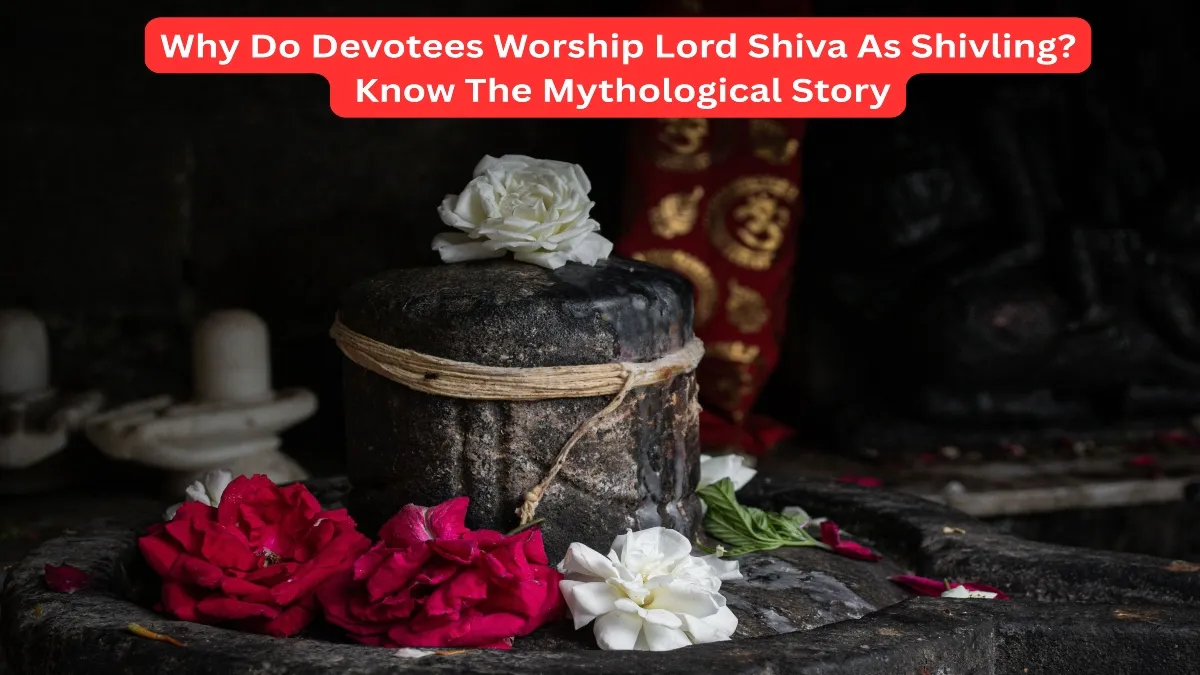
In many Hindu temples, Lord Shiva is worshipped in the form of a lingam. The lingam is believed to represent Lord Shiva's formless and limitless nature. Devotees worship Lord Shiva in this form as Shivling or Shivlinga. They offer their prayers to the Linga, perform abhishekam, and offer dhatura, bel patra, and flowers.
Let's understand in detail why Lord Shiva is particularly worshipped in this form, what it represents, and the ancient story behind it.
What Does Shivling Mean And Represent?
The word ‘Linga’ in Shivlinga means ‘mark’ or ‘sign’. The first time the linga was mentioned in connection with Lord Shiva was in the Shvetasvatara Upanishad, where it is mentioned that Lord Shiva is supreme and beyond any physical form.
According to the Shiva Purana, the Shivling symbolically represents the combined image of Uma Parvati, who is represented by the Peetham or the Vedi, and Lord Shiva, who is presented through the Lingam.
In modern times, the Shivling has often been misinterpreted as a limb or organ, but symbolically it signifies the primordial energy that is believed to originate, sustain, and destroy the Universe.

The Shivling signifies the primordial energy that is believed to originate, sustain, and destroy the Universe (Image: Pexels)
Meaning Behind The Shivling’s Shape
Many devotees wonder why the Shivling is in this rounded form. The shape is believed to represent:
- The axis of the universe
- Stability and balance
- Infinite energy without boundaries
The base of the lingam is believed to symbolise Shakti, the life force, whereas the lingam itself symbolises Shiva, the pure consciousness.
When combined, it represents the union of consciousness and energy that sustains life.
That is why, in meditation and tantra, it is said that spiritual growth can be achieved through a balance of these energies and consciousness.
ALSO READ: Lord Shiva Is Pashupati Nath, So Why Does He Wear Tiger Skin? Know The Mythological Story
What Is The Ancient Story Behind Shivling Worship?
According to mythology, Lord Vishnu and Lord Brahma once disagreed over who was supreme. Suddenly, Lord Shiva appeared in the form of an enormous pillar of light between them that did not have any end or beginning.
Recommended For You
Then he was heard saying that whoever between the two was supreme would find the end of this pillar. So, in order to come first, Lord Brahma and Lord Vishnu raced to either side of the pillar. However, both were unsuccessful in their mission. Thus, this endless pillar of light, which actually was Lord Shiva, represents his infinite and limitless nature.
Why Do Devotees Perform Abhishekam Of Shivling?
During Lord Shiva worship, many devotees pour water or milk on the Shivling. This is called abhishekam.
When devotees perform Abhishekam, they are symbolically offering their stress, negativity, and burdens to Shiva. It is an act of surrender and inner cleansing.

During Lord Shiva worship, many devotees pour water or milk on the Shivling (Image: Facebook/lordshiva)
ALSO READ: Bel Patra Vs Dhatura: Which Is More Auspicious To Offer Lord Shiva In Sawan?
Thus, when devotees worship Lord Shiva in the form of Shivling, it represents how he is ‘nirakaar’, meaning boundless, not limited to any physical form like other deities.