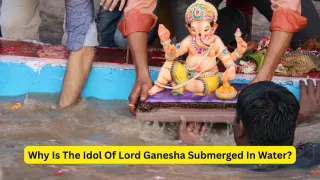
On Ganesh Chaturthi, devotees bring Lord Ganesha’s idol at home and withon a few days comes Ganesh Visarjan, when they have to bid adieu to the God. Many devotees wonder, "Why do we have to say goodbye to Lord Ganesha and submerge his idol in the water?”
According to spiritual mentor and astrologer Jai Madaan, Visarjan is the event of completion of a sacred cycle of creation and dissolution (Srishti-Samhara)
Let's understand in detail why Ganpati Visarjan is done and what is the spiritual meaning behind it.
Why Is Ganpati Visarjan Performed?
During Ganesha Chaturthi, Pran Pratishtha is performed when the idol of Lord Ganesha is brought home. By doing Pran Pratishtha, a devotee symbolically invokes the divine presence in the idol, which then becomes the focus of prayers, thanksgiving and spiritual linkage for the following few days.
Dr Jai Madaan explains that by doing Visarjan, an individual is completing this sacred cycle. It is not about farewell or losing connection with the divine; instead, it’s about limiting it to the physical form.
The Spiritual Meaning Of Ganpati Visarjan
According to Jai Madaan, by performing Ganpati Visarjan, one learns an important lesson: the art of letting go. Sometimes people cling to others and things, to successes and even to specific moments of life.
Lord Ganesha comes with celebration, stays with the devotees, blesses them and then reminds them that everything in the physical world is impermanent.
Further explaining the theory, Jai Madaan says although the idol may crumble, the divine energy and wisdom that it embodies will remain.
During Ganesh Chaturthi, Pran Pratishtha is performed on the idol of Lord Ganesha (Image: Pexels)
From Sakaar To Nirakaar
One of the most beautiful interpretations of Visarjan is the change from sakar to nirakar, the visible form of God to the formless. The clay idol is from nature and will return to nature. This represents the endless cycle of creation, preservation and dissolution.
According to Jai Madaan, it reminds devotees that spirituality does not end when the physical form of divinity is removed; instead, it begins when a person embodies Lord Ganesha's qualities of wisdom, patience, intelligence and humility.
Why Is The Idol Of Lord Ganesha Submerged In Water?
Water is always considered a symbol of purification, movement and transformation. The act of immersing the idol in water is a way of giving back the element from which it came. Idols were traditionally made of natural clay, so that they would be able to break down and blend into nature.
ALSO READ: Ganesh Chaturthi: 5 Teachings Of Lord Ganesha For Today's Gen Z Leaders
Does Visarjan Mean Lord Ganesha Is Leaving?
Many people think Visarjan means that Lord Ganesha is leaving permanently. The chant 'Ganpati Bappa Morya, Pudhchya Varshi Lavkar Ya' expresses the wish to see him again the following year.
Dr Jai Madaan explains that the ritual is rather an invitation to move from worshipping the divine externally to embodying its qualities internally. It encourages devotees to reflect on the deeper truth of life.
The act of immersing the idol in water is a way of giving back the element (Image: Pexels)
The Greatest Lesson Is Detachment
Ganpati Visarjan teaches devotees to love deeply, celebrate fully and let go gracefully. The farewell is done with affection, not with regret. The idol may disappear from home, but the lesson will remain and guide devotees in their daily life.
ALSO READ: 5 Most Powerful Lord Ganesha Mantras For Removing Obstacles
As Dr Jai Madaan says, Bappa may not be present in our homes, but he is reminding us, devotees, to seek the divine not in idol form but within ourselves.
FAQs
1. What is the spiritual purpose behind immersing the Ganpati idol?
The spiritual purpose behind immersing the Ganpati idol shows the return of the divine to its formless state and the cycle of creation and dissolution, emphasising spiritual detachment.
2. What happens to the spiritual energy of the idol after Visarjan?
The divine energy is believed to return to its universal, formless state, representing the cyclical nature of existence and the impermanence of material forms.