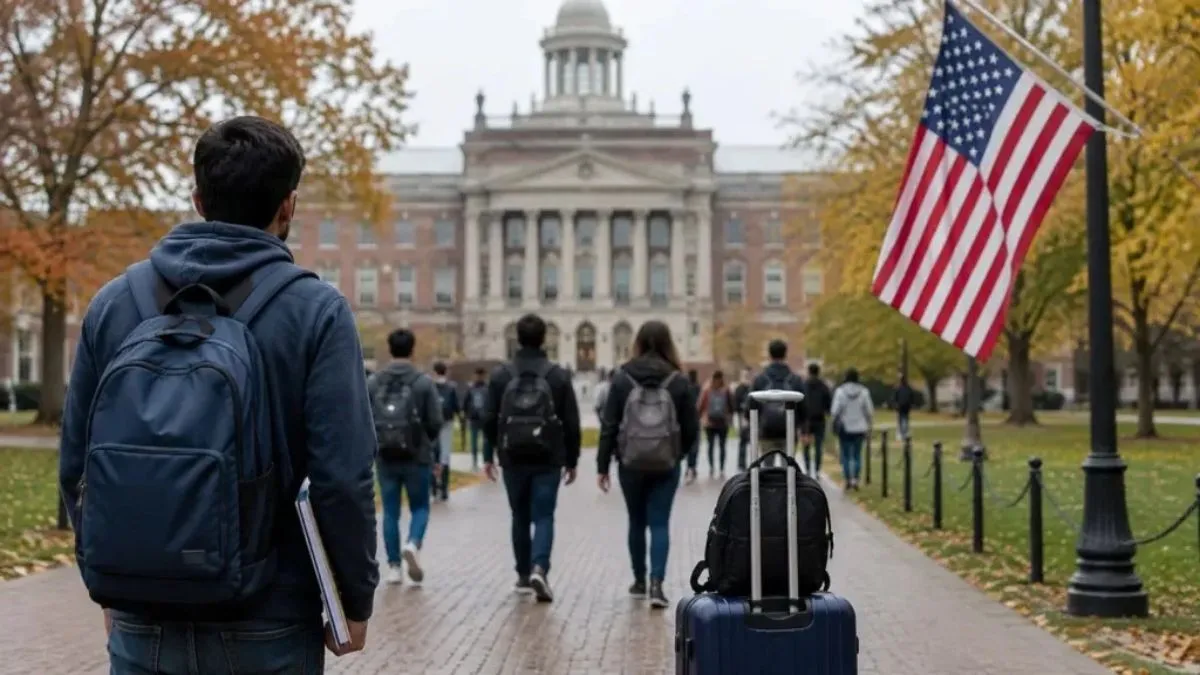
- Midterm elections influence H-1B, Green Card, F-1 visa policies.
- Authority over immigration divided among Congress, President, agencies.
- Congressional control could impact legislation, not automatically change rules.
The midterm elections could influence the future of immigration policies affecting thousands of Indians who want to work, study or settle permanently in the United States. From H-1B work visas and employment-based green cards to F-1 student visas, the election outcome could shape the political debate over immigration during the remaining two years of President Donald Trump's term.
But who really controls America's immigration system? Is it Congress, the President or federal immigration agencies?
The answer is that authority is divided among all three. Congress makes immigration laws, sets statutory visa limits and controls federal spending. The President oversees the executive branch, while agencies such as the Department of Homeland Security (DHS) and US Citizenship and Immigration Services (USCIS) administer immigration programmes within the limits of existing law.
Today's elections will determine the political balance in the US House of Representatives and Senate. The results could affect immigration legislation, congressional oversight and funding priorities, but they will not automatically change existing visa rules.
H-1B Visas: Who Controls The Rules For Indian Professionals?
The H-1B programme is one of the most important routes for Indian professionals seeking employment in the United States, particularly in the technology sector. Congress determines the programme's legal framework, including its annual numerical limits and eligibility requirements.
Recommended For You
Under the existing system, the regular annual H-1B cap is 65,000 visas. An additional 20,000 places are available for eligible applicants with a master's degree or higher from a US institution of higher education. Congress can change these limits or modify eligibility requirements through legislation.
However, the administration also has considerable influence over how the programme operates. DHS and USCIS oversee petition processing, regulatory requirements and employer compliance.
This means the President's administration can make certain changes through regulations and administrative decisions, provided they remain within existing law.
For Indian professionals, a change in congressional control could influence future immigration legislation and scrutiny of H-1B policies. However, neither party can automatically increase or reduce the visa cap simply by winning the midterm elections.
Green Cards: Can Congress Reduce The Indian Backlog?
The employment-based green card backlog is among the biggest immigration concerns for Indian professionals working in America.
The US immigration system has annual limits on employment-based immigrant visas, alongside a general seven per cent per-country limit. These restrictions, combined with high demand from Indian applicants, have contributed to lengthy waiting periods in several employment-based categories.
Congress has the authority to change the statutory limits, revise country-based allocation rules or introduce legislation to address the backlog.
However, any major legislative reform would need to pass both the House and Senate and receive presidential approval.
The administration, meanwhile, can influence application processing and visa allocation within the existing legal framework.
A change in congressional control could therefore reopen discussions about green card reform. But it would not automatically clear pending applications or shorten the waiting period for Indian applicants.
F-1 Student Visas: What Is the Latest Position?
Student visas are another major concern for Indians planning to pursue higher education in the United States. The F-1 visa programme operates under federal immigration law, while DHS and its agencies administer rules governing student status and certain employment-related arrangements.
One significant development concerns the proposed change to the Duration of Status system.
In July 2026, DHS issued a final rule seeking to replace the existing Duration of Status framework with fixed admission periods for F-1 and J-1 students.
The change was scheduled to take effect on September 15, 2026. However, there was an important development just one day before its scheduled implementation.
On September 14, 2026, the US District Court for the District of Massachusetts issued an order pausing the rule's effective date while legal proceedings continue.
As a result, the proposed fixed-period admission system did not take effect on September 15. The existing Duration of Status framework remains in place for F-1 and J-1 students.
This is particularly important for Indian students because their plans often involve moving from F-1 student status to Optional Practical Training (OPT), STEM OPT and eventually H-1B employment.
The future of the proposed rule will depend on further legal proceedings and any subsequent government action.
Congress can also introduce legislation to change student visa laws or scrutinise the administration's policies. However, the midterm election itself will not automatically change F-1 visa requirements.
Immigration Enforcement: Can Congress Challenge Trump's Policies?
Immigration enforcement is another area where the midterm results could have consequences. Congress controls federal spending and can influence the budgets of agencies such as Immigration and Customs Enforcement (ICE), USCIS and DHS.
Lawmakers also have the authority to conduct investigations, organise congressional hearings and question administration officials about deportations, detention policies and immigration enforcement.
If Democrats gain control of one or both chambers, they could increase scrutiny of Trump's immigration policies and challenge certain funding priorities.
However, the President and executive branch retain significant authority over immigration enforcement and the implementation of existing laws.
A change in congressional control would not automatically stop deportations or reverse the administration's enforcement policies.
(With inputs from agencies)