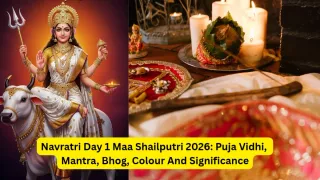
The first day of Navratri is dedicated to Maa Shailputri. This day marks the beginning of the nine devi days with the sacred Ghatasthapana ritual. On this day, devotees traditionally observe a fast and worship the goddess by offering pure ghee, cow milk, and white flowers to seek inner peace and strengthen their weak Moon.
Here is everything you need to know about day 1 of Navratri, including the significance of Goddess Shailputri, bhog, Mantra, colour and even puja rituals.
Day 1 Navratri: Maa Shailputri Puja Tithi, Date, Colour And Auspicious Timings
The first day of Navratri includes two important events: Ghatsthapana (Kalash ritual) and Maa Shailputri Puja. According to Drik Panchang, the date, tithi and timings are :
Maa Shailputri Puja Date: October 11, 2026
Pratipada Tithi Begins - 09:19 PM on Oct 10, 2026
Pratipada Tithi Ends - 09:30 PM on Oct 11, 2026
Ghatasthapana Muhurat - 06:19 AM to 10:12 AM, Sunday, Oct11, 2026
First Day Colour- Orange
Note: These timings are based on the Panchang of New Delhi. Check your local Panchang calendar, as timings vary with sunset and sunrise timings.
The first day of Navratri is dedicated to Maa Shailputri (Image: Instagram/spiritualsouls)
Who Is Maa Shailputri And Why Is Day 1 Of Navratri Dedicated To Her?
Maa Shailputri is a form of Goddess Durga who is worshipped on the first day of Navratri. The name Shailputri means 'daughter of the mountains'. She represents strength, purity, and unwavering devotion.
She is also often associated with the Muladhara (Root) Chakra, the energy centre that is connected with stability, security, and grounding. In yogic philosophy, the journey of inner growth begins here.
It means before celebration, preparation is needed; before victory, there is perseverance. Similarly, before understanding the quality of courage, wisdom, and fulfilment, one must learn to stand firm like the mountains.
Puja Rituals For The First Day Of Navratri
Devotees honour the Goddess by performing a special ritual, Ghatsthapana, which marks the beginning of Navratri Puja. Here is a step-by-step guide to perform the puja:
- Before beginning the puja vidhi, cleanse yourself and the puja space.
- Then install a kalash filled with gangajal, betel nut, durva grass, rice and coins.
- Then cover the kalash with five mango leaves and a coconut wrapped in red cloth.
- Invoke Maa Shailputri while chanting her mantra or beej mantra.
- Light a ghee diya and offer dhoop, kumkum, and sweets to the goddess.
- Recite the Maa Shailputri katha, Vrat katha or Navratri katha to complete the ritual.
What Should You Avoid During Maa Shailputri Puja?
Here are a few things one must avoid during Maa Shailputri Puja:
- Avoid doing the kalash sthapana at the wrong time.
- Never make offerings without paying attention or just to finish the ritual.
- Never offer old flowers or stale food to the Goddess.
- If you are fasting during Navratri, do not break the fast at the wrong time.
ALSO READ: Navratri Akhand Jyot: Know The Right Direction, Rules And Spiritual Significance
Mantra For The First Day Of Navratri
On this day, chanting the Goddess Shailputri mantra can help devotees connect spiritually with her.
The main mantra is:
Om Devi Shailputryai Namah
This mantra is believed to bring strength and divine protection.
Maa Shailputri Prarthana
Vande Vanchhitalabhaya Chandrardhakritashekharam
Vrisharudham Shuladharam Shailaputrim Yashasvinim
Devotees can also recite a prayer during Day 1 worship according to their tradition.
Maa Shailputri Bhog: What Should You Offer?
Traditionally, pure desi ghee is considered the most important bhog for Maa Shailputri. Offering ghee is believed to bring the blessings of good health and vitality in devotees' lives.
Here are some offerings that can be offered to the goddess:
Bhog | Significance |
Pure Desi Ghee | The traditional offering for Day 1, symbolising nourishment, purity, and well-being. |
Milk | Represents simplicity, peace, and freshness. |
Milk-based Sweets | Offerings such as peda, barfi, or kheer are commonly prepared. |
Seasonal Fruits | A natural and sattvic offering expressing gratitude for nature's abundance. |
Makhana (Fox Nuts) | Often included in Navratri bhog and fasting meals. |
Mishri (Rock Sugar) | Symbolises sweetness and auspicious beginnings. |
ALSO READ: What To Keep In A Navratri Kalash And The Sacred Meaning Behind Each Item
It is important to remember that no matter how different traditions may be, the importance of Day 1 of the festival remains the same: a new beginning, full of belief, appreciation, and hope for the coming days.
FAQs
1. Which bhog is associated with Maa Shailputri?
Desi ghee is the customary first-day offering. Use food-grade ingredients for edible prasad and respect your family’s practice.
2. Can I worship without keeping a fast?
Yes. Prayer, aarti, service and thoughtful conduct are meaningful ways to observe the day without food restrictions.