

Kalash Sthapana, also known as Ghatasthapana, is the establishment of a sacred pot on the first day of Navratri, bringing divine energy into the puja. Kalash acts as the seat of the deities and the cosmic waters.
According to Drik Panchang, the shubh muhurat for Kalash Sthapana is 6:19 AM to 10:12 AM in New Delhi, with an Abhijit Muhurat of 11:44 AM to 12:31 PM. The muhurat timings may vary, so check your local Panchang to know.
Essential Navratri Items Checklist
Essential items
- Clean, uncracked Kalash (clay, copper or brass, per your tradition)
- Clean water
- Whole unpeeled coconut
- Mango or Betel leaves
- Moli and red cloth
- Wide earthen pot or tray, clean soil, barley seeds
Commonly used items
- Gangajal, supari, a coin, akshat, durva, fragrance
- Flowers, roli or kumkum
- Diya with ghee or oil, incense, camphor
The Spiritual Significance Of Each Item Used In Kalash
Offering / Item | Symbolism & Significance |
Water (Ganga Jal) | Represents purity and life force (prana). |
Sikka (Coin) | Represents prosperity and wealth. |
Supari (Betel Nut) | Removes ego and vanity. |
Akshat (Rice) | Symbolises peace and abundance. |
Durva (Grass) | Represents durability and strength. |
Moli / Kalawa | Represents protection and devotion. |
Fragrance | An offering of devotion to the Devi. |
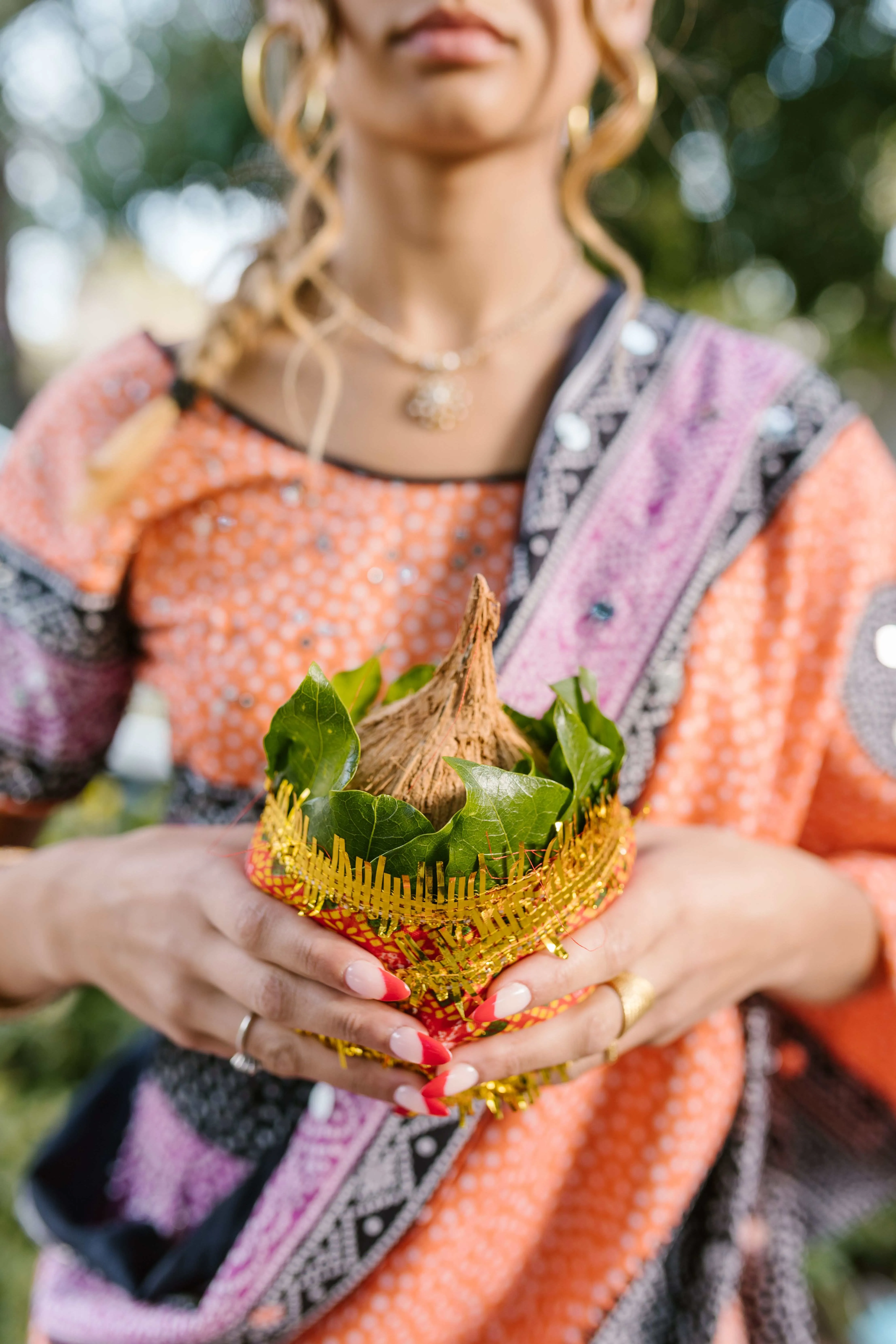
Kalash is usually filled with clean water or Gangajal along with a supari, a coin, and akshat (Image: Pexels)
What To Keep Inside The Navratri Kalash
Traditionally, a Navratri Kalash made of clay, copper, or brass is used. It is usually filled with clean water or Gangajal along with a supari (betel nut), a coin, akshat (unbroken rice), a few durva blades and a drop of fragrance.
Moli is tied around its neck, and mango or betel leaves and a coconut on top, along with soil and barley seeds.
What Goes On Top Of The Kalash?
1. Mango Or Betel Leaves: Fresh leaves are placed around the mouth of the Kalash. Traditionally, people use five leaves. However, the number can vary. These leaves represent freshness and growth.
2. Coconut: A whole and unpeeled coconut with its husk and tuft is commonly used and placed upright on top of the Kalash. It is often seen as a symbol of abundance and offering.
3. Red Cloth Or Chunri: The coconut is wrapped in red cloth and tied with moli. In the worship of the Goddess, red is associated with Shakti and auspiciousness.
ALSO READ: Why Is the Kalash Essential In Hindu Puja? Know The Religious And Scientific Significance
What Goes Under The Kalash?
Beneath the Kalash sits a wide earthen pot or tray of clean soil in which barley is sown. Some households even sow sapta dhanya (seven grains) instead of only barley.
Barley is traditionally regarded as one of the earliest grains, and sowing it symbolises new beginnings, growth and abundance.
Note: The list of items can vary depending upon your family traditions.
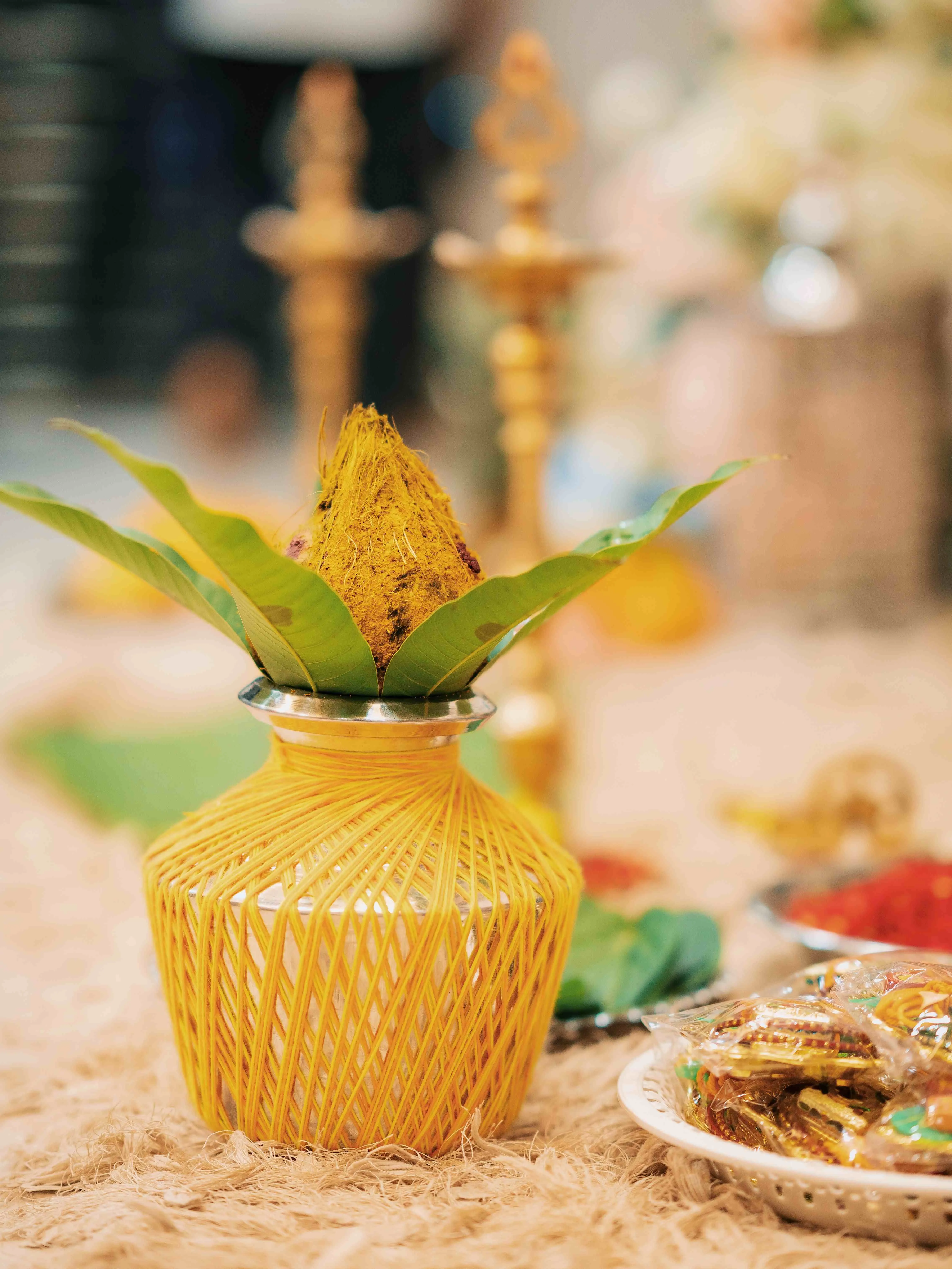
Beneath the Kalash sits a wide earthen pot or tray of clean soil in which barley is sown (Image: Pexels)
Step-by-Step: Kalash Sthapana Vidhi
1. Clean the puja space and lay a red cloth. Over it, place a wide clay pot with soil and sow barley seeds, then set the kalash upon it. Some families even prepare a small heap of rice as the base for the kalash.
2. Fill the Kalash with gangajal and add the commonly used items: supari, coin, akshat, durva, and fragrance in it.
3. Then place five or seven mango or betel leaves at the mouth of the kalash.
4. Wrap a coconut in a red cloth and set it firmly on top of the leaves, forming the crown of the kalash.
5. Then apply tilak of roli and kumkum to the kalash, offer flowers and akshat, and invoke the deities using a mantra into the pot.
Common Mistakes To Avoid During Kalash Sthapana
- Never use a broken, cracked or chipped kalash for puja.
- Always set the Kalash during an auspicious muhurat.
- Do not move or empty the kalash until the ritual concludes.
These are a few items that need to be placed in the Kalash when setting it up for Navratri.
FAQs
1. Should Kalash water be changed during Navratri?
Most households do not change it. If the level falls, top up gently with clean water.
2. Can the Kalash be moved after Sthapana?
The common practice is to leave it in place. If it must be moved, lift it gently with both hands.