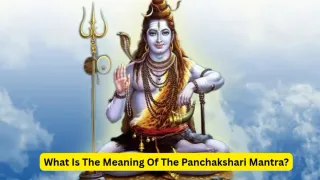
The Panchakshari Mantra, 'Namah Shivaya', is a sacred five-syllable Vedic chant dedicated to Lord Shiva. When Om is added, it is called the Shadakshari Mantra. It comes from the Sri Rudram hymn found in the Taittiriya Samhita of the Krishna Yajurveda, which literally means 'I bow to Lord Shiva'.
The mantra also represents the five main elements of creation and is often used as a psychological tool to purify the mind and attain spiritual liberation (Moksha).
Let's understand the meaning behind the five-syllable mantra and its significance.
What Do the Five Syllables Mean?
The term Panchakshari comes from two Sanskrit words: Pancha meaning five and Akshari meaning syllable. Each of the five syllables represents the five cosmic elements (pancmabhuta) and a dimension of existence:
Syllable | Symbolism | Cosmic Element | Spiritual Significance |
Na | Concealing Grace (Tirobhava) | Earth (Prithvi) | Grounding, stability, and purification. |
Ma | Creation (Srishti) | Water (Jala) | Represents the mind, flow, and emotion. |
Shi | Destruction / Transformation (Samhara) | Fire (Agni) | Burns away ego, ignorance, and illusion. |
Va | Revealing Grace (Anugraha) | Air (Vayu) | Represents the life force (Prana) and divine grace. |
Ya | Liberation (Moksha) | Ether / Space (Akasha) | Represents ultimate consciousness and supreme bliss. |
ALSO READ: Why Is Shri Suktam Recited During Lakshmi Puja?
Spiritual And Philosophical Significance Of Panchakshari Mantra
Tamil Shaiva text Thiruvakkam explains the deep and positive significance of the Panchakshari mantra.
1. The Panchakshari Mantra is considered a seed for the sound structure. According to the Shiva Purana, the sound vibrations of each syllable align with the practitioner's body, helping them to connect with the divine and their own consciousness
2. In Shaiva Siddhanta philosophy, the mantra represents the five actions of the supreme deity: creation, preservation, dissolution, truth and liberation. Chanting the mantra is believed to help the seeker break the cycle of death and rebirth and attain moksha.
3. Unlike several Vedic mantras that require initiation (Deeksha), traditional scriptures state that the Panchakshari Mantra is universal. The mantra can be used anywhere and by anyone regardless of background.
The Panchakshari Mantra is dedicated to Lord Shiva (Image: Facebook/lodshivamahadev)
Panchakshari Mantra vs. Shadakshari Mantra: What's The Difference?
Sometimes practitioners get confused between these two mantras:
Mantra Name | Mantra | Syllables | Key Addition | Meaning |
Panchakshari Mantra | Namah Shivaya | 5 Syllables | — | Focuses on the elemental world and devotion. |
Shadakshari Mantra | Om Namah Shivaya | 6 Syllables | Adds Om (Pranava) | Introduces the infinite reality behind creation. |
Benefits Of Reciting The Panchakshari Mantra
Here are five spiritual benefits of chanting the Panchakshari Mantra:
1. It helps to purify the thoughts and actions.
2. Helps to remove obstacles and delays.
3. Promote spiritual growth
4. Helps devotees to be free from the cycle of birth and death. Thus attaining moksha (liberation).
5. Brings stability and prosperity in life.
ALSO READ: What Is The Meaning Of The Baglamukhi Beej Mantra And Why Is It Chanted?
Thus, chanting the Panchakshari Mantra with devotion and the right intention, one can bring significant changes in life.
FAQs
1. Who can recite Panchakshari Mantra?
Everyone. The Panchakshari mantra carries no restriction by gender, age, caste or background. Women, children, and elders can all recite it.
2. Does the Panchakshari mantra require initiation?
It requires no initiation, priest or ceremony to begin.
3. How many times should Om Namah Shivaya be recited daily?
108 times at least is the standard daily practice. When time is short, 11 or 21 repetitions sustained daily are worth far more than 108 attempted twice a week.