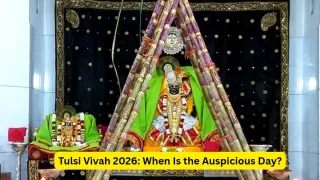
Tulsi Vivah will be observed on 21st November, on Kartik Shukla Dwadashi. On this day, the sacred holy basil (Tulsi) plant is married to Lord Vishnu in his Shaligram form.
This auspicious ritual symbolises the end of the four-month Chaturmas period and the start of the annual Hindu wedding season.
Families who don't have a daughter of their own perform Tulsi kanyadaan, giving the plant away as a bride, and earn the same benefits believed to come from a daughter's marriage.
Tulsi Vivah 2026: Date And Auspicious Timings (Shubh Muhurat)
Tulsi Vivah is traditionally observed on the Kartik Shukla Ekadashi or Kartik Shukla Dwadashi.
Event | Details And Timings |
Tulsi Vivah 2026 Date | Saturday, November 21, 2026 |
Dwadashi Tithi Begins | 06:31 AM on Nov 21, 2026 |
Dwadashi Tithi Ends | 04:56 AM on Nov 22, 2026 |
Abhijit Muhurat (Auspicious Window) | 11:46 AM to 12:28 PM on Nov 21, 2026 |
Vijay Muhurat | 01:53 PM to 02:35 PM on Nov 21, 2026 |
Significance Of Tulsi Vivah
According to Padma Purana, Goddess Tulsi is the incarnation of Vrinda, the wife of a demon named Jalandhar and an ardent devotee of Lord Vishnu. When Lord Vishnu tricked her to defeat Jalandhar, she cursed him, turning Lord Vishnu into Shaligram.
Pleased by her devotion, Lord Vishnu blessed her in return and told her that she would be born as a Tulsi plant, worshipped in every home, and he promised to marry her each year in that form.
Tulsi Vivah thus marks the start of the Hindu wedding season. It is believed that those who perform Tulsi Vivah earn the spiritual merit equal to performing Kanyadaan. Praying to Goddess Tulsi and Lord Shaligram brings harmony, happiness, and prosperity to married life.
Praying to Goddess Tulsi and Lord Shaligram brings harmony and happiness to married life (Image: Pexels)
ALSO READ: Devuthani Ekadashi 2026: November 20 or 21? Know Exact Date, Shubh Muhurat And Puja Vidhi
Tulsi Vivah Samagri List
Before beginning the ritual, gather the following items:
For Tulsi Plant:
- A healthy Tulsi plant in a decorated pot
- red chunri (scarf)
- turmeric paste
- vermillion (sindoor)
- bindi
- glass bangles
- saree/cloth
- seasonal flowers.
For Lord Shaligram:
- Lord Shaligram stone or a Vishnu idol/picture
- yellow cloth (Pitambar)
- sacred thread (Janeu)
- sandal paste (Chandan).
For Puja Setup:
- Sugarcane stalks (to build the mandap)
- tamarind, amla (Indian gooseberry)
- incense sticks
- brass lamp (diya) with ghee
- sweets/kheer for bhog
- holy water (Ganga jal).
ALSO READ: Why Is Tulsi Mala Sacred In Hinduism? Meaning, Rules And Benefits
Step-By-Step Tulsi Vivah Puja Vidhi At Home
Here are some steps that you can follow to perform the sacred wedding ritual correctly:
- Clean the puja area thoroughly and then place four sugarcane stalks around the Tulsi plant to create a symbolic mandap.
- Dress the Tulsi plant like a bride with a bright red chunri, bangles, bindi, and fresh flower garlands and apply turmeric and vermillion to its leaves.
- Place the Shaligram stone on a raised wooden platform covered with a clean yellow cloth to the right of the Tulsi plant.
- Offer the sacred thread (janeau) and sandalwood paste to Lord Shaligram.
- Then perform gathbandhan by taking one end of the red Chunri covering Tulsi and tying it gently to the yellow cloth of Lord Shaligram. This symbolises the sacred marital union.
- Light the ghee lamp and incense sticks. Sing the Tulsi Aarti and offer homemade kheer, seasonal fruits, amla, and tamarind as Prasad.
- Shower flower petals and rice on the divine couple while chanting Vishnu mantras.
- Perform four rounds around the mandap to complete the ritual.
FAQs
1. Can we perform Tulsi Vivah on Dwadashi Tithi?
Yes. Tulsi Vivah can be celebrated on either Devutthana Ekadashi or Kartik Dwadashi. Many households perform it on Dwadashi morning depending on family tradition.
2. What should be done with the Tulsi Vivah Prasad?
Distribute the offered Prasad among family members and neighbours after the aarti.
3. Is Tulsi Vivah observed by fast (Vrat)?
Devotees often observe a day-long fast on Devutthana Ekadashi, breaking it only after the Tulsi Vivah rituals and evening Aarti.