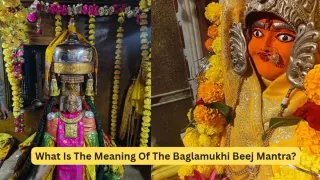
Maa Baglamukhi is the eighth of the ten Mahavidyas (wisdom goddesses) in Shakta Tantra. She is believed to hold the supreme cosmic power of Stambhana (the power to still, freeze, or paralyse negative forces).
Her beej (seed) mantra ‘Hleem’ carries her whole cosmic energy. If you are stuck in your life or facing challenges, this simple beej mantra helps you achieve victory in your conflicts and remove negative energies from your path.
Meaning Of The Baglamukhi Beej Mantra
The Hleem breaks down into its three primal sounds:
1. Ha: Represents Lord Shiva, pure consciousness
2. La: Represents Indra, the physical earth, stability
3. E: Represents Mahamaya, the primordial feminine shakti
4. Bindu (M): Represents the cosmic sound, inner silence
If we combine the meaning of the whole mantra, it translates to 'Salutations to Goddess Baglamukhi, who dissolves hostile energy, immobilises corrupt speech, and helps the mind focus into absolute stillness.
Note: You will see both Hreem and Hleem beej mantras of Baglamukhi. However, the authentic Baglamukhi seed contains the ‘L’ sound, as it represents the paralysing energy (Stambhana).
Maa Baglamukhi is the eighth of the ten Mahavidyas (Image: Pexels)
ALSO READ: Why Is Shri Suktam Recited During Lakshmi Puja?
Why Is the Baglamukhi Beej Mantra Chanted?
Unlike other mantras chanted for deep focus or for calmness, the Baglamukhi beej mantra carries fierce energy.
1. Chanting the Hleem mantra silences the internal battle that an individual is going through, such as self-doubt, panic attacks, and negative thoughts.
2. Traditionally known as Shatru Vinashini, Baglamukhi is used by practitioners when they are stuck in legal battles to silence the enemy if they are using improper techniques.
3. It acts as a psychic shield against jealousy, black magic, toxic workplace sabotage, and ill intentions.
4. Used by some devotees to calm ongoing family conflict or hostility between spouses.
5. Regular chanting of this mantra is believed to provide spiritual growth.
Chanting the Hleem mantra silences the internal battle(Image: Pexels)
Chanting Vidhi: Rules, Timing, And Precautions
Goddess Baglamukhi is also known as Pitambari, the goddess who wears yellow. While chanting her beej mantra, you need to follow certain rules and regulations:
Aspect | When And How To Practice |
Ideal Time | Brahma Muhurta or late evening after sunset |
Direction | North or East |
Asana (Mat) | Yellow cloth or woollen rug |
Attire | Clean yellow clothing |
Mala | Turmeric (Haldi) Mala with 108 beads |
How Many Times | At least 108 times daily for beginners |
Chanting Baglamukhi mantras should always be accompanied by pure ethical thoughts. When chanted with ill intentions, it can bring heavy karmic burdens according to classical Shakta philosophy.
ALSO READ: What Is the Narayan Kavach? Know the Powerful Vishnu Prayer For Protection
If you are performing intense mantra sadhana like Purashcharana of 125,000 chants, formal initiation (Diksha) from a competent Guru is mandatory.
FAQs
1. What if I cannot pronounce the Sanskrit perfectly?
Perfect pronunciation is needed while chanting the mantra. Learn from authentic sources or qualified teachers.
2. Which direction should I face while chanting the Baglamukhi Beej Mantra?
Facing east is generally recommended for daily chanting.
3. How much time will it take to experience the benefits of the mantra?
There is no fixed timeline. The benefits depend on consistency, devotion, discipline, and individual spiritual practice.