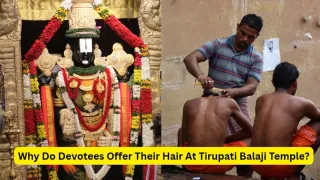
Every single day, thousands of pilgrims climb the sacred seven Hills of Tirumala in Andhra Pradesh, India and shave their heads completely. The ritual, also known as tonsuring or Mokku, is one of the most popular practices.
By donating their hair at Tirumala Venkateswara (Balaji), devotees show deep spiritual surrender and build a deeper connection with the divine.
Let's understand the spiritual and mythological significance of donating hair at Tirupati Balaji.
The Spiritual Meaning Of Donating Hair At Tirupati Balaji
Hair tonsuring carries immense spiritual significance in Vedic culture. Here's why:
1. Destroying The Ego
In Hindu philosophy, hair represents ego, vanity, beauty, attachment and past karmas. Shaving it off and donating it symbolically represents letting go of ego, emotional burdens and desire. By giving up hair, a devotee says: ‘My physical appearance means nothing before the Divine.’
2. Equality And Humility
The most beautiful thing about tonsuring at Tirumala is that whether you are a billionaire CEO, a politician, or a daily-wage labourer, everyone sits on the same tile floors of the Kalyanakatta (tonsuring hall), draped in the same simple cloth, and shaves their heads.
This act dissolves social boundaries and emphasises humility.
3. Fulfilling A Mokku (Sacred Vow)
Devotees frequently make a Mokku, a spiritual pact with the deity. If a child recovers from illness, a family overcomes financial struggle, or completes a major milestone, the family visits Tirumala to tonsure their heads and thank the Lord.
Shaving hair and donating it symbolically represents letting go of ego (Image: Pexels)
ALSO READ: Seeing Yourself Crying In A Dream? Know What It Could Mean Spiritually
Mythological Legend: The Story Of Goddess Neela Devi
The tradition of offering hair at Tirupati appears in the Srinivasa Kalyanam, the celestial lore of Lord Balaji. According to it, when Lord Venkateswara manifested on earth during Kali Yuga, a cowherd struck him on the head, and a small portion of his hair was lost.
A celestial princess, Goddess Neela Devi, noticed this and could not bear to see the Lord’s divine beauty flawed. Without hesitation, she also shaved her own hair to cover the Lord’s scalp using her mystic power.
Moved by her selfless sacrifice, Lord Venkateswara promised that whoever offered their hair to him would receive divine blessings. Since then, offering hair has become a sacred tradition at Tirumala.
The Ritual: What Happens At The Kalyanakatta?
Tirumala Tirupati Devasthanams, the governing body of the temple, manages this. Tonsuring primarily takes place at the massive main Kalyanakatta, which is a multi-story, highly organised complex, alongside several mini-Kalyanakattas spread across the Tirumala hills.
1. Devotees take a token and sit in assigned rows.
2. The hair is completely shaved off while chanting 'Govinda! Govinda!'
3. A soothing paste of sandalwood (Chandan) is applied to the scalp to cool the skin, prevent infection, and signify purity.
4. Then devotees take a ritual bath in the Swami Pushkarini (holy tank) before proceeding for the darshan.
Tonsuring primarily takes place at the massive main Kalyanakatta (Image: Pexels)
What Happens To The Offered Hair?
In Tirupati, nothing goes to waste. The TTD collects, cleans, grades, and auctions the hair globally through official online tenders. Tirupati hair is celebrated worldwide as 'Black Gold' because it is one hundred per cent natural, chemical-free, and untreated.
ALSO READ: These 5 Zodiac Signs Are Not Afraid to Start Their Careers All Over Again
Through auctioning this hair, the temple earns millions of dollars annually. Then this money is used to run free hospitals, medical research facilities, and to fund universities and schools.
FAQs
1. Is hair offering compulsory at Tirupati Balaji Temple?
No. It is a voluntary act of devotion and gratitude, not a strict requirement.
2. What happens to the hair offered at Tirumala?
The hair is collected and auctioned in the international market.
3. Can women also offer their hair at Tirupati?
Yes. Both men and women participate in the ritual, symbolising that everybody is equal in front of the God.