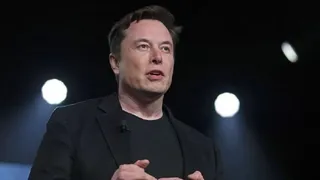
Elon Musk's Starlink is requesting security clearance for a licence to provide satellite internet services in India, and the telecom minister said on Tuesday that it will be granted if all requirements are fulfilled. Since New Delhi decided to distribute spectrum for satellite broadband administratively—Musk's preferred method—instead of through auctions, which rival telecom mogul Mukesh Ambani favoured, Starlink has been pursuing an entry into India.
According to Telecom Minister Jyotiraditya Scindia, Starlink's security clearance necessitates guarantees of secure satellite transmissions and local data storage. "You receive the licence once all the requirements are met. At a function in New Delhi, Scindia stated, "We will be very happy if they [Starlink] do that."
With 14 million wired connections, Ambani's Reliance Jio now dominates the Indian broadband market; obtaining a security clearance would get Starlink closer to Musk's goals. As technology develops, Ambani, who currently has over 479 million Indian telecom consumers, may face competition from Musk's products. Ambani might view Musk's entry as a threat to his broadband, and possibly data and voice, clientele after investing $19 billion in airwave auctions, according to Reuters.
A person with direct information claims that Reliance already has security clearance to begin offering satellite broadband services. According to a different source, Starlink has expressed a desire to comply with all of New Delhi's security specifications.
Even after receiving security clearance, businesses still need to acquire spectrum in order to launch satellite broadband services. Similar to Ambani, who formerly provided free data on his mobile plans, Musk employs aggressive pricing tactics. For instance, Musk disrupted local telecom players by pricing Starlink at $10 per month in Kenya, compared to $120 in the US.