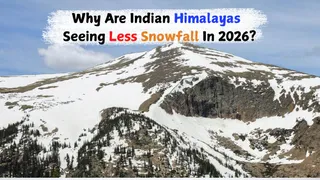
Low Snowfall Reasons in India: In 2026, the Indian Himalayas, especially Uttarakhand and Himachal Pradesh, are seeing much less snowfall than it is expected. Instead of the usual white blanket, the popular hill stations, pilgrimage routes and higher-altitude villages are looking dry and bare. This unusual situation has raised concerns of scientists, locals, tourists and policymakers.
Himalaya’s snow is not just a scenic beauty, but it is very important for the glaciers, rivers, agriculture and water supply for the millions living in the region. Scientists consider a mix of climate change, changing wind patterns and rising temperatures as the cause of the situation, which is highly alarming. To fully understand the seriousness of the situation, it is necessary to understand both the causes and consequences of the less snowfall.
Snow Drought in the Indian Himalayas: What IMD Says?
As of 20 January 2026, the Himalayas are witnessing a historic "snow drought." Uttarakhand and Himachal Pradesh have recorded a deficit of up to 86% in winter precipitation. According to the weather department, the LPA (long period average) rainfall or snowfall of north India, which is from 1971 to 2020, was 184.3 millimetres, which came down drastically in the last five years. Unlike the previous decades, where consistent snowfall started in November, recent years have shown a dwindling trend.
As per the India Meteorological Department's (IMD) forecast, there will be delayed snowfall in the western Himalayas (J&K, Ladakh, Himachal Pradesh, Uttarakhand) from January 22-24, 2026, due to multiple Western Disturbances. This is a cause for concern because natural reservoirs are winter snows, and their absence threatens many ecological risks.
Main Causes Behind Low Snowfall In Indian Himalayas
Here we have mentioned the main causes behind low snowfall in the Indian Himalaya ranges in Uttarakhand, Himachal Pradesh and Jammu and Kashmir. Also, we have discussed what will be the major impact of reduced snowfall in umcoming days;
1. Rising Temperatures Due To Climate Change
Warmer winters are making snowfall turn into rainfall. Small temperature increases are making it harder for snow to form in the mountains.
2. Weak Western Disturbances
Due to fewer and weaker western disturbances in 2026, there is less moisture, resulting in reduced snowfall in Uttarakhand and Himachal Pradesh.
3. Changing Wind And Weather Patterns
Climate change is one of the biggest reasons, as it has brought changes in wind patterns, which decreased the level of moisture movement to the Himalayas, resulting in drier winters.
4. Rapid Urbanisation And Deforestation
Excessive constructions, development and deforestation have disrupted the local climate, affecting the moisture levels and snowfall.
Major Impacts Of Reduced Snowfall
1. Glacier Shrinkage: Due to less snowfall, glaciers are not receiving enough fresh ice. This reduces the amount of water that is held for a longer period of time by accelerating the melting of glaciers.
2. Water Shortage in Rivers: The snow in the Himalayas is essential to the Ganga and Yamuna rivers, among others. During the summer, the rivers flow less because there is less snow.
3. Impact on Agriculture: The farmers depend on getting their irrigation allotted through snowmelt. The low snowfall is a tough situation for crops, especially for apples and other hill produce, thereby affecting local people’s earnings.
4. Tourism and Economy Hit: Every year, the winter peak, skiing, and snow-based travel draw millions of travellers. Inadequate snowfall directly affects the number of people employed by local businesses. Thousands of tourists went to the hill stations on the New Year 2026, but saw no snowfall, as quoted by them.
5. Increased Risk Of Natural Disasters: Because of the unstable soil and slopes, the pattern of dry winters followed by intense rainfall raises the risk of landslides, flash floods, and avalanches.
ALSO READ: Weather Update: IMD Issues Snowfall Alert For J-K, Himachal; Check Forecast For Bihar, UP
Why This Situation Is A Warning Sign
* Less snowfall shows a decline in climate change impacts.
* It highlights the endangered long-term supply of fresh water.
* Not enough snowfall may cause a decline in biodiversity and the most sensitive ecosystems.
* It puts a strain on the lives of millions living in the lower areas.