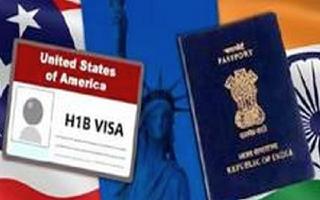
The US Citizenship and and Immigration Services (USCIS) has announced a rule that will increase the premium processing fees across a few categories including the H-1 B visa applications. USCIS has decided to increase the fees by 12 per cent. The new fees will go into effect on February 26, 2024.
The announcement which was reportedly made on December 27 said that premium processing fees have increased for forms I-129, I-140, I-539, and I-765.
All You Need To Know About Revised Fee After Hike:
The fees for the premium processing of Form I-129, which is an application fee for a nonimmigrant worker, such as one on an H-1B visa or an L1 intercompany, have increased by 12 per cent to USD 2,805.
Form I-539, which is used by foreign students, spouses, and dependents of H-1B visa holders to change or extend their non-immigrant status, now has premium processing fees of USD 1,965. Its earlier fee was USD 1,750.
ALSO READ: India Sends Request To Pakistan To Extradite 26/11 Mumbai Terror Attack Mastermind Hafiz Saeed
Meanwhile, the cost of Form 1-765, which is used to request job authorization, has increased from USD 1,500 to USD 1,685, specifically for F-1 students seeking optional practical training (OPT).
The inflation from June 2021 to June 2023 is reflected in the hike. In addition to other USCIS services, it will be used to provide superior processing services and enhance and reply to adjudication.
The USCIS will continue to hike the premium processing fees in the future. It is currently not planning to change the timeframes for cases requesting premium service.
The United States in October this year announced its proposed reforms for the H-1B visa programme while addressing allegations that it has been misused by major tech companies to the detriment of American workers.
An initiative was also taken by the Biden administration to make rules that will simplify eligibility requirements, offer more flexibility to both employers and foreign workers, and combat fraud and abuse within the programme.