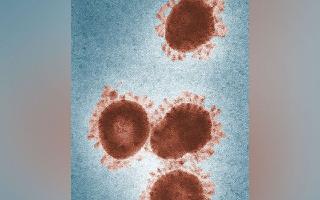
FRENCH scientists have revived a 48,500-year-old zombie virus buried under a frozen lake in Russia to date. With this new discovery, scientists have sparked fears of yet another pandemic, the New York Post reported.
Researchers from Europe analysed ancient samples collected from permafrost in Russia's Siberia and they discovered and characterized 13 new diseases, which they termed "zombie viruses,". Scientists found that viruses to be contagious despite spending many millennia trapped in the frozen ground, Bloomberg reported.
"The situation would be much more disastrous in the case of a plant, animal, or human diseases caused by the revival of an ancient unknown virus," reads the "viral" study, quoted by New York Post.
According to the preliminary report, global warming is irrevocably thawing enormous swathes of permafrost -- permanently frozen ground that covers one-quarter of the Northern Hemisphere. The unsettling result of this has been the release of organic components that have been frozen for up to a million years, including potentially dangerous pathogens.
The thawing of permafrost brought on by atmospheric warming has long been predicted by scientists to accelerate climate change by releasing methane and other previously contained greenhouse gases.
The oldest, Pandoravirus yedoma, was 48,500 years old, a record age for a frozen virus returning to a form where it may infect other creatures. This surpasses the previous record set by the same researchers in 2013, who discovered a 30,000-year-old virus in Siberia.
According to Science Alert, the new strain is one of 13 viruses described in the study, each with its own genome. While the Pandoravirus was discovered at the bottom of a lake in Yukechi Alas, Yakutia, Russia, others have been discovered everywhere from mammoth fur to Siberian wolf intestines.
Scientists discovered that all of the "zombie viruses" have the potential to be infectious and hence pose a "health danger". According to the New York Post, scientists predict that COVID-19-type pandemics may occur more frequently in the future as thawing permafrost awakens dormant viruses like a microbial Captain America.
"It is therefore legitimate to ponder the risk of ancient viral particles remaining infectious and getting back into circulation by the thawing of ancient permafrost layers," they write.