China has listed India’s northeastern state of Arunachal Pradesh among its stated “core interests,” signalling that Beijing views the territory as non-negotiable, according to a Pentagon report submitted to the US Congress. By categorising Arunachal alongside other sensitive disputes, China effectively rules out compromise on the issue.
The report links China’s expanding territorial claims to President Xi Jinping’s goal of achieving the “great rejuvenation of the Chinese nation” by 2049. Under this vision, Chinese leaders have described unification with contested territories, especially Taiwan, as a “natural requirement” for national renewal.
A rejuvenated China, the report says, aims to operate at a higher global level while fielding a “world-class” military capable of “fighting and winning wars,” alongside firmly safeguarding sovereignty, security and development interests.
CCP Sensitivity To Perceived Threats
According to the report, the Chinese Communist Party remains highly sensitive to both internal and external challenges to its authority. To reinforce control, the CCP labels unfriendly political voices in Hong Kong, Xinjiang and Tibet, as well as Taiwan’s political leadership, as separatist elements allegedly influenced by “external forces,” the report notes.
Border Developments Along LAC
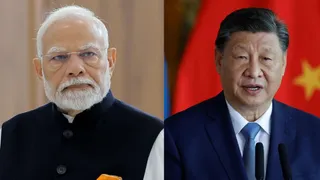
On India-China relations, the Pentagon report highlights developments along the Line of Actual Control (LAC). It notes that in October 2024, India announced an agreement with China to disengage from the remaining standoff sites along the border, shortly before a meeting between President Xi Jinping and PM Modi at the BRICS Summit.
The Xi–Modi meeting marked the start of monthly high-level engagements between the two sides, focusing on border management and steps to stabilise the broader bilateral relationship. These discussions included restoring direct flights, easing visa restrictions, and encouraging exchanges between academics and journalists.
What Is Arunachal Pradesh-China Dispute?
An Indian citizen, Prema Thongdok, was detained for 18 hours during a layover in Shanghai last month after Chinese officials said her passport was invalid because it listed Arunachal Pradesh, claimed by China, as her birthplace. She said officials told her she was not Indian but Chinese, and barred her from continuing her journey to Japan.
China refers to Arunachal Pradesh as “Zangnan” or South Tibet, rejecting the 1914 McMahon Line. It has reinforced its claim by renaming places and disputing maps showing the region as part of India. Tensions flared in 2023 when India pulled out of the Chengdu World University Games over China issuing stapled visas to athletes from Arunachal.