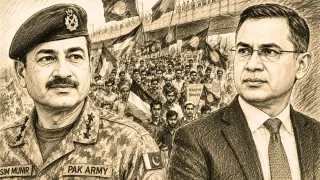
Bangladesh's evolving ties with Pakistan have triggered fresh concerns in India, with Sajeeb Wazed Joy, son and advisor of former Bangladesh Prime Minister Sheikh Hasina, warning that the country could become “another Pakistan” on India’s eastern frontier.
The wild analysis came on August 5 when Wazed, speaking virtually at an event in New Delhi, claimed that foreign intelligence agencies, particularly Pakistan’s Inter-Services Intelligence (ISI), have been allowed greater space in Bangladesh. He also warned that extremist groups could increasingly use Bangladesh as a route into India in the coming years.
"What should concern India most is that Bangladesh has become another Pakistan on India's eastern side. You have another Pakistan today on your eastern front... Al-Qaeda operatives are speaking at public rallies. This is what is happening in Bangladesh, and this does not portend well for India or the world at large,” Joy said virtually.
India has said it is keeping a “close watch” on developments, although the report notes that Indian security agencies have not so far flagged Bangladesh as a terrorism threat. Bangladesh rejected Wazed’s allegations, while Pakistan also denied claims of ISI interference.
Pakistan-Bangladesh Ties Deepen
The concerns come amid a noticeable improvement in relations between Dhaka and Islamabad following Hasina’s ouster in August 2024. Several senior Pakistani military officials have visited Bangladesh, while Bangladeshi military delegations have held meetings with Pakistan’s top military leadership.
ALSO READ: Sheikh Hasina’s Son Blames Pakistan ISI For Bangladesh Turmoil, Hints At Her Return For Elections
The two countries have also revived a direct shipping route between Karachi and Chittagong after decades. Direct commercial flights have resumed as well, while Bangladesh and Pakistan have agreed to facilitate visa-free travel for diplomats and military personnel.
According to experts cited by India Today, these developments point to a significant strategic shift in Bangladesh’s foreign and security policies.
Rising Islamist Influence Raises Questions
Another concern highlighted in the report is the alleged rise of Islamist influence in Bangladesh’s politics and military. Analysts say the country’s relationship with Pakistan has strengthened at the same time as Islamist groups have gained greater political space.
The report also points to changes within Bangladesh’s military, including the creation of new army units named after the first four Islamic Caliphs.
Experts have argued that the growing Islamist footprint could have implications for regional security. However, analysts also stress that Bangladesh remains different from Pakistan, with civilian authorities continuing to exercise political control.
Why Bangladesh Matters To India
For India, the biggest concern is the potential security impact of developments across its eastern border. The two countries share a roughly 4,000-km-long border, making security cooperation and intelligence-sharing particularly important.
Despite political tensions, geography and economic interests continue to bind India and Bangladesh. India remains Bangladesh’s second-largest trading partner and a major source of development assistance. Connectivity, trade and access to affordable healthcare in India are also important to Dhaka.
Experts therefore argue that New Delhi may need a pragmatic approach, addressing its security concerns while continuing to support Bangladesh’s developmental needs. The key question is whether Bangladesh’s growing engagement with Pakistan will become a lasting strategic shift or simply part of Dhaka’s effort to diversify its foreign relations.
(With inputs from agency)
You may also like to watch