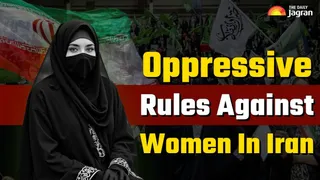
Iran has always faced criticism for imposing strict laws on women. Many human rights groups consider these as violations of basic freedom. Gender-based restrictions are more profound in Iran, which is reflected through compulsory hijab laws, unequal family laws, and harsh punishments for violations. Despite repeated protests, authorities have strengthened these policies rather than bringing reform to them.
The death of 22-year-old Kurdish-Iranian woman Mahsa Amini in September 2022 marked a turning point in the modern history of Iran. It exposed the deep crisis surrounding women’s rights and oppression in the country. The discussion has again emerged following the killing of Supreme Leader Ayatollah Ali Khamenei in recent Israel-US strikes. The videos going viral on the internet show women expressing their happiness and celebrating Khamenei's death.
Oppressive Rules Against Women In Iran
Compulsory Hijab Laws And Discrimination
Since the 1979 Islamic Revolution, Iranian law mandates all women, regardless of religion or nationality, to wear the hijab in public. They are warned, fined, arrested, imprisoned, and even punished if they fail to comply. Moreover, the authorities have established the “Guidance Patrol,” also known as the morality police, to keep a check of modesty laws.
In 2022, Iran's “morality police” arrested Mahsa Amini in Tehran for violating the compulsory hijab law. Her family and witnesses alleged she was beaten in custody. However, authorities denied any wrongdoing. She died in the hospital later. Her death sparked protests across Iran and led to the "Woman, Life, Freedom" movement.
Violence And Abuse By Morality Police; Armita Geravand Case
Several reports over the years depict physical abuse, harassment, and detention of women accused of improper hijab. Armita Geravand's case reflects the harsh moral policing of women. Armita, a 16-year-old girl fell into a coma in 2023 after a confrontation over hijab rules in the metro in Tehran.
Arrest And Harsh Sentences For Activists
Peacefully protesting women are also subjected to severe punishment in Iran. Activists like Yasaman Aryani and Saba Kord Afshari were sent to jail for removing their hijabs in public and encouraging others. In a crackdown that intensified after the 2022 protests, thousands were detained across Iran.
ALSO READ: Iran Allows Stranded Students Land Exit Amid Rising West Asia Tensions; Term Exams Postponed
Inequality In Family And Civil Law
In private life, too, women face deep-seated legal discrimination. For marriage, a woman typically needs her father’s permission. Divorce is particularly harder for women to obtain than for men. A daughter’s share of inheritance is generally half as compared to that of a son. Wives in many cases receive only one-fourth or one-eighth of their husband's assets. In Iran, the legal marriageable age is 13 for girls, which reflects state's priority of traditional family structures over child protection.
Employment and Education Barriers
In Iran, women are often excluded from leadership and specific sectors. Their participation in the labour market is less as compared to men. Women are specially barred from specific professions, like serving as judges.
While Iranian authorities maintain strict stance over several laws, a significant change was observed in February 2026. Ending years of legal restrictions, the Iranian government passed a law officially allowing women to obtain licenses to ride motorcycles. This is significant as women in Iran have long been able to drive cars, but not two-wheelers. The authorities, earlier, refused to issue motorcycle licenses to women based on account of modesty and bylaw regulations.