The new British Prime Minister Liz Truss has selected a cabinet where for the first time a white man will not hold one of the country's four most important ministerial positions. Truss appointed Kwasi Kwarteng whose parents came from Ghana in the 1960s as Britain's first Black finance minister while James Cleverly is the first Black foreign minister.
Cleverly, whose mother hails from Sierra Leone and whose father is white, has in the past spoken about being bullied as a mixed-race child and has said the party needs to do more to attract Black voters.
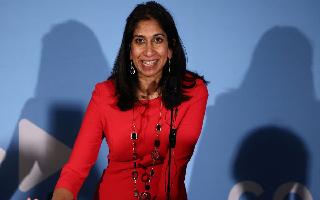
Indian-origin Suella Braverman, whose parents came to Britain from Kenya and Mauritius six decades ago, succeeds Priti Patel as the second ethnic minority home secretary, or interior minister. The mother of two children is the daughter of Hindu Tamil mother Uma and Goan-origin father Christie Fernandes. Braverman will be tasked with projects such as the government's plan to send some asylum seekers to Rwanda, which has faced legal challenges, the BBC reported.
The Cambridge University law graduate married Rael Braverman in 2018 and her maternity leave famously brought about an overdue legal change last year to allow her to remain a Cabinet minister while away to give birth to their second child. Braverman is a Buddhist who attends the London Buddhist Centre regularly and took her oath of office in Parliament on the 'Dhammapada' scripture of Lord Buddha's sayings.
British governments have until a few decades ago been made up of mostly white men. It took until 2002 for Britain to appoint its first ethnic minority cabinet minister when Paul Boateng was appointed chief secretary to the Treasury. Rishi Sunak, whose parents came from India, was Kwarteng's predecessor in the finance job and the runner-up to Truss in the leadership context.
Nevertheless, the Conservatives have the best track record of political firsts among the main political parties, including appointing the first Jewish prime minister in Benjamin Disraeli in 1868. This is despite the fact ethnic minority voters are much more likely to back the opposition Labour party and the ruling party has faced accusations of racism, misogyny and Islamophobia.
(With Agencies Inputs)