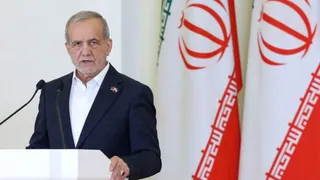
Iranian President Masoud Pezeshkian has submitted an official letter of resignation to the Office of the Supreme Leader, Iran International reported on Sunday. Citing a source familiar with the matter, it referred to an alleged letter addressed to the supreme leader, Mojtaba Khamenei, where Pezeshkian stressed that the president and the government have effectively been excluded from major and vital decision-making processes in the country, and that the vacuum created by this situation has enabled hardline factions within the IRGC to take control of affairs.
Pezeshkian added that under such circumstances, he is unable to run the government and carry out his legal responsibilities, and for that reason, he has requested to step down immediately, according to Iran International report.
IRGC-affiliated news agency refutes resignation reports
However, hours later, the IRGC-affiliated Tasnim News Agency refuted the report and dismissed any letter sent to Khamenei regarding the resignation of the president.
“President Masoud Pezeshkian has not resigned and continues to carry out his duties.. Citing an informed government source, denying an Iran International report that he had sought to step down,” Tasnim reported. Separately, Seyed Mehdi Tabatabaei, deputy head of communications and information at the president's office, dismissed the Iran International report in a post on X and said Pezeshkian would not step back from serving the people, it added.
Is there any rift between Pezeshkian and the IRGC?
It is worth mentioning tensions between Iranian President Masoud Pezeshkian and the Islamic Revolutionary Guard Corps appear rooted in Iran’s dual power structure rather than an open political rupture. Pezeshkian, elected on promises of economic relief and diplomatic engagement, is seen as favoring de-escalation to ease sanctions pressure.
ALSO READ: From Oil Chokepoint To Data Chokepoint: Iran Plans To Tax Subsea Cables Under Strait Of Hormuz
The IRGC, which controls major security and economic networks, traditionally prioritises regional influence and military deterrence. However, Iran’s political system limits presidential authority, with ultimate power resting with Supreme Leader Ali Khamenei. Current signs point to policy friction and institutional competition, not a visible split threatening regime stability.
You may also like to watch