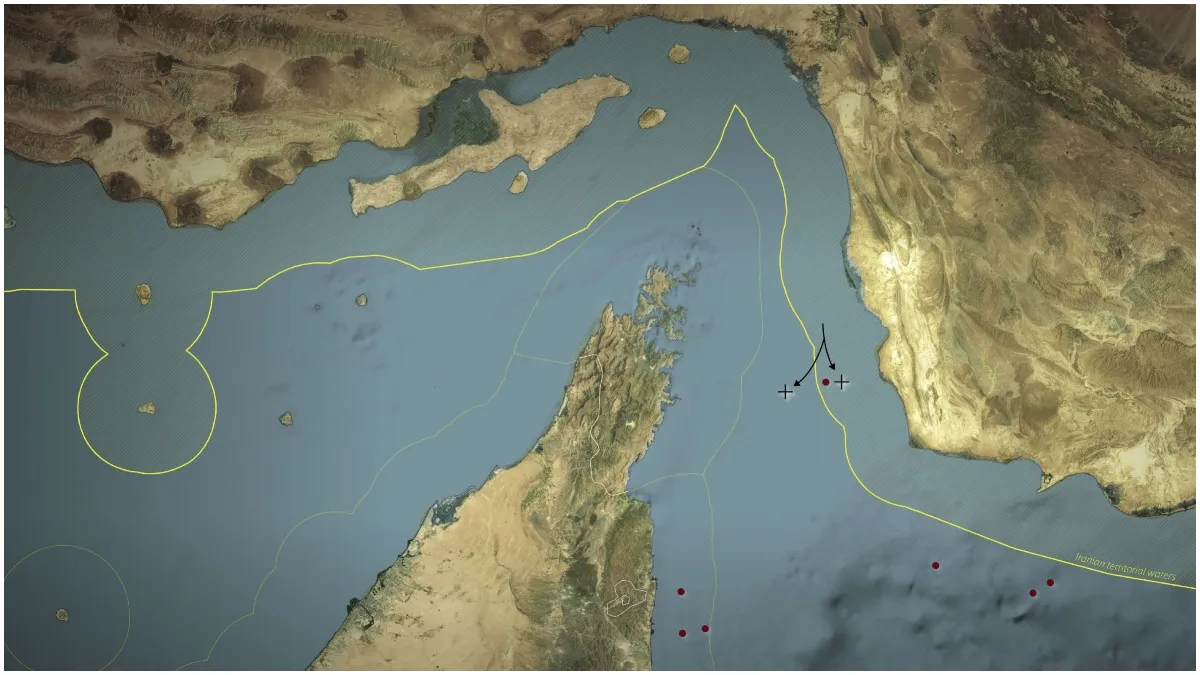
Iran is eyeing a new source of power and revenue from the Strait of Hormuz, weeks after the Islamic regime announced to levy a transit fee on vessel operators. The new source is crucial subsea cables deep beneath the waterways that carry a major financial traffic and internet across Asia, Europe and the Persian Gulf.
Tehran is mulling over the possibility of levying a charge on companies for using and laying subsea internet cables beneath the Strait of Hormuz. According to a CNN report, state-linked media outlets have vaguely threatened to disrupt traffic if the tech firms do not pay.
The report stated that Iranian lawmakers in Tehran discussed a plan last week. The plan emphasised targeting submarine cables linking Arab countries to Europe and Asia.
The state media, linked to Iran’s Islamic Revolutionary Guards Corps (IRGC), said that the plan is to extract revenue from beneath the strait and would require tech majors like Microsoft, Meta, Google, and Amazon, among others, to comply with Iranian law.
Recommended For You
Similarly, the submarine cable companies would also have to pay licensing fees to Tehran for cable passage.
ALSO READ: LPG Tanker Symi, With 20,000 Tonne Fuel Arrives At Gujarat’s Kandla Port After Crossing Hormuz
Exclusive repair, maintenance rights for Iranian firms
One of the important stipulations that Tehran is allegedly planning to include is exclusive rights to Iranian firms for repair and maintenance. However, there are several challenges before the plan can be taken further to become a tangible reality.
One of these challenges is the payment method to be adopted by tech companies as Iran is under strict sanctions of the United States.
Moreover, the Iranian firms engaged in repair and maintenance are unclear of having invested in the cables running through the Iranian waters in the Strait of Hormuz.
ALSO READ: Islamabad Talks Failed? Pakistan Now Heads To Tehran With Another 'Peace Formula'
Worldwide internet connectivity, banking systems at stake
The challenges make Iranian posturing look more like a threat than actual policy-level considerations. However, the veiled threats and warnings of damage to cables could impact some of the trillions of dollars in global data transmission, besides affecting worldwide internet connectivity.
If Iran proceeds with this deep-sea, arterial data revenue plan, it could emerge as another flashpoint between it and the US to worsen already deteriorated conditions in the strait and could hamper financial and communication interests of the world after energy security.