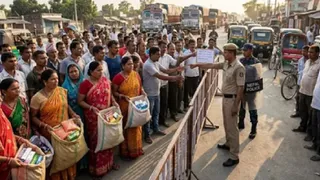
Nepal Excise Duty: The Nepal government may withdraw its decision to charge customs duty on goods worth over NRs 100 from India. The Nepal government's recent move has sparked outrage within the country along the border areas. According to Jagran.com, the new regime is considering taking a U-turn on the controversial tax on Indian goods.
Following the controversial decision, the government faced widespread internal opposition, leading to reports that the government may backtrack. For decades, the open border between India and Nepal has been one of the world's most unique international borders, allowing citizens of both countries to cross freely without visas or passports.
ALSO READ: 'Apologise For The Error': Nepal Airlines Deletes Post Showing Jammu And Kashmir In Pakistan
However, in April 2026, the decades-old arrangement faced a major disruption when the Nepal government, led by Prime Minister Balendra 'Balen' Shah, began strictly enforcing existing customs regulations.
What New Norms Say
After the Nepali New Year in mid-April 2026, the government began strictly enforcing an existing customs regulation. Under this regulation, goods imported from India exceeding the value of 100 Nepali rupees must pay customs duty. Customs duty on these items can be up to 80%, depending on the category of goods. Strict enforcement is being enforced. Reports from border checkpoints indicate that customs officials are even checking small household items. Videos have also surfaced on social media showing packets of potato chips being confiscated.
Madhesis Protest Nepal's Customs Duty
When the law was implemented weeks ago, Madhesi youths held a demonstration in Nepal to protest government's move, prompting several lawmakers from the border areas to demand easing the restrictions.
Why Is Protest Against Excise Duty?
The excise duty has hugely affected life in the Terai, the southern plains of Nepal, bordering India. "Cancel customs duty," "Respect Madhesi people,", "Don't kill the poor people," were the slogans chanted by about 100 placards-carrying youths from the Madhesi communities in Kathmandu's Maitighar Mandala.
"The imposition of tax on small items being brought from across the border by people living in the border area have not only obstructed free movement of people across the border but also damaged our centuries-old relations with the southern neighbour," Kaushal Kumar Singh, president of Other Backward Class (OBC) Federation, Nepal said.
(With Jagran.com/PTI inputs)
You May Also Like To Watch