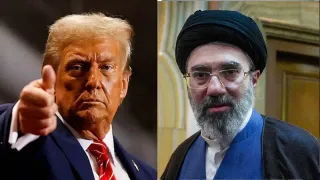
Amid US-Iran tensions, Iran’s Supreme Leader Mojtaba Khamenei made fresh remarks indirectly targeting the US on Monday, saying “enemy forces" would soon be driven out of the Arabian Sea, while claiming that “aggressive powers" were seeking an end to the ongoing war.
The remarks came as Iran marked the anniversary of the Iran-Iraq War and the death anniversary of Hezbollah leader Hassan Nasrallah, who was killed in 2024.
“In the early days of the attacks by the extensions of the ‘System of Domination’, our country had inherited from the former regime virtually empty hands when it came to defending itself against numerous threats," Khamenei said.
He claimed that since then Iran had strengthened its military capabilities, arguing that “aggressive powers" were now seeking protection from Iranian attacks and calling for an end to the conflict.
“Through the establishment of truth and divine assistance, the country has now reached a point where the very aggressive powers themselves--not merely their proxies--seek shelter from attacks by the Islamic Republic’s fighters and plead for an end to the war".
Khamenei also claimed that Iranian forces had pushed the “enemy" away from waters off southern Iran and towards the Arabian Sea.
“Having suffered painful blows from our valiant combatants and the guardians of the Strait of Hormuz, they [the enemy] dare not venture beyond the Arabian Sea," he said.
You May Also Like To Watch
“Whenever they have risked doing so they have only inflicted harm upon themselves, and the time is fast approaching when the Arabian Sea, too, will be cleared of their presence," he added.
ALSO READ: Trump Rejects Iran's 7-Day Truce Offer To Reopen Hormuz; Will Bombings Resume After Nov Midterms?
The Supreme Leader further claimed that different sections of Iranian society, despite their differences, remained united in defending what they consider to be their rightful positions, including maintaining control over the strategically important Strait of Hormuz.