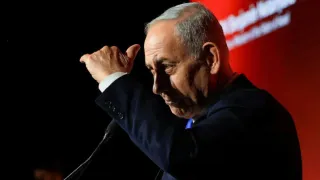
Israel Elections 2026 Explainer: As Israel prepares for its parliamentary elections on Tuesday, October 27, one feature of its political system stands out-- voters do not directly elect the prime minister. Instead, they vote for political parties, and the country’s next leader is determined through parliamentary negotiations and the formation of a governing coalition.
The upcoming election will determine the composition of Israel's 26th Knesset, the country's 120-member parliament. Prime Minister Benjamin Netanyahu is seeking another term amid public scrutiny over security failures surrounding the October 7, 2023, Hamas attack and the subsequent conflicts involving Gaza, Lebanon and Iran.
What makes Israeli elections different: Vote for political parties, not prime ministerial candidates
Unlike countries where voters directly choose their president or prime minister, Israel follows a parliamentary system based on proportional representation. On election day, voters select a political party or electoral list rather than an individual candidate. The votes received nationwide determine how many seats each qualifying party secures in the Knesset.
Israel operates as a single nationwide electoral constituency, meaning voters do not elect separate representatives from individual geographical constituencies. Instead, parties submit candidate lists in a predetermined order, and candidates enter parliament according to the number of seats their party wins.
To qualify for representation, a party must receive at least 3.25 per cent of the valid votes cast nationwide. Parties that cross this threshold receive parliamentary seats broadly in proportion to their share of the vote.
Why winning the most seats does not guarantee power
A party emerging as the largest in the election does not automatically get to form the government. Israel's parliament has 120 seats, and a government generally needs the support of at least 61 lawmakers to command a majority. Because political support is divided among several parties, forming a coalition is usually essential.
After the results are announced, parties begin negotiations to identify potential partners. These discussions often involve agreements on government policies, ministerial positions, security priorities, economic measures and other political commitments.
A party with fewer seats can therefore play a decisive role if it helps another political bloc secure the parliamentary majority required to govern.
This makes coalition negotiations a crucial part of Israel’s election process, sometimes determining the outcome even after voters have cast their ballots.
How Israel selects its Prime Minister
The process of forming a government begins after the election results are officially published. Israel's president consults representatives of the elected parliamentary factions to assess which lawmaker has the strongest chance of assembling a government that can win the Knesset's confidence.
ALSO READ: Is US Preparing To Strike Iran Again? Hegseth's Israel Visit Puts Tehran In Focus
The president then assigns a member of parliament the task of forming the government. Although the leader of the largest party is often selected, this is not an automatic entitlement.
The lawmaker receiving the mandate normally has 28 days to negotiate with other parties and put together a coalition. The president may grant an extension of up to 14 additional days.
Once a proposed government is assembled, the candidate presents its composition and policy programme to the Knesset. If the government receives a vote of confidence, the candidate becomes prime minister and takes office.
If the initial candidate fails, the process can move to another lawmaker. Continued failure to form a government can eventually lead to the dissolution of parliament and another election.
Netanyahu faces a crucial electoral test
The October 27 election is being closely watched because Netanyahu, Israel’s longest-serving prime minister, is seeking to remain in power following years of conflict and political controversy.
His government’s handling of the October 7 attack, subsequent military operations and national security policy are among the major issues shaping the campaign.
The opposition is attempting to secure enough parliamentary support to replace Netanyahu’s coalition. However, the final outcome will depend not only on which party wins the most seats but also on whether rival political groups can agree on a viable governing arrangement.
Arab political parties and smaller religious or centrist factions could also influence coalition calculations, particularly if neither major political bloc secures a clear majority.
Consequently, the election result alone may not immediately reveal who will become the next prime minister. The decisive stage could come during negotiations between parties after the votes are counted.
(With inputs from Reuters)
You may also like to watch