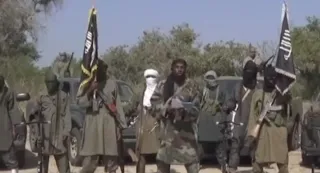
Artificial intelligence is increasingly being used beyond everyday tasks such as answering questions and generating content. A University of Cambridge study has found that members of Boko Haram and allied groups used AI tools in connection with military operations, weapons development, attack planning and battlefield decision-making.
The research, based on interviews with 27 former members of two Boko Haram factions, the Islamic State West Africa Province (ISWAP) and Jamaat Ahl as-Sunnah lid-Da'wah wal-Jihad (JAS), documented the reported use of several major AI chatbots, including ChatGPT, Gemini, Claude, Grok, Meta AI and DeepSeek, according to Al Jazeera.
AI Training Conducted For Terror Group Members
The study found that AI use was not limited to individual members. In areas controlled by ISWAP, senior commanders and other members reportedly attended dedicated training sessions on using the technology.
The sessions were conducted in rooms equipped with laptops and projectors. According to the report, participants were taught ways to get around security restrictions and filters built into AI chatbots. Trainers also reportedly provided subscriptions to AI platforms and encrypted laptops.
Dedicated AI Units Reportedly Set Up
The groups also established dedicated AI units involving engineers and weapons specialists, according to the research.
A former JAS commander told researchers that one such unit had 23 members and operated from a room with its own power supply.
The study said members used AI tools for weapons-related tasks and to modify commercially available drones for use in attacks.
‘Just Ask Grok’: AI Used During Combat
The reported use of AI also extended to frontline operations. In one case cited in the study, footage from a chest-mounted camera worn by a fighter was sent back to the group's base. A commander reportedly uploaded the footage to ChatGPT, which was then used to analyse the situation before new instructions were relayed to fighters.
AI was also reportedly consulted when members encountered unfamiliar weapons. In one account, commanders asked how a newly acquired firearm could be operated, with the response from an AI specialist being, “Just ask Grok,” referring to Elon Musk's AI chatbot.
The study also documented broader use of AI for weapons-related queries. A former Boko Haram commander said, “[Ask] how can I build a bomb?” and then it tells you how,” adding, “It is like a human robot. We used it a lot.”
Another former member said, “God has helped us, and so will AI.”
AI Used To Analyse Failed Operations
The use of AI reportedly continued even after operations had ended.
According to the study, members uploaded footage and other details from failed missions to AI systems and asked the tools to analyse what had gone wrong. The feedback was then used to consider changes to tactics and strategies for subsequent operations.
One former ISWAP fighter also described commanders consulting AI after an operation in which the group suffered heavy losses, seeking to determine whether smaller, more coordinated groups could be more effective.
AI Consulted To Overcome Battlefield Obstacles
Another former commander described fighters turning to AI after trenches were dug around bases to prevent motorcycle attacks.
According to his account, fighters had seen motorcycles jumping obstacles in films and consulted AI while attempting to replicate the idea. He claimed that 18 fighters died during repeated attempts before eight eventually succeeded and later crossed the trenches during an attack after consulting AI.
Researchers Warn Of What Comes Next
Cambridge researcher Antonia Julich said the findings are particularly concerning because the data was collected in 2023 and 2024, while AI systems have continued to become more capable.
The research highlights how extremist groups can incorporate widely available AI tools into organised activities, extending their use beyond conventional content generation and information-seeking tasks.
You May Also Like To Watch: