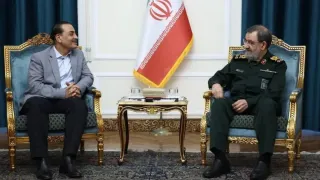
Pakistan Army Chief Field Marshal Asim Munir has reportedly described growing ties between Hindus and Jews as a potential threat to Pakistan and the wider Muslim world, according to Iranian security official Mohsen Rezaei. Rezaei made the claim while discussing a four-nation security meeting involving Pakistan, Iran, Turkey and Saudi Arabia, held in Tehran on October 26. The alleged remarks have brought renewed attention to Islamabad's concerns over strengthening India-Israel relations.
According to reports by Pakistani media outlet 24 News HD, which cited Rezaei's interview with Iranian state broadcaster IRIB, Munir raised concerns about what he described as growing cooperation between Hindus and Jews against Muslims and Pakistan.
What Iran's Mohsen Rezaei claimed
Speaking on Iranian television on October 31, Rezaei discussed the discussions held during the Tehran meeting, attended by senior representatives from the four countries. Pakistan was represented by Munir, while Turkey's intelligence chief Ibrahim Kalin attended on behalf of Ankara. Saudi Arabia was represented by Defence Minister Prince Khalid bin Salman, and Iran by Rezaei.
Recounting Munir's alleged remarks, Rezaei referred to concerns over Israel and said the Pakistani army chief had spoken about the Israeli threat and emerging ties between Hindus and Jews that he believed were directed against Muslims and Pakistan.
Rezaei also said Kalin had expressed strong concerns about Israel. The comments have not been independently verified and remain based on Rezaei's account of the private diplomatic discussions.
Najam Sethi also attributes remarks to Munir
Pakistani journalist Najam Sethi has also discussed the alleged remarks in a programme on his YouTube channel. Referring to Rezaei's account, Sethi said Munir had described the emerging Hindu-Jewish partnership as a major threat to Pakistan. He also suggested that Munir had raised concerns about a broader geopolitical alignment against Muslims and Pakistan.
Sethi's comments add another layer to the claims surrounding the October 26 meeting, although the original account continues to rest primarily on Rezaei's statements.
India-Israel partnership in focus
The remarks come against the backdrop of expanding strategic relations between India and Israel. The two countries have strengthened cooperation in defence, intelligence-sharing, counterterrorism, trade, agriculture, water management and emerging technologies.
During Prime Minister Narendra Modi's February visit to Israel this year, the relationship was elevated to a Special Strategic Partnership. Israel had also publicly supported India's right to defend itself during Operation Sindoor in May last year, following the Pahalgam terror attack.
Israeli Prime Minister Benjamin Netanyahu has separately spoken about developing a broader alliance involving India, Israel, Greece, Cyprus and other partners as part of a proposed regional strategic framework.
Munir's earlier remarks on Hindus and Muslims
Munir has previously made controversial statements highlighting religious and cultural differences between Hindus and Muslims. In April last year, days before the Pahalgam terror attack, he invoked the Two-Nation Theory and argued that the two communities had distinct religious beliefs, traditions, customs and ambitions.
His alleged comments about a Hindu-Jewish alignment, as described by Rezaei, appear to extend that religious and geopolitical framing to India's growing partnership with Israel.
You may also like to watch