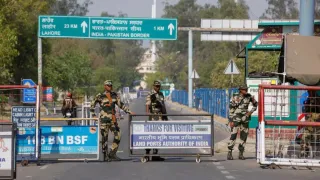
Pakistan has suffered an estimated USD 40 billion in economic losses since trade with India was suspended in 2019 following the Pulwama terror attack and subsequent escalations, the head of a business advocacy group said Monday. Chairman of the Pak-India Business Council Noor Muhammad Qasuri also urged the two neighbouring countries to restore commercial ties, saying it would benefit businesses on both sides and create opportunities for investment, tourism and regional cooperation, PTI reported.
In a statement, Qasuri said the suspension forced Pakistani businesses to import essential raw materials and other goods from distant markets, pushing up transportation and freight costs as well as delivery times. Pakistan's pharmaceutical industry relied on raw materials available in India, he said, adding that its imports from the neighbouring country could generate annual savings of USD 2 billion to USD 3 billion.
ALSO READ: Rs 83,000,000,000,000 And Counting: This Is Pakistan's National Debt Without Foreign Loans
The textile sector, meanwhile, incurred additional costs amid declining domestic cotton production. Textile mills had been forced to source cotton from Brazil, Egypt, China and the United States, resulting in an estimated additional expenditure of USD 5 billion, he added.
Qasuri further said Pakistan was also importing sugar, fertiliser, cement, petroleum products, iron and steel, vegetables and heavy machinery from distant markets despite India's substantial production capacity in these sectors.
The resumption of bilateral trade could lower transportation costs and ensure timely supplies, he said, pointing out that Indian oil refineries were geographically closer to Pakistan, making petroleum imports potentially cheaper and faster.
ALSO READ: Cash-Strapped Pakistan Seeks PKR 2,777,158,050,000 Loan From US After 'Failed' Iran Peace Talks
Indian agricultural and industrial products reduce production
Access to Indian agricultural and industrial products could also help Pakistani businesses reduce production costs, he added. Expressing concern over the shrinking area under cotton cultivation, Qasuri said farmers in traditional cotton-growing regions were increasingly switching to sugarcane, adversely affecting the country's textile industry and wider economy.
He called for improved agricultural policies to revive domestic cotton production. The restoration of trade would benefit businesses on both sides and create opportunities for investment, tourism and regional cooperation, he said. Pakistan could also attract more Indian tourists, particularly those interested in visiting religious and historical sites as well as their ancestral homes and villages, he added.
Citing regional economic cooperation, Qasuri referred to India's financial assistance to Sri Lanka during its economic crisis as an example of how neighbouring countries could support one another in difficult times.
He stressed that political differences should not prevent the two countries from exploring economic opportunities, arguing that outstanding disputes could be addressed through dialogue. "Pakistan and India share historical, cultural and family ties, which could provide a foundation for improved relations," he said.
(With inputs from PTI)
You may also like to watch