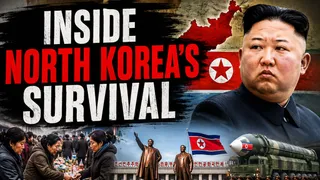
Despite being one of the most isolated countries in the world, North Korea continues to function through a mix of strict government control, limited foreign trade, military power, and underground market activity. While the country often appears completely cut off from the outside world, experts say it survives because it is "isolated", not entirely "disconnected".
So, how does North Korea run if it is isolated?
North Korea’s biggest economic lifeline is neighbouring China, which accounts for most of its trade. China supplies food, fuel, machinery, and consumer goods to the country, helping keep basic services and industries running.
In return, North Korea exports minerals, seafood, textiles, and other resources. Even under heavy international sanctions, some legal and illegal trade reportedly continues across the border.
Inside the country, the government tightly controls almost every aspect of life. Major industries, transportation, farming, media, and communication systems are operated or monitored by the state. Unlike open market economies, North Korea’s ruling Workers' Party of Korea manages economic activity and allocates resources according to state priorities.
Military-first policy
One of those priorities is the military. North Korea follows a “military-first” policy, investing heavily in weapons development, missiles, and defence programs. The leadership sees military strength as essential for protecting the regime and gaining leverage in international negotiations.
At the same time, informal black markets known as jangmadang have become increasingly important for ordinary citizens. These markets emerged after the devastating famine of the 1990s and now allow people to privately trade food, clothing, electronics, and household goods. Though unofficial, these markets play a major role in helping families survive economic hardships.
Inside North Korea's cyber war
North Korea has also been accused by the United Nations and several governments of using cyber operations to earn foreign currency. These allegations include cryptocurrency theft, hacking operations, and cyber espionage aimed at bypassing sanctions and generating revenue for the state.
ALSO READ: North Korea’s Missile Power Explained: Range, Warheads And Nuclear Capability
Despite its isolation, North Korea still maintains diplomatic ties with countries including Russia and China, along with a few nations in Asia and Africa. It also participates selectively in international organisations.
While living standards remain difficult for many citizens, North Korea continues to survive through a carefully controlled political system designed around stability and regime survival rather than economic prosperity.
(With inputs from Reuters)
You may also like to watch