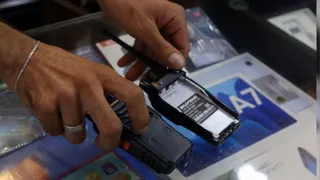
The pagers and walkie-talkies, which used to be considered outdated modes of communication, were weaponised for a one-of-its-kind attack in attack that resulted in a series of explosions for two consecutive days killing 31 and also injuring over 3,000 across the country. The victims were members of Hezbollah. It was expected that Mossad, which is an Israeli spy agency, would be banned for the coordinated strike.
The New York Times spoke to the three Israeli intelligence officers who said that BAC Consulting, which is a Hungary-based manufacturer of pagers, was a shell company set up by Mossad. It was used to rig the devices at the source before shipping them to Lebanon. According to the BAC, there was a contract to produce the devices on behalf of Gold Apollo, the Taiwanese company whose pagers exploded and killed nine on Tuesday. The report also mentions that at least two shell companies were created to mask the real identities of the people creating the pagers.
The report claims that the batteries were laced with explosive Pentaerythritol Tetranitrate (PETN), a very powerful explosive material.
According to Reuters, three grams of explosives were hidden in the new pagers, and it had gone "undetected" by Hezbollah for months.
The members of Hezbollah on Tuesday received a message on the page, thinking that it was the commander, but it triggered explosions across the country.
Israel has neither confirmed nor denied if they were behind the explosion, but, according to a NYT report, 12 current and former defence and intelligence officials who were briefed said that the Israelis were behind it. They spoke to NYT on the condition of anonymity.
The Israelis began targeting the Hezbollah through cyberattacks, hacking devices, remotely controlling the cameras of the phones, and monitoring the activities of the enemy. Hezbollah Chief Hassan Nasrallah concluded in February that the agent tracking is their phones and it's important to switch to low tech. The urgency came after 170 fighters had already been killed in targeted Israeli strikes on Lebanon.
(With input from agencies)