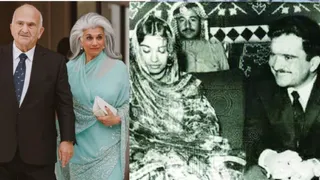
Prime Minister Narendra Modi’s landmark visit to Jordan this week has renewed attention on India’s growing ties with the Hashemite Kingdom, marking 75 years of diplomatic relations and the first visit by an Indian Prime Minister in this millennium. Beyond diplomacy, the relationship also carries a deeply personal dimension, embodied in the life of an Indian-born woman who once stood on the threshold of becoming Queen of Jordan.
Princess Sarvath El Hassan was born Sarvath Ikramullah in Calcutta in 1947, months before the Partition of India. She hailed from one of South Asia’s most influential political families. Her father, Mohammed Ikramullah, was a senior Indian Civil Service officer who later became Pakistan’s first Foreign Secretary.
Her mother, Begum Shaista Suhrawardy Ikramullah, was a pioneering politician and diplomat and among Pakistan’s first women parliamentarians. She was also the niece of Huseyn Shaheed Suhrawardy, a former Prime Minister of Bengal and Pakistan.
Education Abroad And Meeting Jordanian Royalty
Educated in Britain and raised across Europe and South Asia due to her father’s diplomatic postings, Sarvath grew up immersed in international affairs. It was in London that she met Prince Hassan bin Talal of Jordan through shared diplomatic and social circles, a meeting that would eventually link South Asian heritage with Hashemite royalty.
ALSO READ: Chinese Engineer Sacked For Too Much 'Toilet Breaks', Longest Lasting Four Hours
Born In India, Married In Pakistan
Sarvath Ikramullah married Prince Hassan bin Talal on August 28, 1968, in Karachi. The wedding blended Pakistani, Jordanian and Western traditions. Following their marriage, the couple moved to Amman and went on to raise four children, Princesses Rahma, Sumaya and Badiya, and Prince Rashid.
From 1968 to 1999, Princess Sarvath served as Crown Princess of Jordan. During this period, she became a leading advocate for education, women’s empowerment and social welfare. She co-founded the Amman Baccalaureate School, established the Centre for Special Education, and founded the Princess Sarvath Community College to promote vocational training for women and people with disabilities.
In 1999, King Hussein appointed his son Abdullah as successor, ending Prince Hassan’s tenure as Crown Prince. Despite this, Princess Sarvath and her husband remain prominent global royal figures and regularly attend international royal events. Known for proudly wearing saris at public appearances, Princess Sarvath El Hassan continues to reflect her Indian roots while symbolising a rare cultural bridge between India, Pakistan and Jordan.