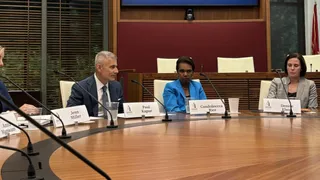
Amid ongoing trade talks between the United States and India, the two nations are simultaneously expanding their strategic cooperation in defence, civil nuclear energy, and trusted artificial intelligence. The statement was underscored by US Assistant Secretary of State S Paul Kapur during a roundtable discussion on India at the Hoover Institution, alongside former US Secretary of State Condoleezza Rice and former US Ambassador to India David C Mulford.
Trump Official Highlights Expanding Defence And Civil Nuclear Cooperation
During the discussion, Kapur highlighted that Washington's engagement with India under the current administration is actively creating domestic jobs while strengthening critical supply chains for both nations and the broader region. He emphasised that this growing partnership extends across defense and civil nuclear cooperation, specifically driving the adoption of trusted artificial intelligence and other emerging technologies.
In a post on X, the Bureau of South and Central Asian Affairs (SCA) quoted Kapur as saying, “Great roundtable on India with @HooverInst and Director @CondoleezzaRice. Under this Administration, U.S. engagement with India is creating jobs at home and strengthening supply chains that are critical to both the United States and the region. We are expanding defense and civil nuclear cooperation, including the adoption of trusted AI and other emerging technologies powering the economy.”
Why Is It Significant?
Kapur’s statement is significant as the US and India had signed the framework for a major defence partnership last year. US Secretary of War Pete Hegseth and Defence Minister Rajnath Singh signed the framework on October 31, 2025, deepening the two nations’ defence cooperation. In an official statement, Washington had called it the most ambitious and wide-ranging document yet. It said that the framework reflects the two countries’ strategic convergence and their intention to deter conflict.
Key priorities under the framework include maintaining peace and security, including safeguarding the Indo-Pacific, strengthening interoperability across all, supporting maritime security and maritime domain awareness, expanding collaboration with partners to address regional security challenges, including via the Quad, preventing the proliferation of weapons of mass destruction, bolstering defense industrial capacity, resilience, and innovation through advanced defense technology cooperation and defeating terrorism and violent extremism.
Also, driven by legal reforms in New Delhi, the civil nuclear sector has become a vital area for bilateral growth. By amending its laws to encourage private investment, India has successfully drawn strong interest from American nuclear firms looking to participate in its commercial energy expansion.
ALSO READ: Trump Tariff Deadline: 10% US Duty On Indian Goods Ends July 24; Will Fresh Levies Follow?
You May Also Like To Watch: