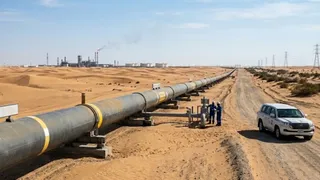
Amid rising tensions around the Strait of Hormuz due to the conflict between the United States and Iran, the United Arab Emirates (UAE) has taken a major step to protect its oil exports. The UAE announced that it will speed up construction of a new oil pipeline that will help the country export more crude oil without depending on the Strait, one of the world’s most crucial oil shipping routes.
UAE Speeds Up Oil Pipeline Project
According to a Reuters report, the decision was announced on Friday after Abu Dhabi Crown Prince Khaled bin Mohamed bin Zayed Al Nahyan directed the Abu Dhabi National Oil Company (ADNOC) to fast-track the West-East Pipeline project. In a statement, the Abu Dhabi Media Office stated that the pipeline is already under construction and is expected to begin operations in 2027.
The UAE already operates the Abu Dhabi Crude Oil Pipeline (ADCOP), also known as the Habshan-Fujairah pipeline, which can transport up to 1.8 million barrels of oil per day. The new project is further expected to double the country’s export capacity through Fujairah on the Gulf of Oman coast, allowing more oil shipments to bypass the Strait of Hormuz.
Currently, the UAE and Saudi Arabia are the only Gulf countries with pipelines that can export crude oil outside the Strait. Other countries like Kuwait, Iraq, Qatar and Bahrain depend heavily on the waterway for oil shipments. The Strait of Hormuz, located between Iran and Oman, handles nearly one-fifth of the world’s oil supply.
Hormuz Crisis
However, the waterway has been badly disrupted after Iran responded to a US-Israeli strike launched on February 28. The tensions have affected global energy supplies and caused oil prices to rise sharply. Due to the supply disruption, many countries are facing higher fuel prices and fears of rising inflation and economic slowdown. By expanding its pipeline network, the UAE is trying to secure its oil exports while reducing risks caused by instability in the region.
You May Also Like To Watch: