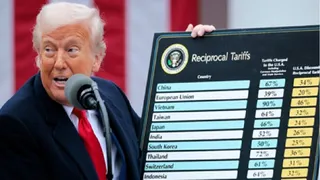
Trump Tariff Case: The Supreme Court of the United States struck down President Donald Trump's far-reaching global tariffs on Friday, which he pursued under a law meant for use in national emergencies, rejecting one of his most contentious assertions of his authority in a ruling with major implications for the global economy.
ALSO READ: Trump Threatens Strikes On Tehran: What’s At Stake For India As US-Iran War Looms | Explained
The top court handed him a significant loss on an issue crucial to his economic agenda. The court ruling centres on tariffs imposed under an emergency powers law, including the sweeping "reciprocal" tariffs he levied on nearly every other country. It's the first major piece of Trump's broad agenda to come squarely before the nation's highest court, which he helped shape with the appointments of three conservative jurists in his first term.
Why Has The Supreme Court Termed The Tariff Illegal?
The justices, in a 6-3 ruling authored by conservative Chief Justice John Roberts, upheld a lower court's decision that the Republican president's use of this 1977 law exceeded his authority. Roberts, citing a prior Supreme Court ruling, wrote that "the President must 'point to clear Congressional authorisation' to justify his extraordinary assertion of the power to impose tariffs," adding, "He cannot."
ALSO READ: Florida Airport Set To Be Renamed As President Donald J Trump International Airport
The Supreme Court reached its conclusion in a legal challenge by businesses affected by the tariffs and 12 US states, most of them Democratic-governed, against Trump's unprecedented use of this law to unilaterally impose the import taxes.
The Republican president has been vocal about the case, calling it one of the most important in US history and saying a ruling against him would be an economic body blow to the country. But legal opposition crossed the political spectrum, including libertarian and pro-business groups that are typically aligned with the GOP. Polling has found tariffs aren't broadly popular with the public, amid wider voter concern about affordability.
(With Agencies inputs)