
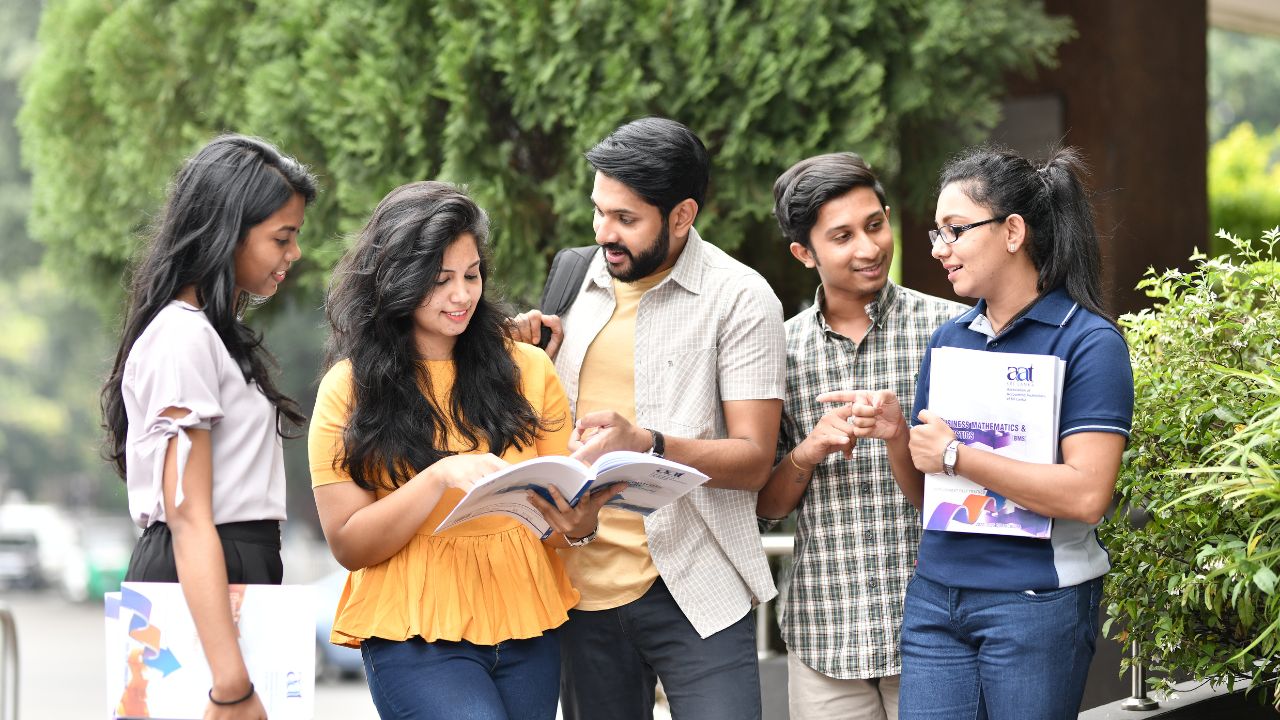
Taruun Gupta | The most poignant news this year has been the spate of student suicide in Kota. Young boys and girls crumbling under academic pressure is the worst form of tragedy. What worries more is the question – have we done enough to mitigate?
It is well known that top engineering/medical college entrance exams in India, are amongst the toughest in the world. As demanding it may be, one cannot begrudge the academic rigour. If we wish to be in the front rank in this knowledge era, there can be no substitute to intensive academics. Besides, is it the academic burden or competitive pressure that is onerous on students?
Let’s call out the problem for what it is. There is a glaring demand-supply mismatch in higher education admission in our country. For the number of applicants, the seats are too few. As a result, the success rate especially for general category students is abysmally low. We need to upgrade the infrastructure and have more colleges and universities offering a higher number of seats. To cope with the burgeoning demand, supply must increase manifolds.
Recommended For You
Privatization of higher education hasn’t helped as much as we imagined. There are quality issues due to which most private colleges aren’t preferred options. The issue is of shortage of seats in the coveted institutes. We need higher capacity in these sought-after centres of learning. We require more colleges and in tier 2/3 cities. Collaborating with the private sector, encouraging investment in education, and facilitating the entry of foreign universities are some policy initiatives that need to be actioned briskly. As in most others, digitization in the education segment can be transformational. Virtual classrooms and online tests are ideas whose time has come. There might be hiccups in the nascent stage, but rather than abandon we should develop virtual learning further.
A major folly of our education system has been excessive reliance on one particular examination. Be it the JEE or NEET respectively for engineering and medical aspirants, the class 12th school passing out exam, or the recently introduced common university entrance test, the fate of students hinges on their performance in that particular test. It is akin to a T20 match where the one-off day can compromise the outcome.
Juxtapose our admissions approach with the prevalent process in some of first world countries. America which has by far the most desirable and advanced education system in the world, places reliance on multiple factors. The students’ academic record in lyceum years, grades 9th to 12th, their interest and performance in sports and various other curricular spheres are all considered. There are standard tests conducted by the college board to bring in the necessary element of standardization, besides the application form, which gives students an opportunity to express themselves, and the admission council to gain an insightful perspicuity. Due weightage to relevant factors not only results in a fairer evaluation, the student stress is also mitigated. No single exam is the be-all and end-all. Can we borrow from the most developed country, and tweak where required to adapt to our circumstances?
Our education system embodies today a unique clannishness. Analogous to the economic elite, we have created a niche academic elite, where only the top 5 percentile or so have access to high-quality higher education. Amongst the remainder, for those who can afford it, there is overseas exodus – incipient brain-drain, for others, compromise and struggle. Isn’t concomitant pressure a natural corollary? Shouldn’t mediocre students also have an easy approach to high-quality higher education of their choice and interest?
The most important role, however, is of the society at large – parents, teachers, peers etc. There is no denying that there has always been, and will perhaps be a still greater need for engineers, doctors, computer and tech professionals. As much the world needs them, there will always also be a requirement for accountants, bankers, lawyers, financial people besides myriad other professionals – teachers, artists, writers and so on - the proverbial non-technical people. In any stream, be it education or occupation, the keyword is quality. While technical skill is an essential supplement, this obsession over proficiency in conventional science and academics must cease. There is an Urdu couplet – “chaman mein ikhtilaat rango boo se baat banti hai, hum hi hum hain to kya hum hain, tum hi tum ho to kya tum ho”, you need flowers of every fragrance and hue to make a garden.
Some ponderable for civil society. Should we toughen our children to face a cruel and heartless world or raise children who will make the world less cruel and heartless? Why are we more concerned with congratulating the successful than comforting the failed? As they say in Latin – “o tempora o mores”, - “oh the times, oh the customs’. A more compassionate society is crucial to tackle this menace of student stress and suicide.