
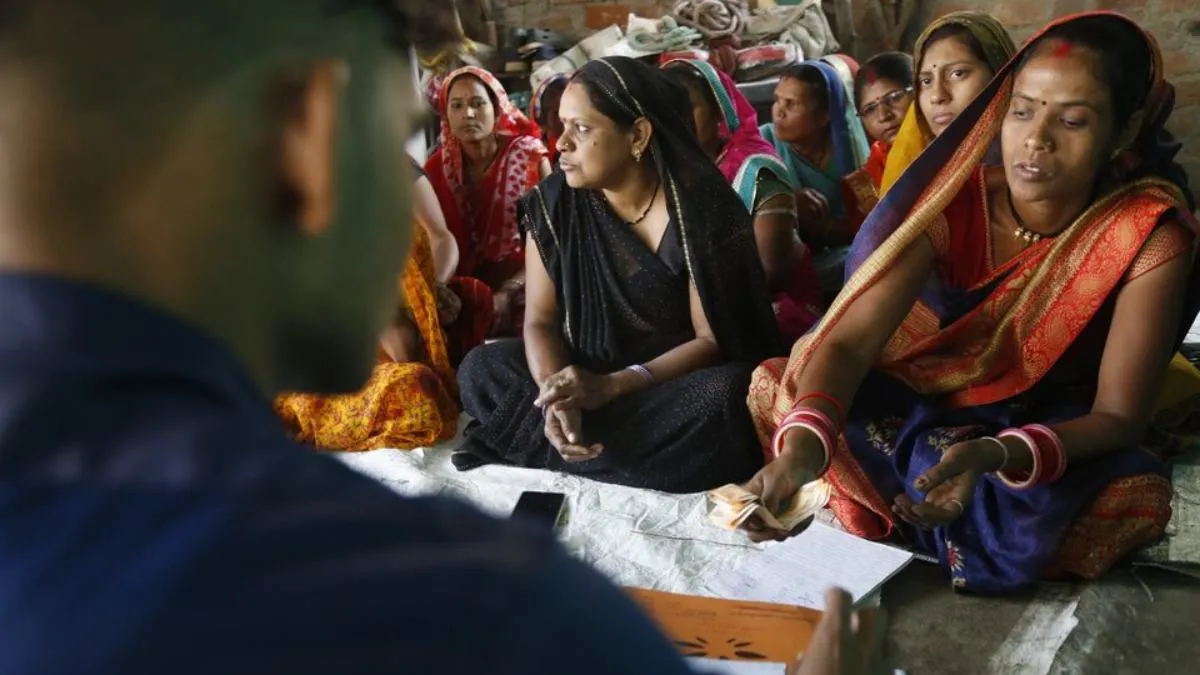
Across rural and semi-urban India, where traditional banks are hard to access, a quiet revolution is unfolding in the hands of women. Millions earn their livelihoods through small, informal enterprises, tailoring, food processing, livestock rearing, local trading, and crafts, often their first sustained source of independent income in places where formal jobs are scarce. In these cases, Microfinance has become the catalyst for this change. For countless women, these collateral-free loans delivered at the doorstep and repaid in small, manageable instalments have enabled them to build livelihoods, strengthen household incomes, and participate meaningfully in the economy. For them, microfinance is not just credit, it is a lifeline.
The microfinance sector reaches deep into India’s heartland, serving nearly 75 million low-income clients across 720 districts, including 112 Aspirational districts, and extending formal finance to the very bottom of the economic pyramid where access has historically been limited. Nearly 100 per cent of these borrowers are women, and for many, a microfinance loan represents their first-ever access to formal credit.
Microfinance has become the primary gateway to formal finance for low-income women, replacing exploitative informal moneylending with regulated, transparent, and accountable credit. By combining formal consumer protections with flexible repayment structures, microfinance enables women without collateral or a formal credit history to access dependable and empowering financial services.
Recommended For You
ALSO READ: Delhi Govt Clears Free Gas Cylinder Scheme For EWS Women Ahead Of Holi; Rs 300 Cr Welfare Push
Most borrowers are first-generation entrepreneurs whose enterprises grow gradually over time. A first loan, typically in the range of Rs 30,000 to Rs 50,000 is used to purchase raw materials, tools, livestock, or basic equipment. Subsequent loan cycles allow women to scale up to Rs 40,000 - Rs 70,000 or more, enabling diversification of income sources or expansion of production. Predictable repayment schedules and doorstep servicing introduce financial discipline, while even modest but regular earnings allow households to plan better than the uncertainty of casual wage labour.
As women gain confidence, many enterprises move beyond subsistence. Home-based activities grow into small businesses, with some women hiring or training others, allowing microfinance to generate local employment beyond individual households.
This progression is not anecdotal but structural. A 2021 NCAER study on the present and potential contribution of microfinance to India's economy estimated that the sector contributes about 2.03 per cent to India's gross value added and supports employment for nearly 130 lakh people, positioning microfinance as an integral part of India's economic architecture, extending well beyond household livelihoods.
ALSO READ: UP Voter List SIR: Women Voters Drop Sharply, Gender Ratio Falls From 877 To 824
Microfinance has also become a quiet driver of the digital revolution among women, with technology creating a phygital model that combines in-person engagement with digital efficiency. Many women now receive disbursements and make repayments via UPI, while QR codes are increasingly used even by nano enterprises. Over time, these transactions help build formal credit histories, opening pathways to MSME loans, housing finance, and insurance products previously beyond reach.
The sector's stability rests on a strong regulatory framework, under which RBI-regulated entities operate through well-established structures and processes that promote responsible lending and safeguard women borrowers. The Reserve Bank of India mandates that a borrower’s total microfinance repayment obligations must not exceed 50 per cent of household income, ensuring sufficient room for essential consumption and emergencies. In addition, sector-level safeguards prescribed by the Microfinance Industry Network (MFIN), the RBI-recognised self-regulatory organisation, limit overall exposure by allowing no more than three regulated entities to lend to a single borrower, with the aggregate loan amount capped at Rs 2 lakh. Together, these measures reinforce borrower protection while supporting the sector's long-term stability.
Borrower protection lies at the heart of the microfinance. RBI-regulated entities follow strict RBI guidelines, the Fair Practices Code, and an industry Code of Conduct, backed by a three-tier grievance redressal system, with MFIN operating a 24×7 second-level mechanism. Together, these safeguards ensure accountability, protect women borrowers, and sustain trust in the sector.
Despite its proven impact, the microfinance sector is currently facing a significant liquidity challenge, which has pushed an estimated 50 lakh borrowers out of organised credit, increasing the risk of their return to informal moneylenders and unregulated companies. At a time when the organised microfinance sector plays a critical role in reducing dependence on informal moneylending through regulated, transparent, and affordable credit, sustaining the flow of formal finance is essential to protect vulnerable households from slipping back into cycles of high-cost debt.
Beyond income, microfinance delivers lasting social impact. Regular earnings strengthen women's role in household decisions, improve investments in children's education and health, and build savings. As financial contributors and increasingly as job creators, women gain social standing and economic independence both within their households and their communities.
As India pursues women-led development, microfinance will remain a foundational pillar. Sustained capital flows, regulatory vigilance, and responsible innovation are essential to its future. When designed well and delivered with discipline, microfinance loans can drive big change, strengthen livelihoods and contribute decisively to India's growth story.
(The writer is the CEO and Director of Microfinance Industry Network (MFIN). The views expressed are his own.)