
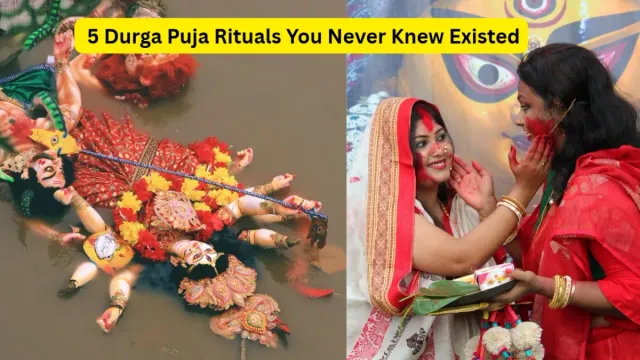
Do you know that certain Durga Puja rituals are conducted only in Bengal? Across India, idols of Goddess Durga are installed in temples, homes or pandals, and people worship the goddess by observing fasts. However, in West Bengal, devotees perform different types of puja rituals to celebrate the Goddess.
Let's explore the rituals that happen mostly in Bengal during Puja.
1. Kola Bou Snan or Nabapatrika: Bathing A Banana Tree As The Goddess’s Avatar
Nabapatrika is held on the seventh day (Saptami) of Navratri. It's an ancient ritual in which eight different plants and a banana are taken to the nearest river, usually the Hooghly or Ganges and given a ceremonial bath.
The banana is draped in a red and white saree, smeared with vermilion, and placed beside Lord Ganesha. The nine plants, or Nabapatrika, signify the nine forms of Maa Durga: Goddess Brahmani (banana), Goddess Kalika (Colocasia), Devi Durga (turmeric), Goddess Kartiki (Jayanti), Goddess Shiva (wood apple), Devi Raktadantika (Pomegranate), Devi Sokrahita (Ashoka tree), Devi Chamunda (Arum plant) and Goddess Lakshmi (rice plant).
Many assume the ritual only centres on the clay idol of Goddess Durga.
2. Bel Tala: Awakening The Goddess From Her Cosmic Slumber
Bengalis believe the idol of Goddess Durga is not awake until a specific ritual under a Bael (Wood Apple) tree takes place. On Sasthi (the sixth day), priests perform Bodhon (awakening) under a Bel tree.
According to Hindu mythology, deities enter a deep sleep during this part of the year. Lord Rama invoked Durga out of Akaal Bodhon to gain her blessings before fighting Ravana.
Most festivals begin when the idol is installed. In Bengal, the ritual acknowledges that the Goddess must be invited and welcomed into the community like an honoured family member returning home.
ALSO READ: Why Does Bengal Welcome The Goddess As A Daughter During Durga Puja?
3. Dhunuchi Naach: High-Energy Dance
A dhunchi is a clay pot that acts as an incense burner, filled with burning dried coconut husks and aromatic ingredients.
During Sandhi Puja and Navami evening, devotees hold these dhunuchis in their hands and dance to the beats of the traditional drums called dhak.
From outside, these rhythmic movements appear wild, hypnotic, and dangerous. However, this act isn't a performance for an audience but an offering of energy to the Goddess.
The smoke in the pot purifies the air, and the dance symbolises triumph over chaotic forces.
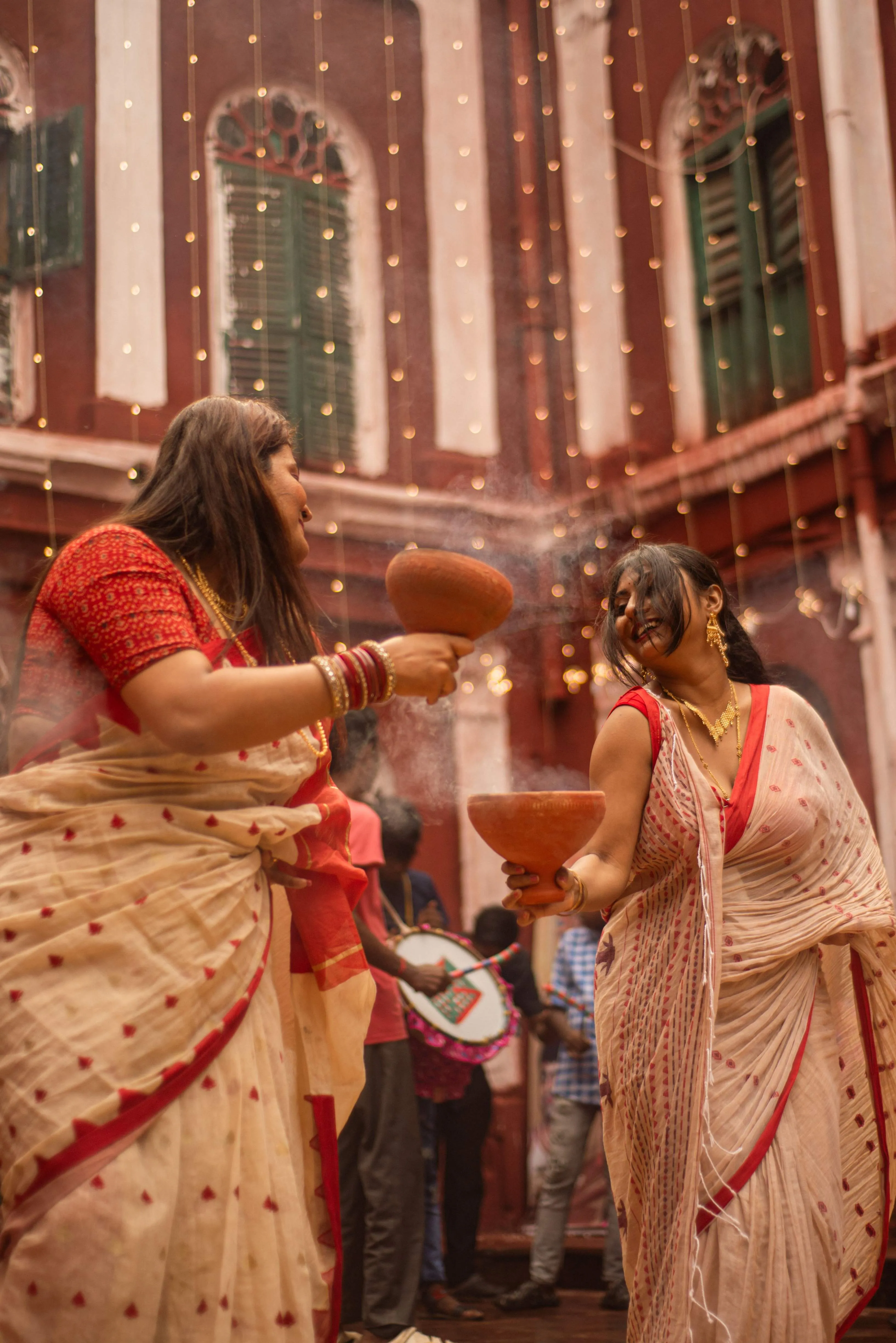
During Sandhi Puja and Navami evening, devotees hold these dhunuchis and dance to the beats of the traditional drums called dhak (Image: Pexels)
4. Kumari Puja: Worshipping A Pre-Pubescent Girl As The Divine Mother
On Maha Ashtami, a young girl usually between 5 and 7 years old is dressed as Goddess Durga and worshipped with the same devotion.
The young girl is treated as the pure, uncorrupted manifestation of Shakti believed to reside in every woman.
In many traditional settings, children are spectators in rituals. By including them in the puja rituals, they become the central object of veneration, with adults, including high-end priests, bowing before their feet.
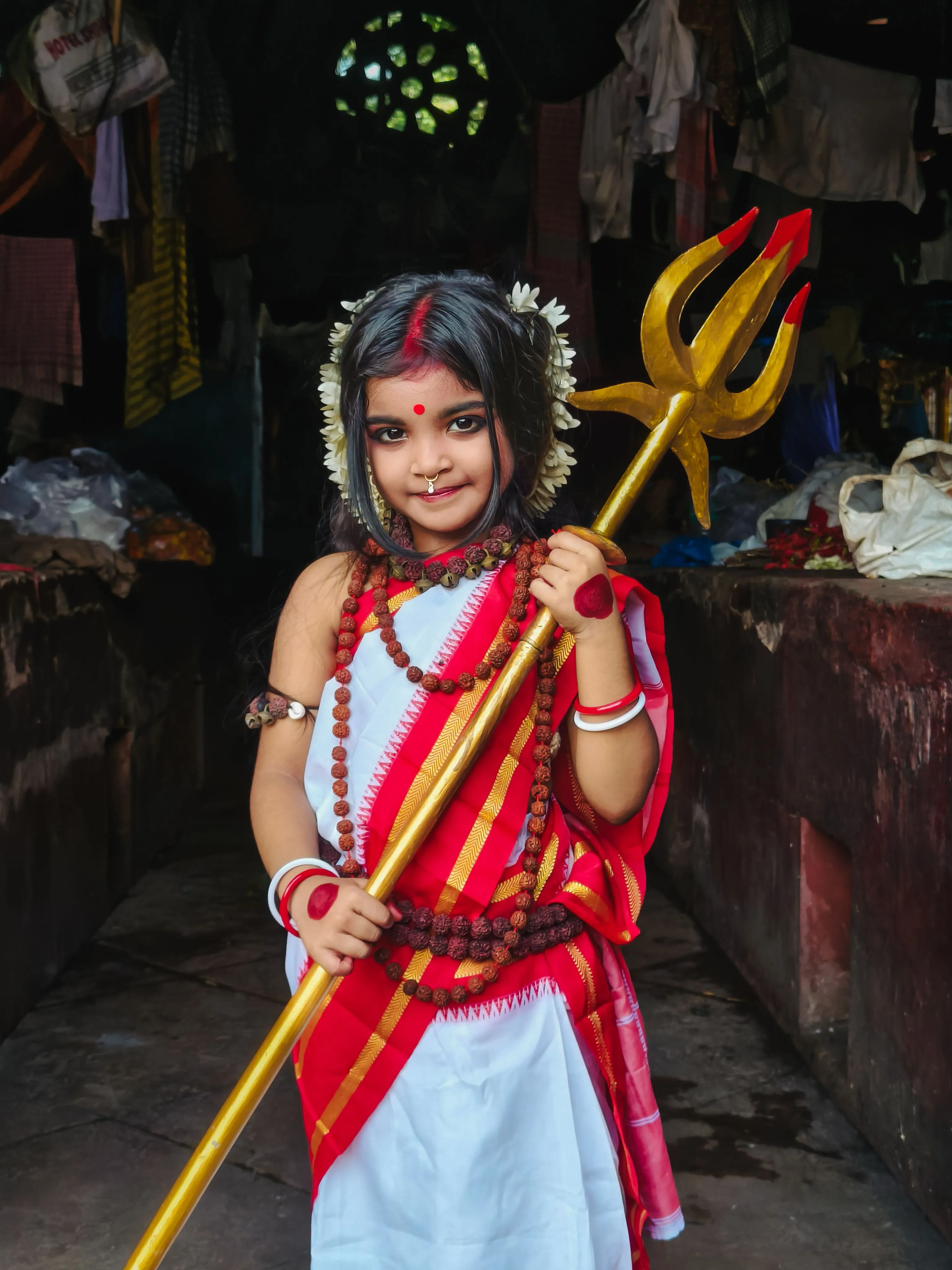
On Maha Ashtami, a young girl usually between 5 and 7 years old is dressed as Goddess Durga (Image: Pexels)
ALSO READ: Why Is Soil From A Sex Worker's Courtyard Traditionally Used In Some Durga Idols?
5. Bishorjon And Sindoor Khela: A Tearful Farewell
Unlike festivals that end on a quiet spiritual note, Bengal’s Dashami (final day) end with celebration and tears.
Married women apply sindoor to the Goddess’s forehead and sweets to her lips before smearing each other with vermilion called Sindoor Khela.
After this, the heavy clay idols of Goddess Durga are immersed in the river (Bishorjon). As the idol sinks, crowds chant 'Asho bochor abar hobe!', which means it will happen again next year!
The sudden shift from celebration to genuine tearful grieving leaves first-time visitors emotional and surprised.
ALSO READ: Why Is Soil From A Sex Worker's Courtyard Traditionally Used In Some Durga Idols?
What do you think about these rituals?
FAQs
1. What is Durga Puja?
Durga Puja is a major Hindu festival celebrating Goddess Durga.
2. Are these rituals observed in other parts of India during Navaratri?
No, these rituals are mostly performed in Bengal only.