
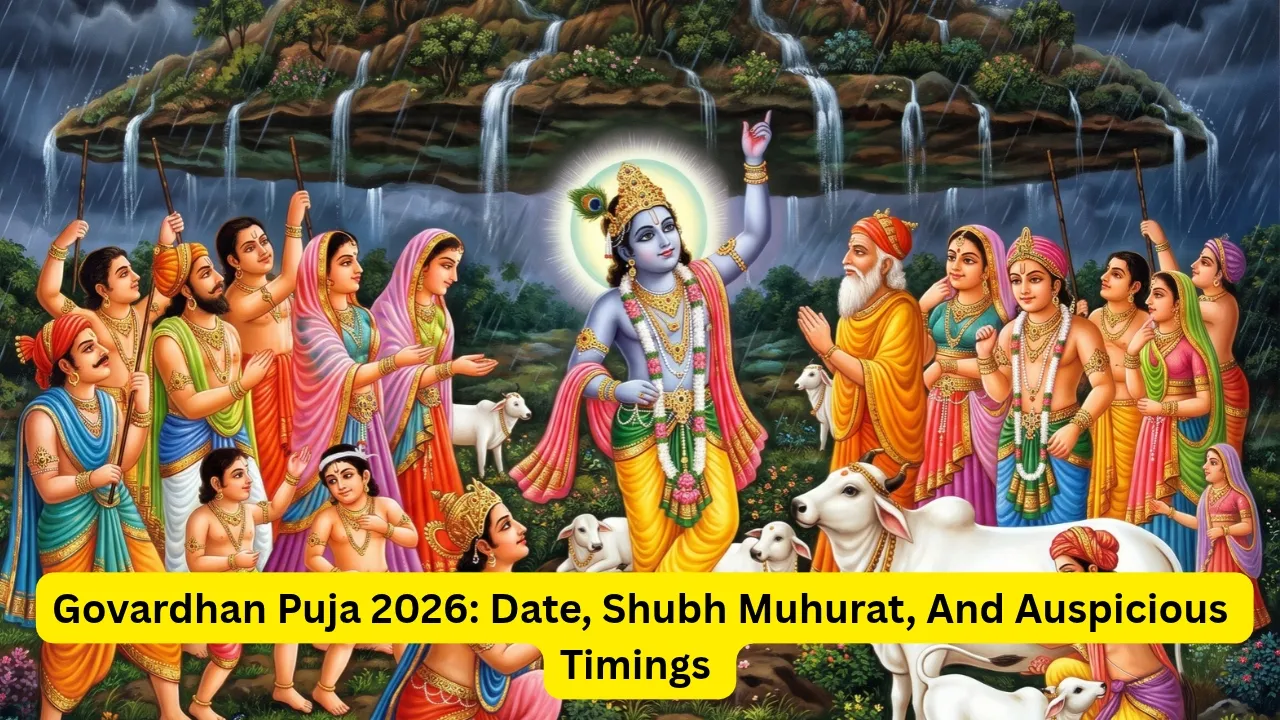
Govardhan Puja, also known as Annakut, occurs on the Pratipada Tithi of the bright fortnight (Shukla Paksha) in the Hindu month of Kartik. This year it falls on Tuesday, November 10, 2026.
This festival is observed the day after Diwali and honours Lord Krishna, who protected the people of Braj from the anger of Lord Indra.
Govardhan Puja 2026: Exact Date And Shubh Muhurat Timings
Govardhan Puja is observed on Kartik Shukla Pratipada, the first day of the waxing lunar fortnight. According to Drik Panchang, the auspicious timings are:
Event | Date And Time |
Govardhan Puja Date | Nov 10, 2026 |
Govardhan Puja Pratahkala Muhurat | 06:40 AM to 08:50 AM, Nov 10, 2026 |
Pratipada Tithi Begins | 12:31 PM on Nov 09, 2026 |
Pratipada Tithi Ends | 02:00 PM on Nov 10, 2026 |
The Origin Story: Why Lord Krishna Lifted Govardhan Parvat
Govardhan Puja has its origin in the Bhagavata Purana. According to legend, the people of Braj used to prepare elaborate annual offerings for Lord Indra every year to thank him for rainfall.
A young Lord Krishna questioned this tradition and persuaded the villagers to express their gratitude to nature, the Govardhan Hill that feeds their cattle and the forests that support their lives.
Lord Indra, angry at this, unleashed a storm so severe it threatened to wash away entire Vrindavan. To protect every villager, animal, and home, Lord Krishna effortlessly lifted the massive Govardhan Parvat on his little finger for seven consecutive days and nights, providing a divine shield until Indra surrendered his pride.
Since that day, worshipping Govardhan Hill has symbolised human harmony with nature and divine protection.
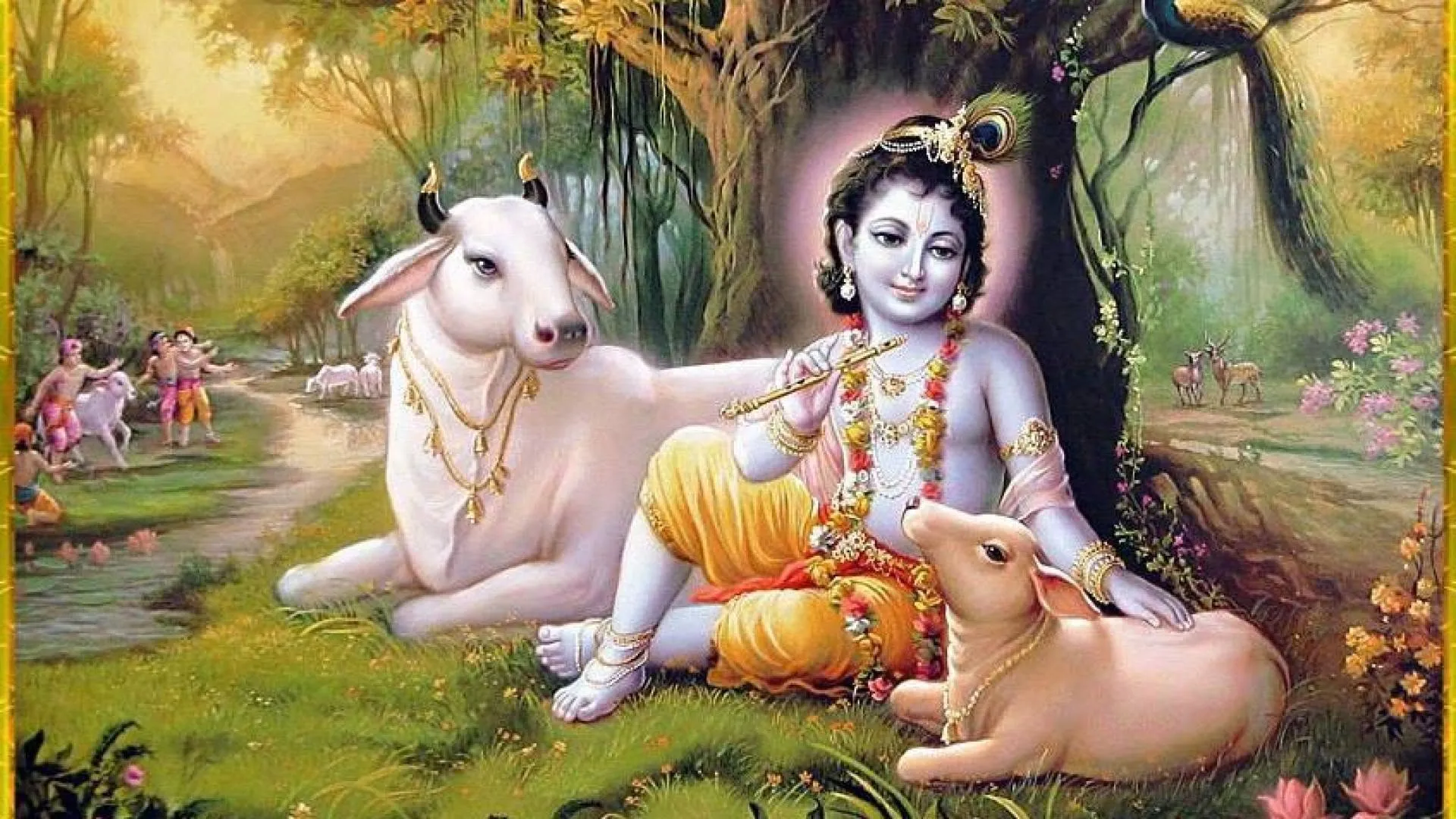
A young Lord Krishna questioned this tradition and persuaded the villagers to express their gratitude to nature (Image: Facebook/lordkrishna)
Essential Samagri For Govardhan Puja
Before performing the puja, gather these ingredients so that you don't need to get up in between the rituals.
- Fresh cow dung
- Flowers, kumkum (vermilion), turmeric, and uncooked rice
- Sugarcane sticks
- Curd, milk, honey, and pure ghee
- Curd mixed with sugar (Panchamrit)
- Earthen lamps and Incense sticks
- Prepared Annakut prasad and 56 Bhog items
ALSO READ: Lakshmi Puja: 5 Common Ritual Mistakes To Avoid On Diwali
Recommended For You
Step-By-Step Govardhan Puja Vidhi At Home
If you cannot perform the rituals in Vrindavan or Mathura, you can perform an authentic puja at home by following these steps:
1. In your courtyard or clean balcony space, use cow dung to make a horizontal idol representing Lord Krishna holding the Govardhan Hill.
2. Decorate the idol with fresh flowers, colours, and sugarcane sticks.
3. Place small clay trees or grass to symbolise the lush greenery of Vrindavan.
4. Light an earthen lamp filled with pure ghee near the head of the idol.
5. Apply a tilak of vermilion and turmeric to the idol and then gently pour drops of Panchamrit over the idol as a sacred bathing ritual.
6. Walk around the Govardhan idol seven times in a clockwise direction. As you walk, trickle water or uncooked rice along your path as an offering.
7. Offer the prepared Annakut items and 56 bhog to the deity while singing the Govardhan Aarti.
8. Distribute the prasad to family and friends.
The Deep Significance Of The 56 Bhog
According to legend, Lord Krishna lifted the mountain on his little finger for seven consecutive days and was without food. Traditionally, Lord Krishna ate 8 meals a day. After the storm subsided on the eighth day, to make up for the missed meal and show their gratitude, villagers prepared 56 meals for Lord Krishna.
ALSO READ: Why Is Goddess Kali Worshipped On Diwali Night In Bengal?
That offering became the Chappan Bhog we still prepare today.
FAQs
1. What is the difference between Govardhan Puja and Annakut?
They are essentially the same festival. Govardhan Puja emphasises the worship of Lord Krishna and the symbolic Govardhan Hill, while Annakut refers to the grand mountain of food offered to the deity on this day.
2. Can we use clay instead of cow dung to make Govardhan Hill?
Yes. While cow dung is traditional due to its sacred status in Vedic culture, clean river clay or eco-friendly mud can be used if cow dung is unavailable