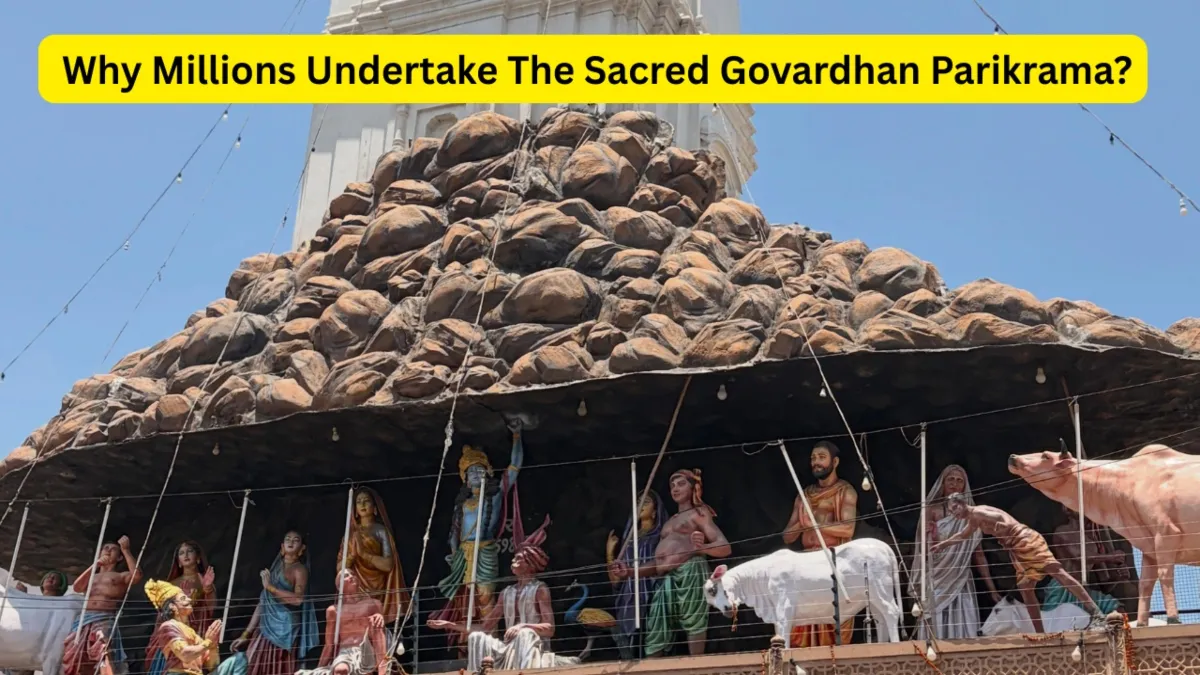
Govardhan Hill, situated in the Mathura district of Uttar Pradesh, is one of the most sacred places for Hindus. Every year, thousands of people visit this mountain for the sacred circumambulation of Govardhan Hill, known to devotees as Giriraj.
It honours Lord Krishna, who lifted the hill on his little finger to shelter the people of Braj from Indra's storm. By circumambulating it, devotees express their devotion and surrender.
Let's understand why Govardhan Parikrama is performed and when it should be done.
Why Devotees Perform Govardhan Parikrama?
The Govardhan Parikrama is a 21 km walk around Giriraj hill. Devotees perform this parikrama because they believe that it is a journey of their soul. It is the path where they leave behind the darkness and walk toward the light of divine realisation.
It is believed that Govardhan is the direct manifestation of Lord Krishna and is blessed by Radha as well. Every stone holds his smile, and every tree carries the gentle grace of Radha.
This sacred mountain witnessed many moments of Radha and Lord Krishna. It is where the Lord herded cows with his friends, stole butter with the gopis, and filled the forests of Vrindavan with divine bliss.
Even today, for every pilgrim who visits the holy land of Braj, performing the Govardhan Parikrama is considered essential and deeply auspicious.
People believe that by circling the parvat, their wishes will be fulfilled and their past sins will also be dissolved.
The Legend Behind Govardhan Hill
The story of Govardhan Hill is deeply rooted in Lord Krishna's childhood. According to legend, when Lord Indra unleashed torrential rains on the village of Vrindavan, Lord Krishna lifted the entire Govardhan Hill on his little finger to protect the villagers.
That is why people, to this day, express their gratitude and devotion by performing Govardhan Parikrama.
ALSO READ: Govardhan Parikrama: Distance And Significance Of This Sacred Hill Pilgrimage | Divine Paths
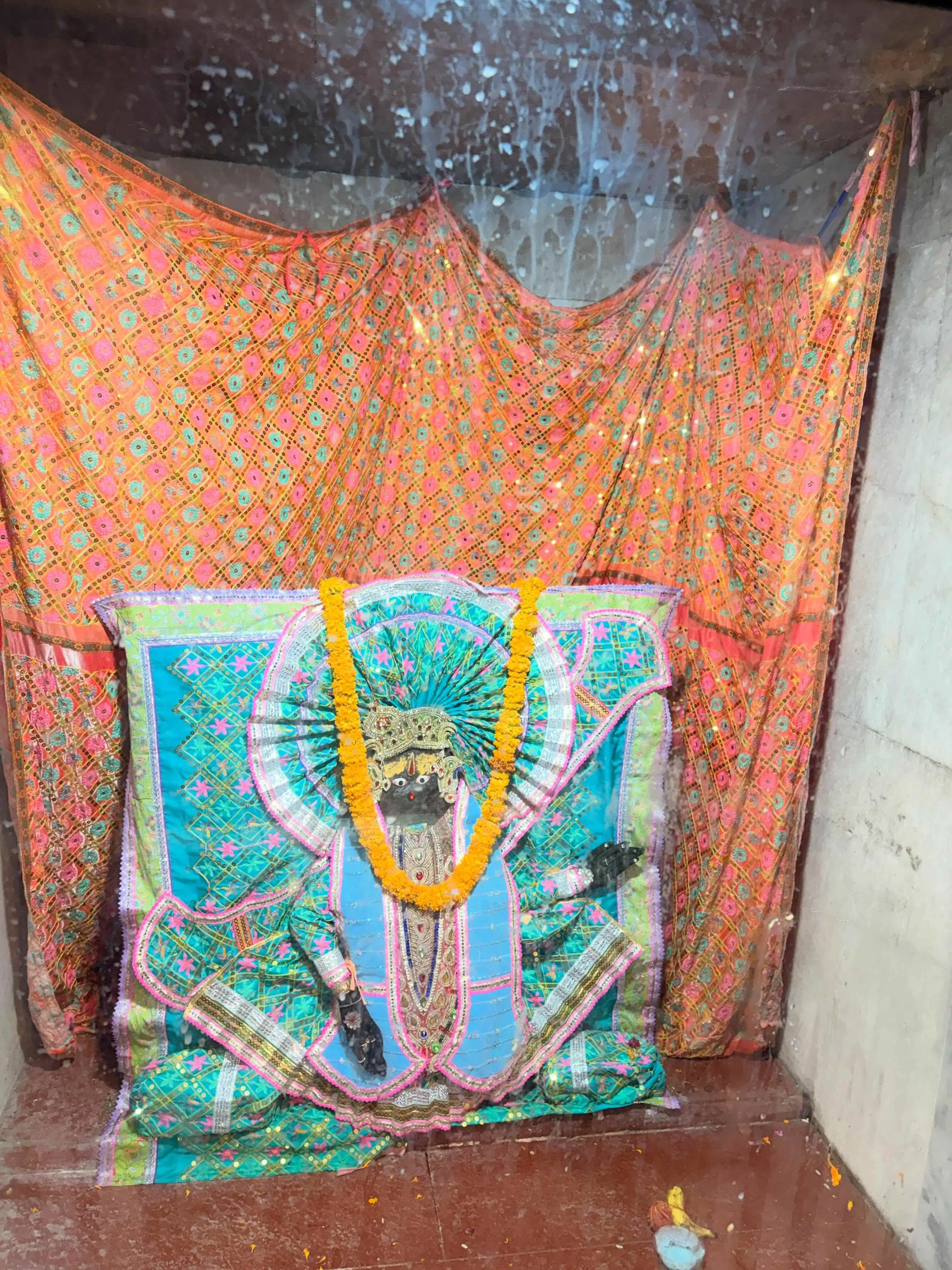
It is believed that Govardhan is the direct manifestation of Lord Krishna (Image: Instagram/shrutisharma)
When Govardhan Parikrama Should Be Done?
For devotees, certain days are considered highly beneficial for the Parikrama, as they increase spiritual merit. These days are:
- Ekadashi
- Purnima
- Govardhan Puja
- Guru Purnima
- Gopashtami
How To Start The Parikrama?
The total distance of a complete parikrama is 21 km, which is divided into two parts. The first parikrama is called ‘Badi parikrama’, which is 12 km and the other is called ‘Choti parikrama ', which is 9 km.
Recommended For You
Many devotees complete the parikrama in a single day, while some take two days.
The Govardhan village lies midway along the route. To its north is Radha Kund village, and to the south is Puchhari village. The path begins at Danghati, passing through Anyor, Puchhari, and Jatipura, returning to Govardhan, covering 12 km.
The route from Govardhan to Uddhav Kund, then to Radha Kund, and back to Govardhan is known as the small parikrama, about 9 km long.
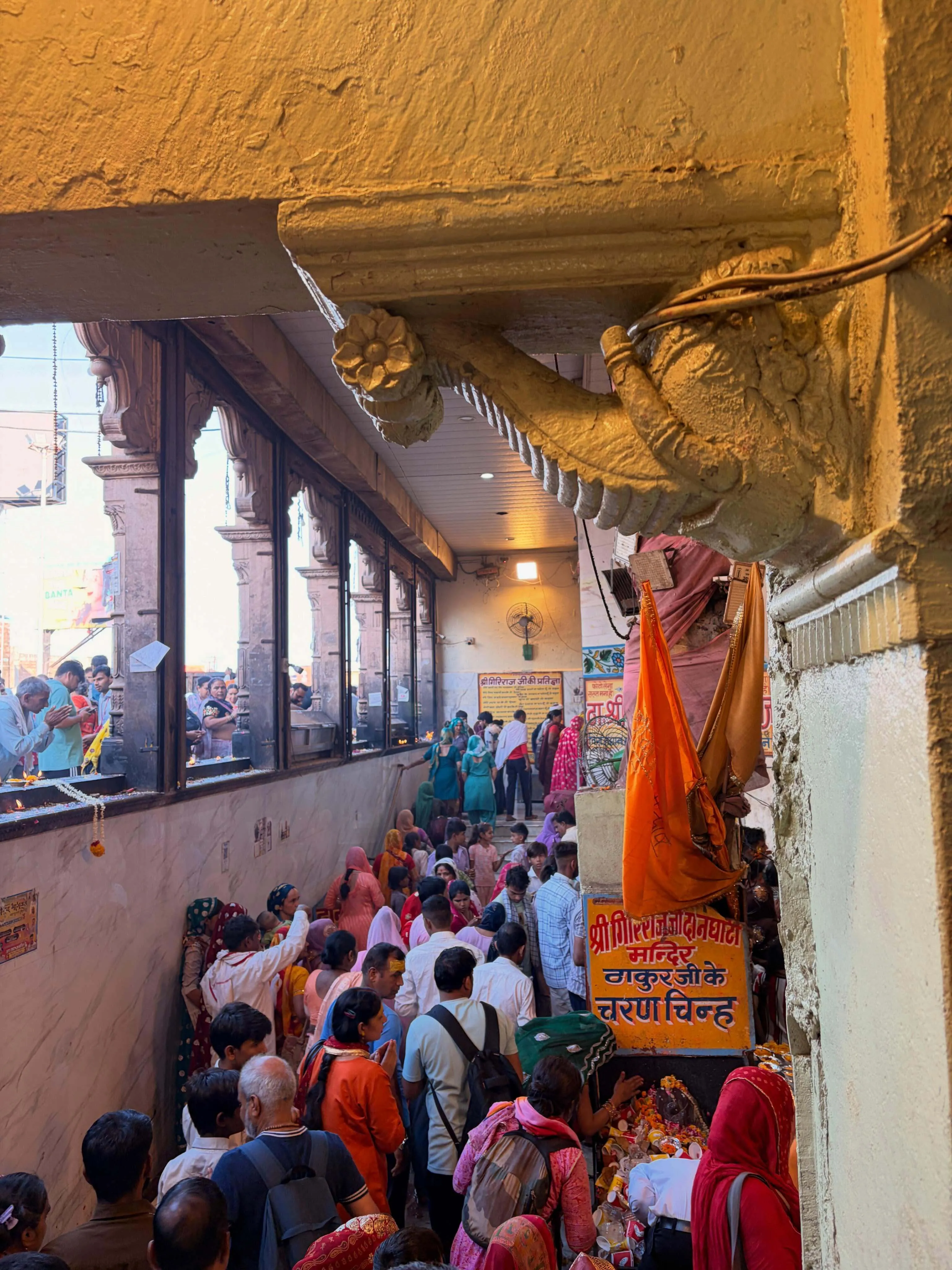
Many devotees complete the parikrama in a single day (Image: Instagram/shrutisharma)
Tips For Travellers Who Are Performing Parikrama For The First Time
Here are some tips that you can follow if you are planning to circumnavigate the Govardhan hill:
- Do the parikrama during the cooler months of October to March, as the crowd is smaller.
- The 21-kilometre journey can be physically demanding, so carry water and light snacks to stay energetic.
- Dress modestly and wear comfortable shoes.
ALSO READ: Govardhan Puja 2026: Date, Shubh Muhurat, Rituals, and the Significance of 56 Bhog
Thus, performing Govardhan parikrama is more than just a pilgrimage. This circumambulation builds a deeper connection with the divine and provides inner peace.
FAQs
1. Which is the best day to perform Govardhan Parikrama?
Govardhan Puja, the day after Diwali, is the most auspicious day. But it is also the most crowded.
2. Are there any specific rituals or prayers to perform during Parikrama?
Many devotees walk barefoot, carrying a japa mala bag, chanting the Hare Krishna maha-mantra as they walk.
3. What is the symbolism of walking around Govardhan Hill specifically?
Circumambulating the sacred hill symbolically represents devotion and surrender.