
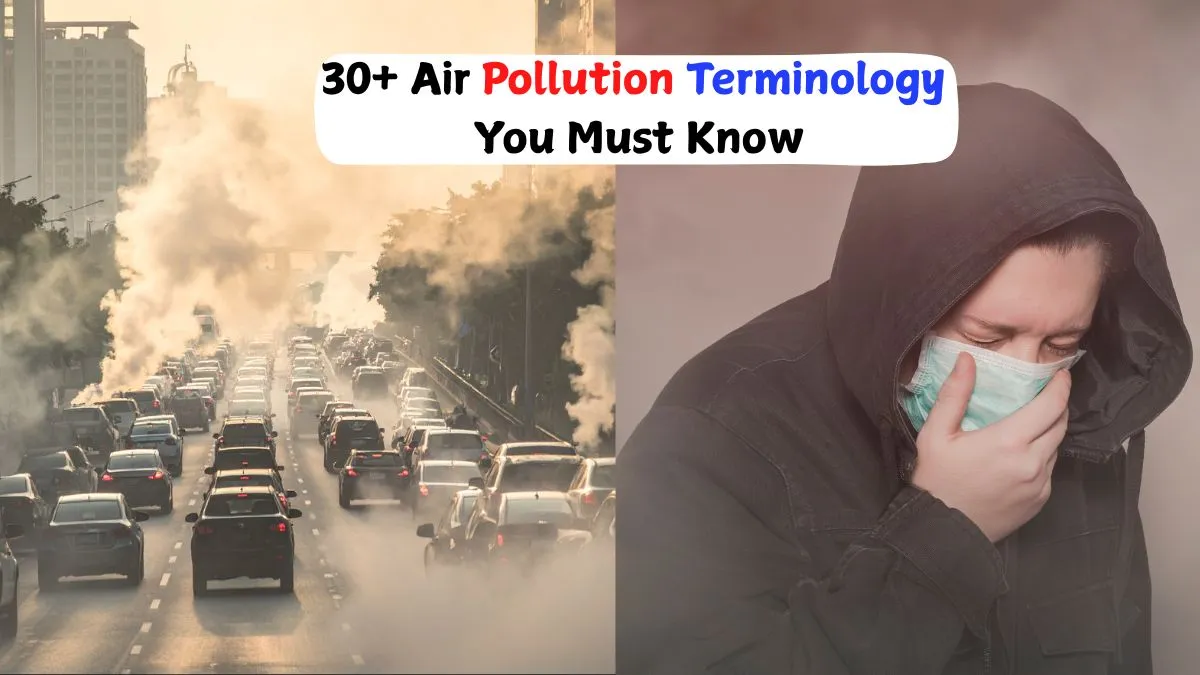
Air Pollution Terminology: Every winter, Delhi's air gets polluted by smoke from automobiles, factories and farm fires. Sunlight disappears as the fog gets thicker, and you can barely see ahead while driving. People cough more, struggle to breathe when the sky turns grey. Dust from building sites adds to the mess in the city’s atmosphere. Weather patterns trap pollutants instead of sweeping them away. Vehicle emissions, construction dust, industrial smoke, crop burning, and weather conditions together push Delhi’s air into the “very poor” or “severe” category for many days. Doctors advise people to stay inside all day on bad days. Recently, the central government has announced Grap IV (a process of ban on constructions, work from offices and more) in Delhi and NCR.
In such situations, people usually come across words such as AQI, PM2.5, smog, or contaminants on the news - yet many aren’t aware on what those actually stand for. Knowing these terms matters since they are related to how safe we are, our well-being, and choices like whether to go outside or use a mask. Getting familiar with simple definitions lets people make sense of pollution updates and act wisely when air gets bad.
Air Pollution Term Glossary
This article consists more than 30 important air pollution terms in simple words, helping you stay informed and protected in worsening air conditions like those seen in Delhi.
| No. | Term | Meaning |
|---|---|---|
| 1 | Air Pollution | Harmful substances present in the air that affect health and environment. |
| 2 | AQI (Air Quality Index) | A scale that shows how clean or polluted the air is. |
| 3 | PM2.5 | Fine particles smaller than 2.5 microns that enter lungs and bloodstream. |
| 4 | PM10 | Larger dust particles that affect breathing and eyes. |
| 5 | Smog | Thick air pollution caused by smoke mixed with fog. |
| 6 | Pollutants | Substances that contaminate air, water, or soil. |
| 7 | Emissions | Gases and particles released from vehicles, factories, or fires. |
| 8 | Greenhouse Gases | Gases that trap heat in Earth’s atmosphere. |
| 9 | Carbon Monoxide (CO) | Colourless, poisonous gas from incomplete fuel burning. |
| 10 | Nitrogen Dioxide (NO₂) | Gas from vehicles that irritates lungs. |
| 11 | Sulphur Dioxide (SO₂) | Gas from coal burning that harms respiratory health. |
| 12 | Ozone (O₃) | Harmful ground-level gas causing chest pain and coughing. |
| 13 | Indoor Air Pollution | Poor air quality inside homes or buildings. |
| 14 | Outdoor Air Pollution | Pollution present in open environments. |
| 15 | Airborne Particles | Tiny solid or liquid particles floating in air. |
| 16 | Visibility | How clearly objects can be seen through air. |
| 17 | Thermal Inversion | Weather condition that traps pollutants near ground. |
| 18 | Stubble Burning | Burning of crop residue, a major pollution source. |
| 19 | Vehicular Pollution | Pollution caused by cars, bikes, and trucks. |
| 20 | Construction Dust | Dust released from building activities. |
| 21 | Respiratory Diseases | Lung-related illnesses caused by polluted air. |
| 22 | Mask (N95) | Protective mask that filters fine particles. |
| 23 | Air Purifier | Device that cleans indoor air. |
| 24 | Meteorology | Study of weather affecting pollution spread. |
| 25 | Environmental Health | Impact of environment on human well-being. |
| 26 | Air Monitoring Station | Facility measuring pollution levels. |
| 27 | Pollution Hotspot | Area with extremely high pollution levels. |
| 28 | Emission Standards | Legal limits on pollution release. |
| 29 | Breathlessness | Difficulty in breathing due to poor air quality. |
| 30 | Chronic Exposure | Long-term contact with polluted air. |
| 31 | Short-Term Exposure | Brief contact with high pollution levels. |
| 32 | Public Health Advisory | Official warning issued during severe pollution. |
ALSO READ: 30+ Important Trading Terms Every New Trader Must Know
Recommended For You
In today's deteriorating air quality situation, particularly in cities like Delhi, it is crucial to comprehend air pollution terminology. You can accurately read air reports, take prompt precautions, and make healthier daily decisions if you understand what terms like AQI, PM2.5, and smog actually mean. Protection is strengthened by awareness.