
- By Ridam Sharma
- Thu, 04 Dec 2025 11:22 AM (IST)
- Source:JND
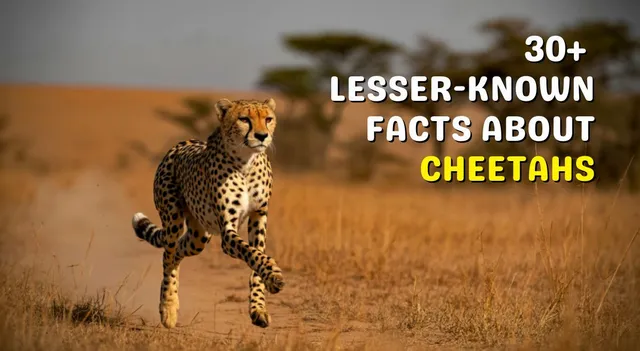
Lesser-Known Facts About Cheetah: The International Cheetah Day is celebrated annually on December 4th to promote conservation efforts to protect these hunting cats from extinction. They also help balance the ecosystem and are considered keystone species. The scientific name for the cheetah is Acinonyx jubatus. They are famous across the globe for being known as the fastest land animals on Earth, yet Africa’s most endangered big cat. To your surprise, cheetah is a Hindi-originated word, where ‘chita’ means ‘spotted one,’ which signifies the cheetah's unique spotted coat.
Today, on the occasion of International Cheetah Day 2025, let’s take a look at the list of more than 30 lesser-known and interesting facts about Cheetahs, according to Cheetah.org.
List Of 30+ Lesser-Known Facts About Cheetahs:
1. Cheetahs do not take much longer than one minute to chase. It can run more than 110 km/h (70 mph) in just over three seconds.
2. At maximum pace, they walk three steps a second with a seven-meter stride.
3. Cheetahs use only 12 per cent of their time to move, which saves them most of their energy.
4. Cheetah is named after the Hindi word chita, which means spotted one.
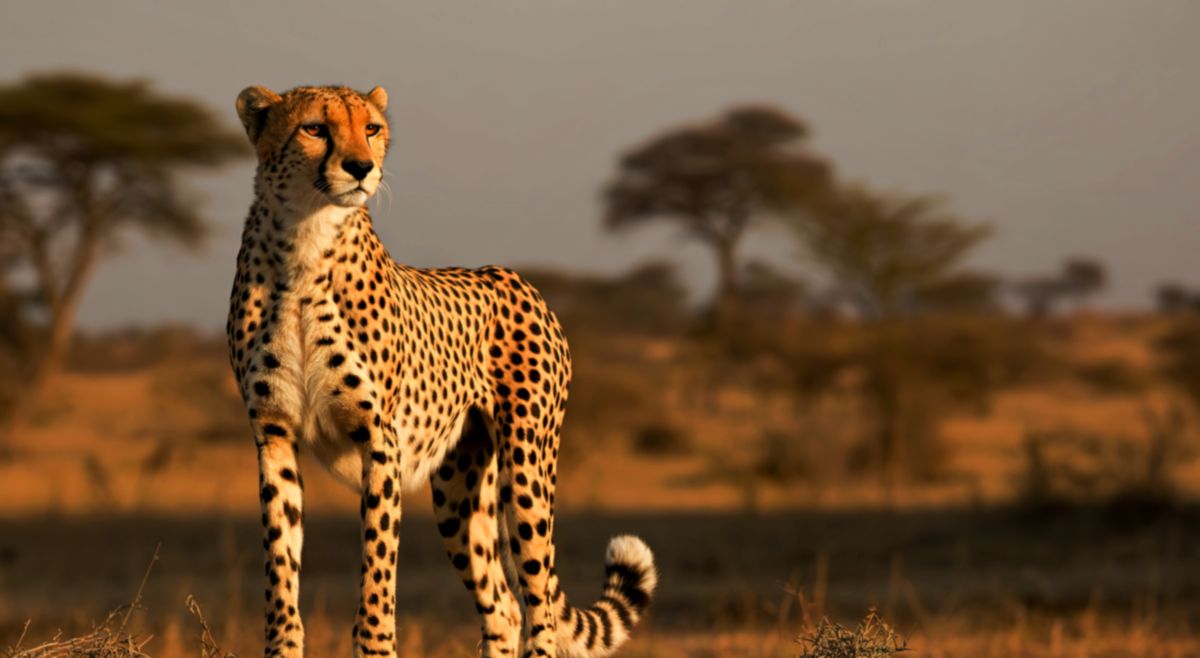
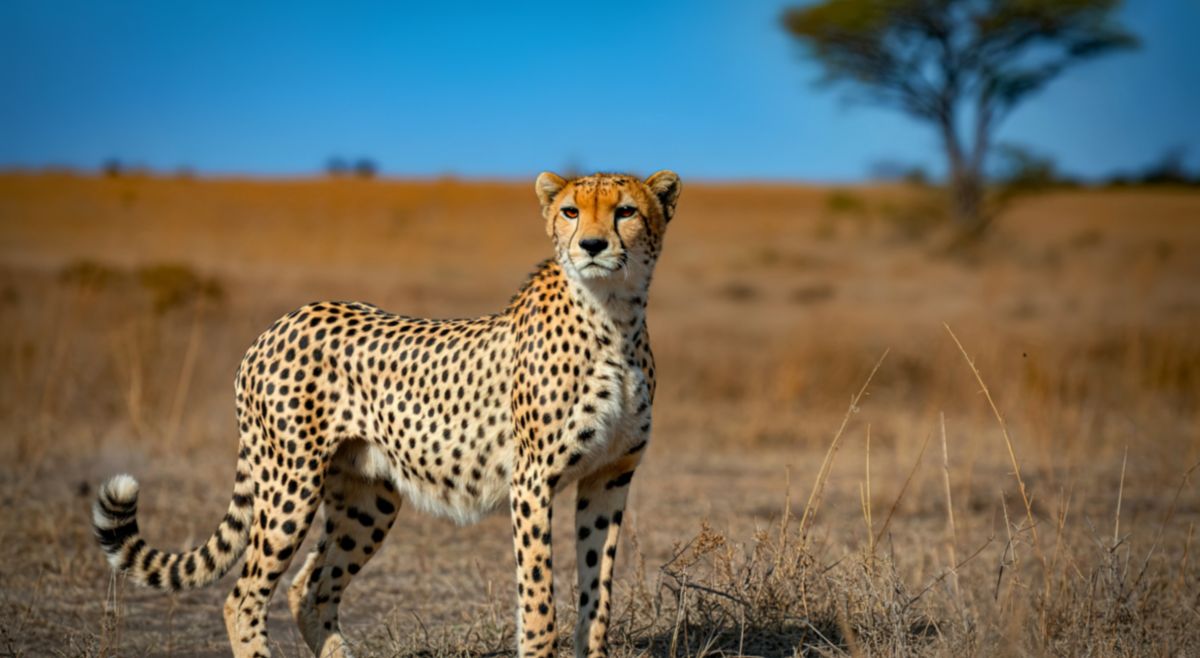
5. The pattern of spots of each cheetah is unique, similar to that of fingerprints, and it helps them to camouflage themselves when hunting.
6. Some rare species of cheetahs, known as king cheetahs, are stained with uncertain colored coats that change into stripes by a recessive gene.
7. Most cats hunt at night, unlike the cheetahs, who hunt in the daytime to avoid their competitors, like lions.
8. They have black tear marks on their faces, which look like the glare of the sun and are better for daytime vision.
9. According to Tanzanian research, more than one out of every 10 cheetah kills is stolen by hyenas or lions.
International Cheetah Day (Image Credit: Canva)
10. Cheetahs can survive up to four days without water.
11. They take about 12 hours of sleep per day, probably because of the fatigue of sprints.
12. Cheetahs possess extraordinarily sharp eyesight, which allows them to see their prey even from a distance.
13. Their claws are made like running shoes, and with semiretractable grips.
14. When a cheetah attacks its target, it kills it by use of a throat bite, where the cheetah trips the prey before choking it.
15. A few cheetahs are also found in Iran, out of the primary African habitat.
16. In captivity, cheetahs can live from 17 – 20 years.
17. Their bulky bodies and long straight tails are used as rudders during high-speed navigation.
18. The Cheetahs are fond of small antelopes, like springboks, steenboks, Thompson gazelles and duikers.
19. During the 18th century, the Indian cheetahs were tamed to hunt antelopes.
20. Cheetahs are incapable of roaring: they purr, mew, and chirp like a bird.
21. High mortality rates of the cub are up to 70 per cent due to genetic bottlenecks that occurred based on inbreeding in the past.
22. Larger predators usually eat the kill first, which is usually lost to cheetah mothers with cubs.
23. They have dilated nasal passages and sinuses to breathe in more oxygen, which is specifically important for chases.
24. The light weight of the cheetah (75-150 pounds) compromises the strength in favour of speed.
25. At the age of 2 months, cubs move out of the den, but remain with mom until the age of 18-24 months.
26. Male adults enter into lifetime coalition brotherhoods with their siblings to defend their territories.
27. Women live alone unless they have 35 cubs in their litter.
International Cheetah Day (Image Credit: Canva)
28. When the chase is more than 500 meters, Cheetahs lose 90 per cent of the race against the prey.
29. Their spine is as springy as it can be, making 60 mph jolts within three seconds possible.
30. Cheetahs in zoos usually walk around because they are stressed, since they do not have the space to run.
31. They lap water with their tongue like house cats do.
32. King cheetahs were believed to be a different species, but genetics has disproved this fact.
33. The skull of the Cheetahs is flexible as well as having small teeth, which are designed to take quick bites and not to break a bone.
Also Read: MP: Another Namibian Male Cheetah, Pawan, Dies At Kuno National Park
34. Fifty per cent of all wild cheetahs are made up of populations in Namibia, all thanks to significant conservation efforts.
35. As a form of camouflage, cubs have a mothball of fur which is longer.
36. Under certain clear weather conditions, the cheetahs can see distances of 10km due to their improved vision.
Each of the above-mentioned facts about Cheetas provides deep insights into their fascinating existence, including their unique adaptations, ecological importance, and the urgent need for conservation attention. Happy International Cheetah Day 2025.


-1764766368292_m.webp)
-1764754812719_m.webp)